iFANN
    iFANNを検索...
    ログイン
    ホーム
    ニュース
    動画
    写真
    GIF
    見つける
    投票
    アワード
    iFAMOUS
    ウィキ
    アニメ
    ルーム
    通知
    メッセージ
    ブックマーク
    プロフィール
    ウィキアワードiFAMOUSランキング業界クリエイター報酬ユーザー報酬利用規約プライバシーコミュニティガイドライン削除申請 / DMCAヘルプ開発者

    © 2026 iFANN

    ホーム
    検索
    メッセージ
    お知らせ
    プロフィール
    写真
    Scarlett S
    Scarlett S@scarlett_s1mo
    💭Info/Editorials💭Europe
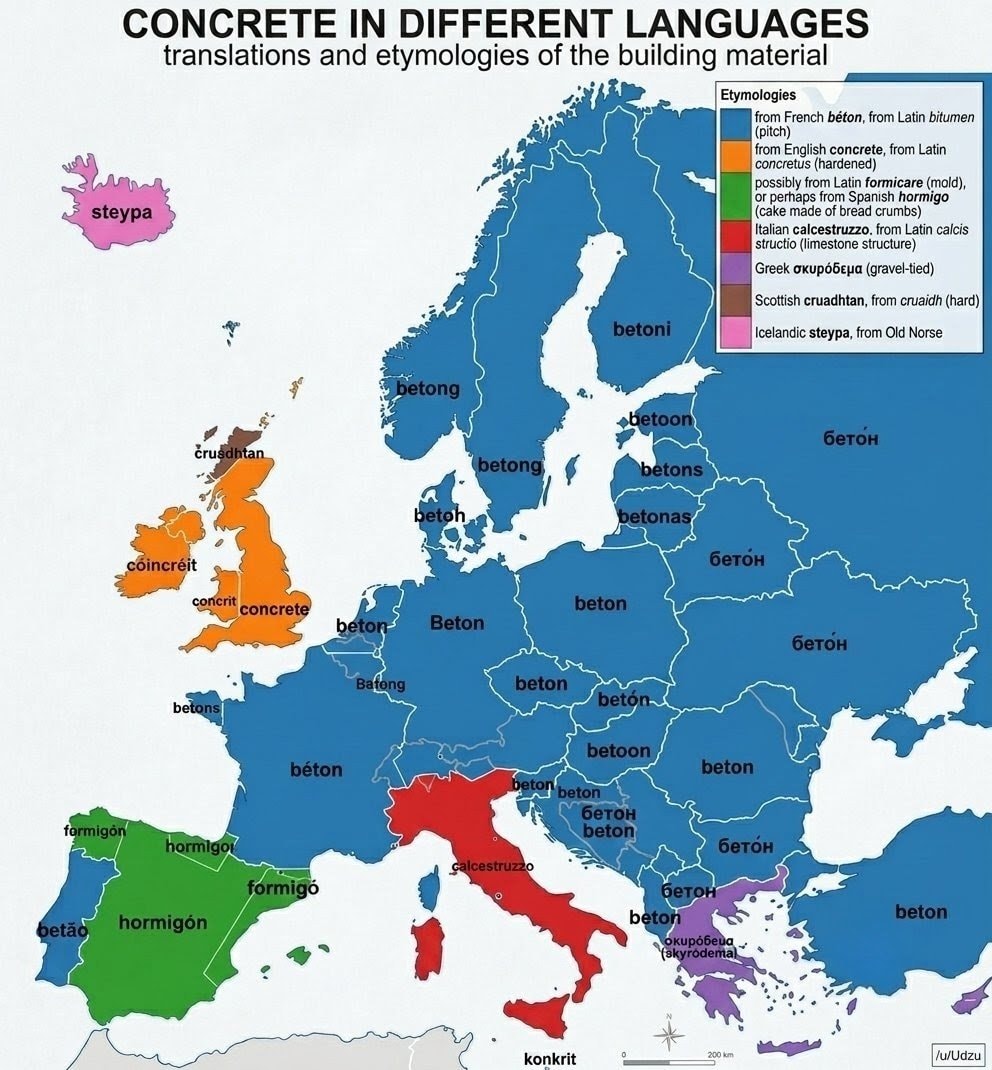
    Concrete in Different Languages

    @scarlett_sA map of Europe breaks down the word for concrete by language and etymology, so you can see how French béton traces back to Latin bitumen while English concrete comes from concretus. Spanish hormigón might be from formicare or a bread-crumb cake, Italian calcestruzzo is from calcis structio for limestone structure, Greek σκυρόδεμα means gravel-tied, Scottish cruaidhhtan comes from cruaidh for hard, and Icelandic steypa goes back to Old Norse

    元の投稿を見る
    Concrete in Different Languages

    @scarlett_sさんの写真· Aug 10, 2026· Info/Editorials

    この写真について

    The image is a map of Europe showing the word for "concrete" in different languages. The map is color-coded to show etymological origins, with a legend explaining the different color groups. The style is informative and educational, like a textbook illustration. A notable detail is the variety of spellings and pronunciations for the same word across different countries. ON-SCREEN TEXT: CONCRETE IN DIFFERENT LANGUAGES translations and etymologies of the building material Etymologies from French béton, from Latin bitumen (pitch) from English concrete, from Latin concretus (hardened) possibly from Latin formicare (mold), or perhaps from Spanish hormigón (cake made of bread crumbs) Italian calcestruzzo, from Latin calcis structio (limestone structure) Greek σκυρόδεμα (gravel-tied) Scottish cruaidhhtan, from cruaidh (hard) Icelandic steypa, from Old Norse /u/Udzu

    Info/Editorialsの写真をすべて見る

    ?

    まだコメントはありません。最初のコメントを投稿しましょう!

    Info/Editorialsの写真をもっと見る

    Info/Editorialsの写真をすべて見る
    European holiday destinations infographicEuropean holiday destinations infographicMichelin Star Restaurants Across EuropeMichelin Star Restaurants Across EuropeEuropean flags in other stylesEuropean flags in other stylesEurope Household Size Ranking 2024Europe Household Size Ranking 2024European English Speaking Rates by CountryEuropean English Speaking Rates by CountryEuropean electricity sources mapEuropean electricity sources mapEurope walking cycling statsEurope walking cycling statsLife Expectancy in Europe 2026Life Expectancy in Europe 2026Europe military spending GDP 2025Europe military spending GDP 2025Europe Most Visited Countries 2025Europe Most Visited Countries 2025Map translation across EuropeMap translation across EuropeGraz Austria city squareGraz Austria city squareEuropean Supermarket Chains MapEuropean Supermarket Chains MapMinimum Age for Presidential Candidacy in EuropeMinimum Age for Presidential Candidacy in EuropeSnow Days in European Capitals2Snow Days in European Capitalsaverage male height in Europeaverage male height in EuropeHow to say snow in EuropeHow to say snow in EuropeEuropean blood donation rates by country2European blood donation rates by country
    写真
    Scarlett S
    Scarlett S@scarlett_s1mo
    💭Info/Editorials💭Europe
    Concrete in Different Languages

    @scarlett_sA map of Europe breaks down the word for concrete by language and etymology, so you can see how French béton traces back to Latin bitumen while English concrete comes from concretus. Spanish hormigón might be from formicare or a bread-crumb cake, Italian calcestruzzo is from calcis structio for limestone structure, Greek σκυρόδεμα means gravel-tied, Scottish cruaidhhtan comes from cruaidh for hard, and Icelandic steypa goes back to Old Norse

    元の投稿を見る
    Concrete in Different Languages

    @scarlett_sさんの写真· Aug 10, 2026· Info/Editorials

    この写真について

    The image is a map of Europe showing the word for "concrete" in different languages. The map is color-coded to show etymological origins, with a legend explaining the different color groups. The style is informative and educational, like a textbook illustration. A notable detail is the variety of spellings and pronunciations for the same word across different countries. ON-SCREEN TEXT: CONCRETE IN DIFFERENT LANGUAGES translations and etymologies of the building material Etymologies from French béton, from Latin bitumen (pitch) from English concrete, from Latin concretus (hardened) possibly from Latin formicare (mold), or perhaps from Spanish hormigón (cake made of bread crumbs) Italian calcestruzzo, from Latin calcis structio (limestone structure) Greek σκυρόδεμα (gravel-tied) Scottish cruaidhhtan, from cruaidh (hard) Icelandic steypa, from Old Norse /u/Udzu

    Info/Editorialsの写真をすべて見る

    ?

    まだコメントはありません。最初のコメントを投稿しましょう!

    Info/Editorialsの写真をもっと見る

    Info/Editorialsの写真をすべて見る
    European holiday destinations infographicEuropean holiday destinations infographicMichelin Star Restaurants Across EuropeMichelin Star Restaurants Across EuropeEuropean flags in other stylesEuropean flags in other stylesEurope Household Size Ranking 2024Europe Household Size Ranking 2024European English Speaking Rates by CountryEuropean English Speaking Rates by CountryEuropean electricity sources mapEuropean electricity sources mapEurope walking cycling statsEurope walking cycling statsLife Expectancy in Europe 2026Life Expectancy in Europe 2026Europe military spending GDP 2025Europe military spending GDP 2025Europe Most Visited Countries 2025Europe Most Visited Countries 2025Map translation across EuropeMap translation across EuropeGraz Austria city squareGraz Austria city squareEuropean Supermarket Chains MapEuropean Supermarket Chains MapMinimum Age for Presidential Candidacy in EuropeMinimum Age for Presidential Candidacy in EuropeSnow Days in European Capitals2Snow Days in European Capitalsaverage male height in Europeaverage male height in EuropeHow to say snow in EuropeHow to say snow in EuropeEuropean blood donation rates by country2European blood donation rates by country