iFANN
    iFANNを検索...
    ログイン
    ホーム
    ニュース
    動画
    写真
    GIF
    見つける
    投票
    アワード
    iFAMOUS
    ウィキ
    アニメ
    ルーム
    通知
    メッセージ
    ブックマーク
    プロフィール
    ウィキアワードiFAMOUSランキング業界クリエイター報酬ユーザー報酬利用規約プライバシーコミュニティガイドライン削除申請 / DMCAヘルプ開発者

    © 2026 iFANN

    ホーム
    検索
    メッセージ
    お知らせ
    プロフィール
    写真
    Ts Floyd
    Ts Floyd@ts_floyd20h
    💭AI💭Tech
    20 JEV Tips for Machine Decision Models

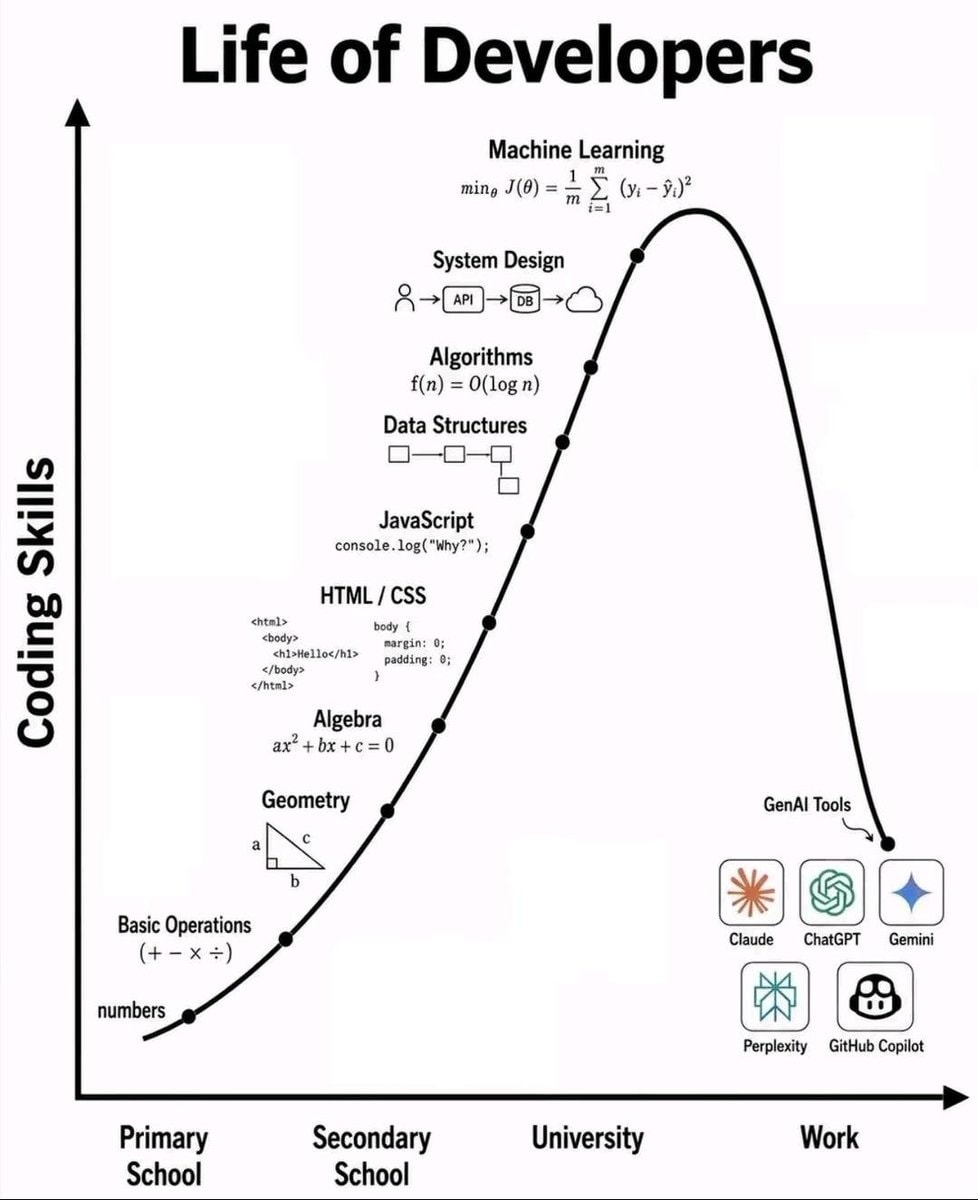
    @ts_floydTypeSafe just shipped the first model built for machines, not for people. Jev doesn't write text like an LLM; it decides based on input state and outputs typed results. The system relies on three primitives: Choice picks from a list, Score places items on a rubric, and Noul returns a probability between 0 and 1. The architecture splits roles clearly: an LLM generates content, Jev makes decisions, code controls execution, and humans handle uncertain cases. Effective usage demands stating facts with one atomic question and exact criteria while skipping personas or preambles entirely. Descriptive criteria beat simple labels, so defining outcomes like technical failures as broken behavior or integration failure works better than vague tags. Each query must focus on a single judgment; complex multi-part questions like asking if something is valuable, urgent, and likely to buy need to be combined in code rather than asked separately. The model never provides explanations; it returns only decisions, probabilities, and confidence levels, which forms the contract. State management must stay clean, containing only the object, relevant context, and changing facts without extra noise. While the model supports a 64k token limit, accuracy shifts as state size increases, making smaller useful states an upgrade. Queries can be batched to judge multiple dimensions in parallel with minimal latency impact, allowing one call to assess thirteen dimensions at once. Users should include all potential questions in requests since output tokens are free. Decision gating should rely on confidence thresholds rather than the answer itself, acting above 0.85, escalating between 0.55 and 0.85, and routing below 0.55 to humans. These thresholds require tuning based on specific dataset performance because numbers from a post are just a starting point, not a config. Every uncertain answer needs a defined escalation path because treating low confidence as normal is how bad decisions ship. Candidate options must be built in code before being presented to the model for selection; it should never invent options itself. Arithmetic and hard rules remain in the code while Jev judges meaning, ensuring your program does the math. Model versions should be pinned to ensure stability after threshold tuning, using jev-latest to track stable releases or jev-1.13.0 once tuned. Logging must include model ID, probabilities, confidence, routing logic, and outcomes for review to catch false positives and retune. Integration should place the model within the decision loop for routing, tool gating, and output judging rather than next to it. The five money workflows include universal verifier, support triage, lead scoring, model routing, and giant dataset jobs. Setup requires joining the waitlist at typesafe.ai before reading the guide on building fast AI agent systems.

    元の投稿を見る

    20 JEV Tips for Machine Decision Models

    @ts_floydさんの写真· Sep 19, 2026· AI

    この写真について

    The image is a graphic design with text. It displays "20 JEV TIPS" prominently in large, stylized lettering. The content is organized into sections with numbered tips and categories like "CONTRACT," "PROMPTING," "SCALE," "CONTROL," and "OPERATIONS." The overall aesthetic is clean and modern with a pink and white color scheme. A section at the top has a heading "MODEL ANNOUNCEMENT / PUBLIC" with text about TypeSafe. At the bottom, there are sections for "DEPLOYMENT NOTES / PRICE SIGNAL / EARLY ACCESS" and a price indication of "$0.042 PER MILLION INPUT TOKENS."

    AIの写真をすべて見る

    ?

    AIの写真をもっと見る

    AIの写真をすべて見る
    Autonomous plane US flight milestone2Autonomous plane US flight milestoneLife of Developers infographicLife of Developers infographicSuperiorTrade Hyperliquid terminalSuperiorTrade Hyperliquid terminalChatGPT email screenshotChatGPT email screenshotHulk meme formatHulk meme formatVibe Coding vs Vibe Debugging memeVibe Coding vs Vibe Debugging memeWill Smith futuristic gun robotsWill Smith futuristic gun robotsTravis Scott RHYNO Spotify debut2Travis Scott RHYNO Spotify debutElon Musk Uranus joke theoryElon Musk Uranus joke theorythv collagethv collageNick Bostrom on machine intelligenceNick Bostrom on machine intelligenceElon Musk X usage recordsElon Musk X usage recordsAudio app beats ChatGPT to #2Audio app beats ChatGPT to #2Apple executive on iPhone durabilityApple executive on iPhone durabilitySecret internet life and Pocket FM milestoneSecret internet life and Pocket FM milestoneGoogle Gemini security breach alertGoogle Gemini security breach alertPS4 console updatePS4 console updateGoogle Astra policy reactionGoogle Astra policy reaction
    写真
    Ts Floyd
    Ts Floyd@ts_floyd20h
    💭AI💭Tech
    20 JEV Tips for Machine Decision Models

    @ts_floydTypeSafe just shipped the first model built for machines, not for people. Jev doesn't write text like an LLM; it decides based on input state and outputs typed results. The system relies on three primitives: Choice picks from a list, Score places items on a rubric, and Noul returns a probability between 0 and 1. The architecture splits roles clearly: an LLM generates content, Jev makes decisions, code controls execution, and humans handle uncertain cases. Effective usage demands stating facts with one atomic question and exact criteria while skipping personas or preambles entirely. Descriptive criteria beat simple labels, so defining outcomes like technical failures as broken behavior or integration failure works better than vague tags. Each query must focus on a single judgment; complex multi-part questions like asking if something is valuable, urgent, and likely to buy need to be combined in code rather than asked separately. The model never provides explanations; it returns only decisions, probabilities, and confidence levels, which forms the contract. State management must stay clean, containing only the object, relevant context, and changing facts without extra noise. While the model supports a 64k token limit, accuracy shifts as state size increases, making smaller useful states an upgrade. Queries can be batched to judge multiple dimensions in parallel with minimal latency impact, allowing one call to assess thirteen dimensions at once. Users should include all potential questions in requests since output tokens are free. Decision gating should rely on confidence thresholds rather than the answer itself, acting above 0.85, escalating between 0.55 and 0.85, and routing below 0.55 to humans. These thresholds require tuning based on specific dataset performance because numbers from a post are just a starting point, not a config. Every uncertain answer needs a defined escalation path because treating low confidence as normal is how bad decisions ship. Candidate options must be built in code before being presented to the model for selection; it should never invent options itself. Arithmetic and hard rules remain in the code while Jev judges meaning, ensuring your program does the math. Model versions should be pinned to ensure stability after threshold tuning, using jev-latest to track stable releases or jev-1.13.0 once tuned. Logging must include model ID, probabilities, confidence, routing logic, and outcomes for review to catch false positives and retune. Integration should place the model within the decision loop for routing, tool gating, and output judging rather than next to it. The five money workflows include universal verifier, support triage, lead scoring, model routing, and giant dataset jobs. Setup requires joining the waitlist at typesafe.ai before reading the guide on building fast AI agent systems.

    元の投稿を見る

    20 JEV Tips for Machine Decision Models

    @ts_floydさんの写真· Sep 19, 2026· AI

    この写真について

    The image is a graphic design with text. It displays "20 JEV TIPS" prominently in large, stylized lettering. The content is organized into sections with numbered tips and categories like "CONTRACT," "PROMPTING," "SCALE," "CONTROL," and "OPERATIONS." The overall aesthetic is clean and modern with a pink and white color scheme. A section at the top has a heading "MODEL ANNOUNCEMENT / PUBLIC" with text about TypeSafe. At the bottom, there are sections for "DEPLOYMENT NOTES / PRICE SIGNAL / EARLY ACCESS" and a price indication of "$0.042 PER MILLION INPUT TOKENS."

    AIの写真をすべて見る

    ?

    AIの写真をもっと見る

    AIの写真をすべて見る
    Autonomous plane US flight milestone2Autonomous plane US flight milestoneLife of Developers infographicLife of Developers infographicSuperiorTrade Hyperliquid terminalSuperiorTrade Hyperliquid terminalChatGPT email screenshotChatGPT email screenshotHulk meme formatHulk meme formatVibe Coding vs Vibe Debugging memeVibe Coding vs Vibe Debugging memeWill Smith futuristic gun robotsWill Smith futuristic gun robotsTravis Scott RHYNO Spotify debut2Travis Scott RHYNO Spotify debutElon Musk Uranus joke theoryElon Musk Uranus joke theorythv collagethv collageNick Bostrom on machine intelligenceNick Bostrom on machine intelligenceElon Musk X usage recordsElon Musk X usage recordsAudio app beats ChatGPT to #2Audio app beats ChatGPT to #2Apple executive on iPhone durabilityApple executive on iPhone durabilitySecret internet life and Pocket FM milestoneSecret internet life and Pocket FM milestoneGoogle Gemini security breach alertGoogle Gemini security breach alertPS4 console updatePS4 console updateGoogle Astra policy reactionGoogle Astra policy reaction