iFANN
    iFANNを検索...
    ログイン
    ホーム
    ニュース
    動画
    ブック
    写真
    GIF
    見つける
    投票
    アワード
    iFAMOUS
    ウィキ
    アニメ
    ルーム
    通知
    メッセージ
    ブックマーク
    プロフィール
    ウィキアワードiFAMOUSランキング業界クリエイター報酬ユーザー報酬利用規約プライバシーコミュニティガイドライン削除申請 / DMCAヘルプ開発者

    © 2026 iFANN

    ホーム
    検索
    メッセージ
    お知らせ
    プロフィール
    写真
    Tim Official
    Tim Official@tim_official1w
    🏢Nvidia💭Finance💭Tech
    Nvidia 10-Q paper gains explained

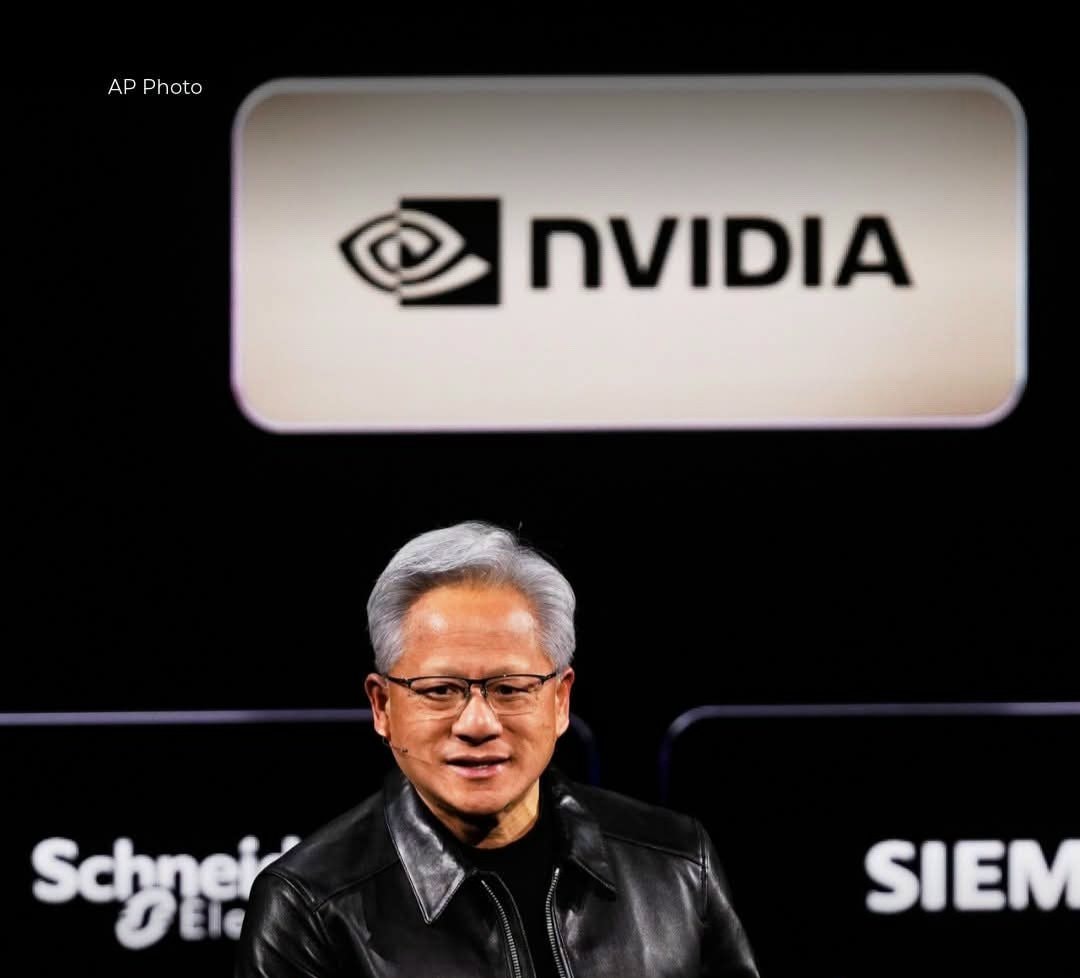
    @tim_officialWall Street is pricing Nvidia like every dollar of profit comes from selling chips. If that's the assumption baked into the stock, then the 10-Q is worth a slow read, because roughly one in six pretax dollars in the first half came from somewhere else entirely: marking up the value of stakes Nvidia holds in other companies. The headline number is $23.7 billion in gains from equity securities for the six months ending July 26. Nvidia's own filing calls most of that unrealized, which means it's paper gains on stakes it still holds, not cash anyone handed over. Against $141.4 billion in pretax profit for the same stretch, that's about a sixth of the total arriving from write-ups on other companies' valuations, and a lot of those companies turn around and buy Nvidia hardware. The April quarter sharpens it. $15.9 billion of the $69.9 billion total was investment markups, close to one in four. A year earlier the same line sat at $2.1 billion for the half. It's more than eleven times larger now. And the pile keeps building. Late July found Nvidia holding $99 billion in equity investments, with another $25 billion committed to what it calls AI model makers and infrastructure financiers. Cash and bonds at that point added up to about $56.6 billion. So the most valuable chip company on Earth has more riding on other companies' stock than it has sitting in cash and bonds. Then comes the part where it rents the chips back. $36 billion sits in AI cloud agreements: clouds purchase Nvidia's data center products, and Nvidia commits to buying computing capacity from them. The filing admits those clouds can walk away from selling to Nvidia whenever someone else offers better rates. Nvidia is the buyer they fall back on when nobody pays more. And then it vouches for the debt. In August, Nvidia signed $105 billion of guarantees on leases at the Ohio campus an OpenAI affiliate is leasing. Those guarantees end once OpenAI earns a satisfactory credit rating. I read that as Nvidia lending its own credit to a customer the market won't fully trust on its own. So the loop runs: invest in a customer, the customer buys chips, buy capacity back from the clouds running those chips, guarantee the leases, and when the customer's valuation climbs, book that as profit too. There's a real case on Nvidia's side. Accounting rules force it to mark these stakes to market. Operating profit alone grew 134% in the first half. Microsoft, Amazon and Google do the same thing with OpenAI and Anthropic. And the biggest buyers, Microsoft, Meta and Google among them, pay for chips with their own cash. But paper gains work in both directions. The quarter Nvidia reports on ended October 25, and Nebius, an AI cloud where Nvidia disclosed a 9.3% stake, fell about 30% between October 29 and November 5. The same machine that pumped profit up on the way up can drain it on the way down. So when roughly one in six dollars traces back to customers' valuations rather than chip sales, how much of the AI boom is real demand?

    元の投稿を見る

    Nvidia 10-Q paper gains explained

    @tim_officialさんの写真· Nov 15, 2026· Nvidia

    この写真について

    The image is a graphic detailing Nvidia's financial performance. It highlights that Nvidia made $23.7 billion without selling a chip, with paper gains from marking up its stakes in other companies. The graphic uses a dark aesthetic with red and white text for emphasis. A notable detail is the comparison of gains on stakes, showing a significant increase from $2.1 billion a year earlier to $23.7 billion this year. The graphic also breaks down "How the Loop Works" with numbered steps and associated dollar amounts. ON-SCREEN TEXT: NVIDIA 10-Q - SIX MONTHS ENDED JULY 26, 2026 Nvidia made $23.7 billion without selling a chip Paper gains from marking up its stakes in other companies, many of which buy its chips NVIDIA'S PRETAX PROFIT, FIRST HALF: $141.4B Everything else $117.7B Chips, software, networking and interest income 1 IN EVERY 6 DOLLARS CAME FROM

    Nvidiaの写真をすべて見るNvidiaのウィキを読む

    ?

    Nvidiaの写真をもっと見る

    Nvidiaの写真をすべて見る
    Jensen Huang Nvidia CEOJensen Huang Nvidia CEOTrump on Nvidia BoardTrump on Nvidia BoardJensen Huang Nvidia CEO2Jensen Huang Nvidia CEOPiketon Ohio AI campus explainedPiketon Ohio AI campus explainedTrump calls for Jensen Huang to return as Nvidia CEO2Trump calls for Jensen Huang to return as Nvidia CEOCompanies profit per $100 revenueCompanies profit per $100 revenueMichael Burry halves Nvidia short2Michael Burry halves Nvidia shortJensen Huang resigns as CEO2Jensen Huang resigns as CEOUS stock market losses heatmapUS stock market losses heatmapNvidia subpoena California AGNvidia subpoena California AGCalifornia flag Nvidia investigation2California flag Nvidia investigationTrump on Jensen Huang2Trump on Jensen HuangNvidia driver bug warning2Nvidia driver bug warningElon Musk on Jensen Huang and Nvidia2Elon Musk on Jensen Huang and NvidiaPavel Durov on Nvidia CEO2Pavel Durov on Nvidia CEOBill Ackman on Nvidia board and Jensen Huang2Bill Ackman on Nvidia board and Jensen HuangKeith McCullough on the AI bubbleKeith McCullough on the AI bubbleJeff Bezos on Nvidia CEO2Jeff Bezos on Nvidia CEO