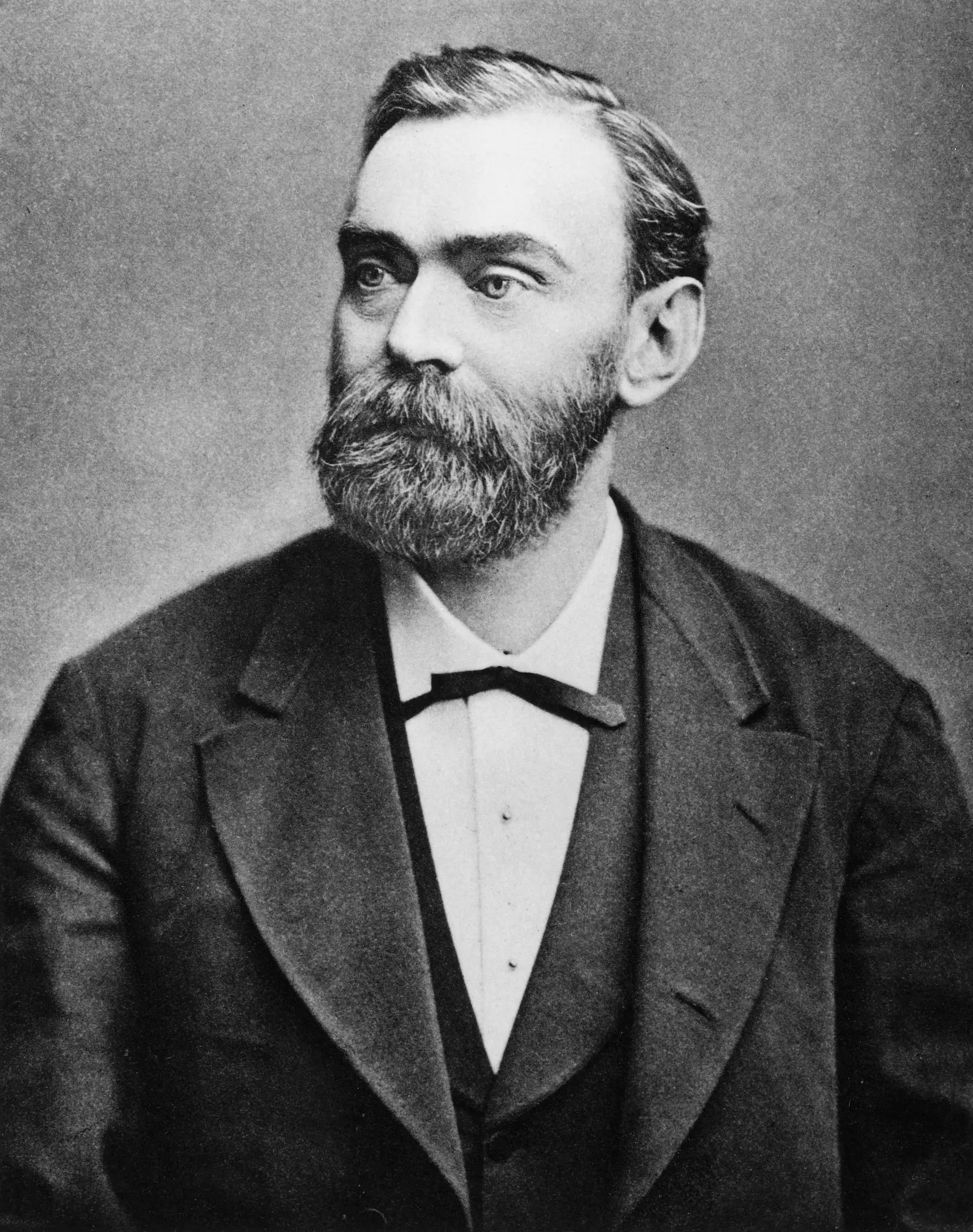
Alfred Nobel
 Sweden
chemist•industrialist•philanthropist
誕生日
October 21, 1833
星座
Libra
出生地
Stockholm, Sweden
年齢
63歳で死去
身長
5 ft 6 in (168 cm)
概要
アルフレッド・ベルンハルド・ノーベルは、スウェーデンの化学者、発明家、実業家であり、爆発物と平和賞という二つの方法で世界を変えた人物です。1833年10月21日にストックホルムで名門ノーベル家に生まれ、幼い頃から科学と言語に才能を示し、6か国語を流暢に話しました。24歳までに最初の特許を取得し、生涯で355の特許を取得しましたが、彼を有名にしたのは1867年に特許を取得したダイナマイトです。ニトログリセリンを吸収剤と混合して作られたこの安定した爆発物は、建設や採掘に革命をもたらしました。その後、1875年にゼリグナイト、1887年に初期の無煙火薬であるバリスタイトを発明しました。
ノーベルは発明家であるだけでなく、抜け目ない実業家でもありました。彼と家族は鉄鋼メーカーであるボフォースを所有し、彼はそれを大手兵器メーカーに変貌させました。彼の事業は大陸をまたぎ、莫大な富を築きました。しかし、ノーベルは複雑な人物でした。1888年に誤って掲載された「死の商人、死す」という見出しの死亡記事に衝撃を受け、それが彼に遺産の再構築を促しました。1896年12月10日にイタリアのサンレモで亡くなった際、彼の遺言は驚きをもたらしました。彼の財産の大部分はノーベル賞に充てられ、毎年「人類に最大の利益をもたらした」人々に授与されることになりました。
今日、彼の名前は物理学、化学、医学、文学、平和の権威ある賞に冠されています。彼が会員だったスウェーデン王立科学アカデミーが物理学と化学の受賞者を選びます。合成元素ノーベリウムは彼の名にちなんで名付けられ、彼の事業の後継であるダイナマイト・ノーベルやアクゾノーベルなどの企業も同様です。ノーベルの物語は、破壊と創造のバランスを模索し、人類の業績を称え続ける遺産を残した男の物語です。
生い立ちと背景
アルフレッド・ノーベルの幼少期は、経済的困難と知的可能性によって形作られました。1833年にストックホルムで生まれ、父親のイマヌエル・ノーベルはエンジニア兼発明家で、スウェーデンで安定した事業を築くのに苦労していました。家族は貧困の中で暮らしていましたが、1837年にイマヌエルがロシアのサンクトペテルブルクに移り、ロシア軍向けの機雷や装備の製造で成功を収めました。1842年には残りの家族も合流しました。アルフレッドと兄弟は家庭教師から自然科学、人文科学、言語の厳格な教育を受けました。17歳までにアルフレッドはスウェーデン語、ロシア語、フランス語、英語、ドイツ語を流暢に話し、後にイタリア語も習得しました。
1850年、ノーベルはパリに渡り、爆発物の研究で知られる化学者テオフィル=ジュール・ペルーズのもとで化学を学びました。その後、アメリカで1年間、装甲艦モニターの発明者ジョン・エリクソンのもとで短期間働きました。これらの経験により、特に1847年に発見された揮発性化合物ニトログリセリンへの関心が深まりました。1856年にクリミア戦争が終結すると、父親の会社は軍事契約を失い倒産しました。家族は1859年にスウェーデンに戻りました。爆発物に専念していたアルフレッドは、ストックホルム近郊のヘレネボリにある小さな工場でニトログリセリンの実験を始めました。1864年9月3日、壊滅的な爆発が弟のエミールと他の4人の命を奪いました。この悲劇がノーベルに安全な爆発物の開発を促しました。彼は1863年に起爆剤を発明し、制御された爆発を可能にし、さらにニトログリセリン自体を安定させる方法を模索しました。
キャリアの歩み
ノーベルの画期的な発明は1867年、ニトログリセリンを多孔質の粘土である珪藻土に吸収させたダイナマイトの特許取得でした。これによりニトログリセリンは安全に輸送・取り扱いが可能となり、採掘、鉄道建設、解体に不可欠なものとなりました。ノーベルはヨーロッパ中と米国に工場を建設し、世界的な爆薬帝国を築きました。1875年には、より強力で耐水性のあるゼリグナイトを発明し、多くの用途でダイナマイトに取って代わりました。1887年には無煙火薬バリスタイトの特許を取得し、これはコルダイトの前身となりましたが、特許をめぐる法的紛争が続きました。
1880年代、ノーベルはスウェーデンのボフォース製鉄所を買収し、大砲などの兵器を製造する大手兵器メーカーに変えました。1890年代までに、彼は20か国以上に研究所や会社を所有していました。事業の成功にもかかわらず、ノーベルは自身の発明が破壊的に使用されることに悩んでいました。1888年、フランスの新聞が弟ルドヴィグの死亡記事を誤ってアルフレッドのものとして掲載し、「死の商人、死す」という見出しをつけました。この記事は彼が戦争で利益を得ていると非難するものでした。この出来事が彼に平和賞を創設する動機を与えたと広く信じられています。1895年、彼は最終遺言に署名し、莫大な財産の94%をノーベル賞の基金に充てました。彼は1896年12月10日、イタリアのサンレモで脳卒中により亡くなりました。最初のノーベル賞は1901年に授与されました。
キャリア年表
公的イメージとスタイル
アルフレッド・ノーベルの公的なイメージは、厳格でひげを生やした19世紀の実業家であり、しばしば公式の肖像画で描かれています。彼に関連する視覚的な美学は、金色のノーベル賞メダルと公式の式典です。メディアでは、悲劇的で複雑な天才、莫大な富と知性を持ちながらも自身の発明の破壊的可能性に悩み、賞を通じて贖罪を求めた人物として描かれています。世界中の学術・科学コミュニティは毎年ノーベル賞の予想と式典に参加しており、これが彼の遺産をめぐる主要な「ファン文化」となっています。ノーベル賞のソーシャルメディアアカウントは、公式で教育的かつ祝賀的であり、受賞者とその発見に焦点を当てています。公式のファン名は存在しません。彼は歴史的人物であり、ポップカルチャーの有名人ではありません。
名声とファンダム
Alfred Nobel stands as a singular figure whose legacy transcends the industrial era, yet his standing in modern fame metrics reflects a unique position of historical reverence rather than current viral dominance. While he remains a household name globally due to the enduring prestige of the prizes bearing his title, iFANN's Global Fame Engine has evaluated this person, but they do not currently hold a placement in the published rankings (Global Top 1,000 or a Top-100 scope list). This absence from the active charts does not diminish his impact; instead, it highlights how his fame operates on a different axis entirely. The world does not track him through trending algorithms or social media spikes but through the annual cycle of nominations and the global recognition of his institutions. His cultural footprint is vast, anchored by the story of the premature obituary that titled him "The Merchant of Death," a narrative that sparked the creation of the Peace Prize and transformed his identity from a weapons manufacturer to a benefactor of humanity. This paradoxical redemption arc is the defining legend of his life, one that history books recount with regularity. Today, his presence is felt in the halls of academies and the quiet anticipation of award ceremonies rather than in the frenetic energy of fan campaigns. There is no organized fandom for Alfred Nobel in the traditional sense, nor is there a specific name for those who revere his work. The entities associated with him today are the administrative bodies established by his will, such as the Nobel Foundation and the Nobel Prize committees, which operate as custodians of his legacy rather than centers for fan interaction. His influence persists through the continued nomination cycles, where thousands of candidates vie for honors that bear his name, ensuring his relevance remains steady across generations without needing the validation of a ranked chart.
興味深い事実と伝説
Before his rise as an industrialist, Nobel displayed a literary flair by writing both a novel and a play during his youth. His tragedy, Nemesis, focused on Beatrice Cenci and was deemed blasphemous; while most copies were destroyed after his death, a single Swedish edition survived to tell the tale. He also patented a process for manufacturing improved plywood, a precursor to the modern material used worldwide. At his villa in San Remo, he kept a horse named Marmite, a personal touch often overlooked in biographies. Fluent in six languages including Russian, French, German, English, Italian, and Swedish, he navigated international business with ease. A persistent historical anecdote involves the mistaken obituary published by a French newspaper in 1888 following the death of his brother Ludvig; the paper confused the two men, labeling Alfred "The Merchant of Death." This error deeply distressed him and directly influenced his decision to establish the Nobel Prizes. Though he never married or had children, his relationship with Sophie Hess lasted nearly eighteen years, during which he provided her financial support until her death. The story of the obituary remains the most widely retold legend of his life, illustrating how a moment of public condemnation catalyzed a century of global philanthropy.
注目の発言
“I would rather take care of the stomachs of the living than the glory of the departed in the form of monuments.”
“Home is where I work and I work everywhere.”
“The merchant of death is dead.”
“If I have a thousand ideas and only one turns out to be good, I am satisfied.”
家族と私生活
アルフレッド・ノーベルは、エンジニア兼発明家のイマヌエル・ノーベルとアンドリエット・アールセル・ノーベルの三男でした。父親の爆発物と工学の仕事がアルフレッドのキャリアを形作りましたが、家族は初期には貧困に苦しみました。兄にはロバートとルドヴィグがおり、どちらも成功を収めました。ルドヴィグはロシアで石油会社ブラノーベルを設立しました。弟のエミールは1864年のニトログリセリン爆発で家族の工場で亡くなりました。ノーベルは結婚せず、子供もいませんでした。生涯の多くを独りで暮らしましたが、兄弟や母親と親しい友情を保ち、広範な書簡を交わしました。晩年はイタリアのサンレモに別荘を構え、そこで亡くなりました。
注目の関係
アルフレッド・ノーベルは、技師兼発明家であるイマヌエル・ノーベルの息子でした。兄のルードヴィッヒは石油王で、ブラノベルを設立しました。ノーベルは、1905年にノーベル平和賞を受賞した平和活動家ベルタ・フォン・ズットナーと親交を深めました。彼らの往復書簡は、彼が平和賞を設ける決断に影響を与えました。彼の遺言執行人ラグナー・ソールマンは、ノーベル財団の初代理事に就任しました。ノーベルはアメリカで、装甲艦モニターを発明したジョン・エリクソンのもとで短期間学びました。
恋愛関係と交際歴
アルフレッド・ノーベルは結婚したことがなく、子供もいませんでした。彼の恋愛生活は限られており、情熱的というよりは知的であることが多かったです。若い頃、アレクサンドラというロシア人女性に恋をしましたが、プロポーズは断られました。1876年、秘書を求める広告を出し、オーストリアの伯爵夫人で平和主義者のベルタ・フォン・ズットナーを雇いました。恋愛関係の噂もありましたが、彼女はすぐに密かにバロン・アルトゥール・グンダッカー・フォン・ズットナーと結婚するために去りました。二人はその後も親友であり、生涯にわたって文通を続けました。彼女の反戦活動は、ノーベルが遺言に平和賞を含める決断に影響を与えたと考えられています。彼女は後に1905年にノーベル平和賞を受賞しました。約18年間、ノーベルはウィーンの花屋で出会った若い女性ゾフィー・ヘスと関係を持ちました。彼は彼女にパリの別荘、後にオーストリアのバーデン・バイ・ウィーンの邸宅を提供しました。関係は波乱に満ちており、彼女は要求が多く不誠実だったとされますが、ノーベルは生涯にわたって経済的に支援しました。この関係は一連の書簡に記録されています。2026年現在、アルフレッド・ノーベルは故人であり、結婚歴はありません。
- 噂ありAlexandra1860 - 1860ノーベルは若い頃に彼女に恋をしたが、プロポーズを断られた。
- 噂ありBertha von Suttner1876 - 1896彼女は短期間彼の秘書として働き、親友として文通を続けた。1905年にノーベル平和賞を受賞。
- 交際歴ありSophie Hess1876 - 1890ノーベルはウィーンの花屋で彼女と出会い、彼女の要求や不誠実さにもかかわらず、生涯経済的に支援した。
死去とその後
死没
December 10, 1896 (63歳没)
死没地
San Remo, Liguria, Italy
死因
Cerebral hemorrhage
Alfred Nobel passed away on December 10, 1896, at his villa in San Remo, Italy. He was sixty-three years old and had been managing his international business affairs from his Italian residence despite declining health that included heart disease and diabetes. The immediate cause of death was a cerebral hemorrhage, confirmed by his personal physician. While some accounts suggest minor strokes preceded the fatal event, the official narrative remains consistent regarding this massive stroke resulting from chronic cardiovascular conditions. Public reaction evolved slowly rather than erupting immediately, as he was a prominent industrialist rather than a pop culture figure. Initial confusion lingered because a French newspaper had previously published a mistaken obituary titled "The Merchant of Death Is Dead" while he was still alive, condemning his work with explosives.
Upon his actual death, tributes from peers and institutions grew over time as the first Nobel Prizes were awarded in 1901. His funeral was a private affair held in the chapel of the Swedish Church in Paris on December 15, 1896, attended by close family members including his brother Emil and a small circle of friends. His body was subsequently transported back to Sweden and cremated, with ashes interred at the family plot in the Northern Cemetery in Stockholm. Posthumously, his estate faced intense scrutiny and litigation initiated by relatives who contested the validity of his will. These disputes were resolved through civil courts, leading to the establishment of the Nobel Foundation in 1900 to administer the prizes according to his specific instructions.
総資産(遺産評価額)
$550 Million
iFANN編集チームによる推定
At the time of his passing in 1896, Alfred Nobel's estate was valued at approximately 31.5 million Swedish kronor. Adjusted for inflation and converted to 2026 dollars, that figure translates to roughly $250-300 million. The Nobel Foundation, established in 1900 to manage the estate's assets and administer the prizes, now holds a diversified portfolio of stocks, bonds, real estate, and hedge funds. As of 2026, the foundation's total assets are estimated between 5.5 and 6 billion SEK, approximately $500-550 million USD. This fund generates annual returns that finance the prize amounts, currently 11 million SEK per prize. Additional revenue comes from donations and licensing of the Nobel name for merchandise and official events. The foundation's investment strategy has grown the original capital significantly over the decades, ensuring the prizes remain substantial. Per iFANN's editorial analysis, the total net worth attributed to Alfred Nobel's enduring legacy and estate management is $550 Million.
受賞 (3)
アルフレッド・ノーベルは競争的な賞を受賞していません。彼はノーベル賞の創設者です。彼はスウェーデンの北極星勲章やブラジルのローズ勲章などの騎士団勲章を授与されました。1884年にスウェーデン王立科学アカデミーの会員に選出されました。死後、1998年に米国発明家殿堂入りし、合成元素ノーベリウムが彼にちなんで命名されました。
1880 · 騎士団勲章
1880 · 騎士団勲章
代表作
Dynamite
1867 · Inventor
Nobel Prizes
1901 · Founder
Gelignite
1875 · Inventor
Ballistite
1887 · Inventor
キーワード
クイック情報
- 職業
- chemist, industrialist, philanthropist
- 生年月日
- October 21, 1833
- 出生地
- Stockholm, Sweden
- 死没
- December 10, 1896
- 死没地
- San Remo, Italy
- 性別
- 男性
- 星座
- Libra
- 身長
- 5 ft 6 in (168 cm)
個人情報
- 本名
- Alfred Bernhard Nobel
- 身長
- 5 ft 6 in (168 cm)
- 学歴
- Private tutors in St. Petersburg; studied chemistry in Paris under Théophile-Jules Pelouze and in the United States with John Ericsson
よくある質問
アルフレッド・ノーベルはなぜノーベル賞を創設したのか?
アルフレッド・ノーベルには妻や子供がいましたか?
アルフレッド・ノーベルはいくつの特許を取得していましたか?
アルフレッド・ノーベルの総資産はいくらでしたか?
アルフレッド・ノーベルは何歳で亡くなりましたか?
コミュニティに参加
人のファンが話題に