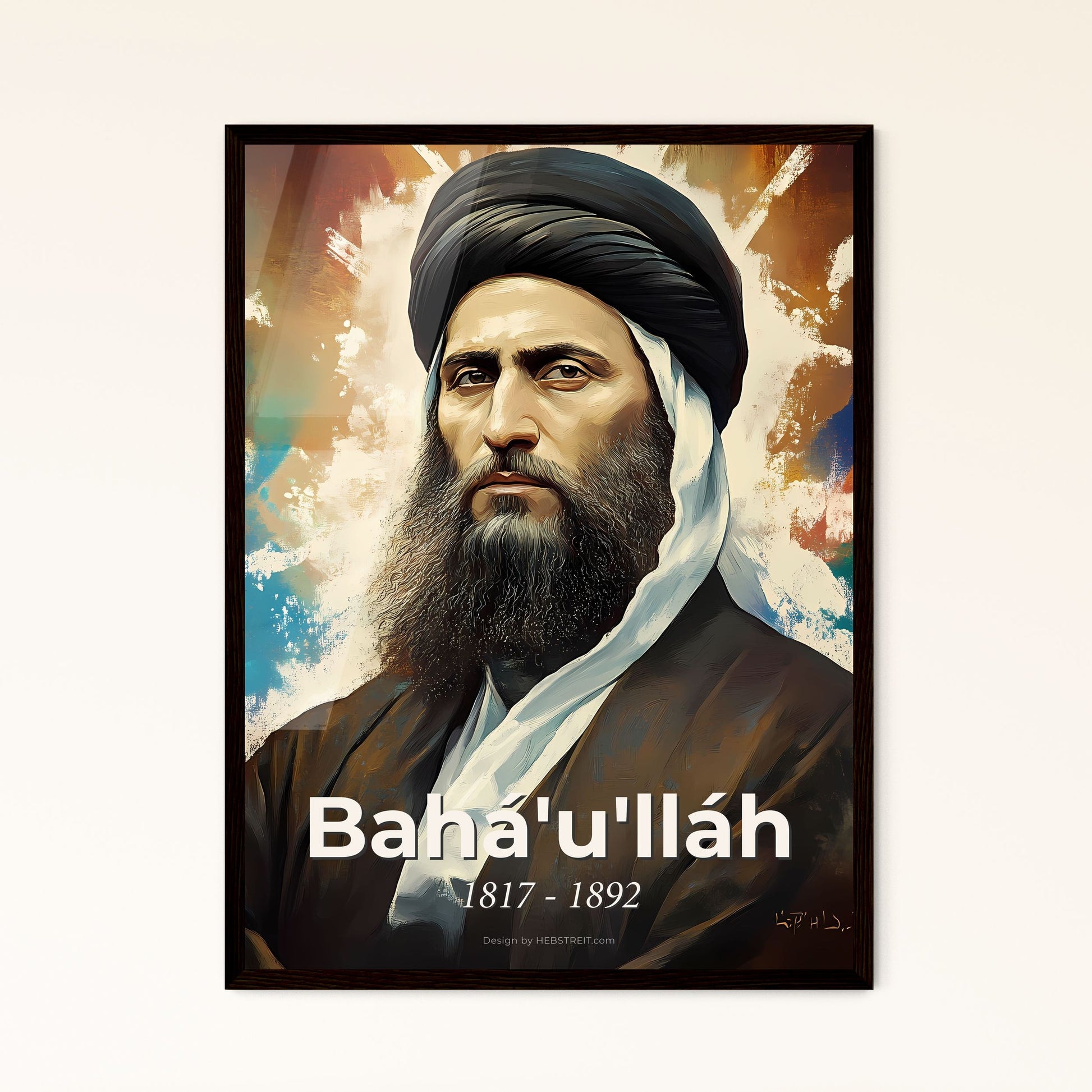
Baháʼu'lláh
 Iran
IranAlso known as: Mírzá Ḥusayn-ʻAlí Núrí, Baháʼu'lláh, The Blessed Beauty
誕生日
November 12, 1817
星座
Scorpio
出生地
Tehran, Persia (now Iran)
年齢
74歳で死去
概要
Baháʼu'lláh, born Mírzá Ḥusayn-ʻAlí Núrí in 1817, was the founder of the Baháʼí Faith, a global religion with 5 to 8 million adherents. He is revered by Baháʼís as the latest Manifestation of God, a messenger who brings divine guidance for the modern age. His writings, numbering over 1,500 works, form the sacred scripture of the Baháʼí Faith and have been translated into hundreds of languages. Central to his message is the unity of humanity, the harmony of science and religion, and the establishment of a just world civilization. Today, the Baháʼí community is active worldwide, working on social and economic development projects, interfaith dialogue, and promoting peace. Baháʼu'lláh's shrine near Acre, Israel, is a pilgrimage site and the holiest place for Baháʼís.
生い立ちと背景
バハオラはテヘランの有力な貴族の家庭に生まれました。父のミルザー・アッバース・ヌーリーはシャーの宰相であり、家族はかなりの富と影響力を持っていました。幼い頃から、バハオラは貧しい人々への顕著な思いやりと深い精神的な傾向を示しました。彼は貴族の子供たちに与えられる伝統的な教育を拒否し、自ら学ぶことを好みましたが、ペルシャ語とアラビア語の文学、哲学、イスラム神秘主義に精通するようになりました。
22歳の時に父が亡くなり、政府は彼に高位の大臣職を提案しましたが、彼は辞退し、代わりに家領の管理と慈善活動に専念しました。彼は惜しみなく困っている人々にお金や食べ物を与え、その寛大さで知られるようになりました。1844年、27歳の時に、新しい神の使者の到来を告げる改革派宗教運動であるバーブ教運動に出会います。バハオラはバーブの教えを受け入れ、すぐに著名な指導者となり、自身の富を使って仲間のバーブ教徒を保護し支援しました。これにより当局の注目を集め、1850年にバーブが処刑された後、バハオラは逮捕され、テヘランの悪名高いシヤー・チャール地下牢に投獄されました。そこで、鎖と暗闇の中で、彼は自身の神聖な使命の最初の予感を経験しました。
キャリアの歩み
転機は1853年、バハオラがシヤー・チャールから解放され、バグダッドへ追放された時に訪れました。その後10年間、彼はバーブの死後混乱状態にあったバーブ教徒の共同体を指導しました。1863年、バグダッド近郊の庭園での隠遁中に、彼は仲間たちに対して、自分がバーブによって約束された者であると公に宣言しました。このリドヴァーン期間として知られる宣言は、バハイ教の正式な始まりを示しています。
オスマン帝国とペルシャの当局は、彼の影響力の増大に警戒し、彼をコンスタンティノープル(イスタンブール)、次にエディルネ、そして1868年にはオスマン領パレスチナのアッカの流刑地へと追放しました。過酷な投獄と数回の暗殺未遂にもかかわらず、バハオラは精力的に執筆を続けました。彼は法の書『キターブ・イ・アクダス』と、重要な神学書『キターブ・イ・イーガーン』を著しました。アッカでは、訪問者を受け入れ、ヴィクトリア女王やナポレオン3世を含む世界の統治者たちに手紙を書き、軍縮と集団安全保障を呼びかけました。彼の晩年はバフジの邸宅で比較的自由に過ごし、1892年に亡くなりました。
キャリア年表
公的イメージとスタイル
バハイ教徒にとって、バハオラはこの時代の神の顕現であり、最高の精神的権威と慈悲を持つ存在です。彼のイメージは、愛情深い父であり、人類のために計り知れない苦しみに耐えた恐れを知らない改革者です。彼はバハイの文献でしばしば「祝福された美」と表現され、その精神的輝きを反映しています。信仰の外では、男女平等や普遍的教育など、主流となるはるか以前に進歩的な社会原則を導入した画期的な宗教指導者として認識されています。歴史家や学者は、その文学的・哲学的深みから彼の著作を研究しています。多様で世界的なバハイ共同体は、彼への崇敬で団結し、祈り、学び、奉仕を通じて彼の生涯と教えを祝っています。世俗的な意味でのファンダムはありませんが、献身的な世界的共同体が数百万人に上ります。
名声とファンダム
The community surrounding Baháʼu'lláh operates not as a fandom in the modern pop-culture sense, but as a global religious movement with deep historical roots and structured spiritual practices. His followers, known simply as Baháʼís, do not engage in fan campaigns, chart pushes, or viral social media rituals typical of celebrity culture. Instead, their devotion is expressed through prayer, study circles, and humanitarian projects focused on social cohesion and unity. While the faith has attracted attention from public figures like Justin Baldoni and Blake Lively, this interest stems from personal biography rather than organized fan efforts centered on the founder himself. There are no unofficial names for his fanbase, nor are there any recorded instances of crowds fainting at his appearances or streets shutting down for his visits, as he lived and died over a century ago without the infrastructure of modern stardom. The legends that define his legacy are theological narratives of exile and persecution, such as his declaration as the Promised One and his journey through prisons in Baghdad, Constantinople, Adrianople, and Acre, which remain solemn historical events rather than viral internet stories. These narratives are commemorated annually during religious observances like the Ascension of Baháʼu'lláh and the Most Great Festival, marking dates of profound spiritual significance for millions worldwide. Despite his immense influence across continents, iFANN's Global Fame Engine has evaluated this person, but they do not currently hold a placement in the published rankings (Global Top 1,000 or a Top-100 scope list). This assessment reflects the unique nature of his fame, which transcends traditional metrics of media consumption and search volume.
興味深い事実と伝説
Born Mírzá Ḥusayn-ʻAlí Núrí in 1817, Baháʼu'lláh carried the honorific 'Mírzá' to denote his noble lineage. Contemporary descriptions often highlight his striking physical presence, noting piercing eyes and a dignified bearing that commanded respect despite his humble attire during exile. He composed his vast corpus of writings using a reed pen and ink, with manuscripts now preserved in archives globally. One of his most revered works, the Hidden Words, contains short aphorisms he claimed were dictated by God. Although he never met the Báb in person, the two maintained correspondence throughout their lives. Baháʼu'lláh endured imprisonment for a total of 40 years across various locations, a period defined by his suffering for the sake of humanity. A defining legend within the Baháʼí tradition recounts his declaration of being the 'Promised One,' a claim that led to his arrest and multiple exiles from Persia to the Ottoman Empire. Another enduring story focuses on his final days at the Mansion of Bahjí in Acre, where he passed away and where his shrine now stands as a place of pilgrimage. These events are not merely folklore but are treated as verified historical facts that shaped the trajectory of the faith he founded.
注目の発言
“The earth is but one country, and mankind its citizens.”
“My purpose is none other than the education of all men.”
“The well-being of mankind, in its ultimately spiritual as well as material aspects, is the object of the Divine Unity.”
“Let your vision be world-embracing, rather than confined to your own self.”
家族と私生活
バハオラは、19世紀のペルシャの慣習に従って3人の妻と結婚しました。最初で主要な妻はアーシヤ・ハーヌムで、彼女は献身と強さで知られる貴族の女性でした。彼女はすべての追放に同行し、不動心の模範とされています。2人の間には7人の子供がいましたが、成人したのは3人だけでした。後にバハイ教を指導したアブドル・バハ、著名な人物であるバヒーヤ・ハーヌム、そして22歳で事故死したミルザー・ミフディーです。バハオラはまた、ファーティマ・ハーヌムとガウハル・ハーヌムと結婚し、さらに子供をもうけました。家族は財産の喪失、離別、そして祈り中に天窓から落ちて亡くなったミルザー・ミフディーの死など、計り知れない苦難に耐えました。アッカでのバハオラの家庭には数人の子供と孫が含まれており、初期のバハイ行政の中核を形成する緊密な共同体を築きました。
注目の関係
バハオラの使命は、バーブ教運動を創始したバーブによって予告されました。バハオラの死後、その子アブドル・バハが彼の著作の公認解釈者となり、バハイ共同体を指導しました。彼の妻アーシヤ・ハーヌムは忠実さの模範として崇敬されています。他の重要人物には、娘のバヒーヤ・ハーヌムと息子のミルザー・ミフディーがいます。
恋愛関係と交際歴
バハオラは1835年頃、最初の妻アーシヤ・ハーヌムと結婚しました。彼女は貴族の娘で、生涯にわたって彼の主要な伴侶であり続けました。2人の間には7人の子供が生まれましたが、幼少期を生き延びたのは3人でした。1849年頃、彼はファーティマ・ハーヌムと結婚し、その後ガウハル・ハーヌムとも結婚しました。3人の妻はすべて彼の追放に同行しました。アーシヤ・ハーヌムは1886年に亡くなり、バハオラは深く悲しみました。彼の結婚は当時の慣習に従ったものであり、家族生活は献身と苦難の共有によって特徴づけられました。
- 既婚Ásíyih Khánum1835 - 1886正妻、アブドル・バハとバヒーヤ・ハーヌムの母。
- 既婚Fatimih Khánum1849 - 1892第二妻、マフディ・ウリヤとして知られる。
- 既婚Gawhar Khánum1849 - 1892第三妻。
死去とその後
死没
May 29, 1892 (74歳没)
死没地
Akká, Ottoman Empire (present-day Israel)
死因
Prolonged illness and fever
Baháʼu'lláh passed away on the evening of May 29, 1892, in the Mansion of Bahjí just outside Akká, bringing an end to a life defined by exile and spiritual revelation. Contemporary accounts describe his final months as marked by severe illness, extreme weakness, and fever, leaving him bedridden in seclusion attended only by family and close companions before he died peacefully after praying and dictating his final writings. Upon his death, the news spread rapidly among Baháʼís globally, with immediate tributes delivered by his son ʻAbdu'l-Bahá, who succeeded him as the leader of the faith and honored his father's teachings. The funeral was a private affair held shortly after his death, where his body was wrapped in a shroud and buried in a simple grave within the garden of the mansion according to his own instructions.
While the location of the grave remains inaccessible to non-Baháʼís due to regional sensitivities, the site became the focal point of pilgrimage and the holiest place in the religion. Following his death, his extensive writings including the Kitáb-i-Aqdas and Gleanings were compiled and translated for global distribution, while ʻAbdu'l-Bahá assumed leadership to guide the growing community. Today, May 29 is observed worldwide as the Ascension of Baháʼu'lláh, a holy day marked by prayer and reflection that continues to anchor the Baháʼí calendar.
総資産(遺産評価額)
Not Publicly Available
iFANN編集チームによる推定
As a 19th-century religious leader rather than a commercial figure, Baháʼu'lláh never accumulated personal wealth in the modern sense. Born into an aristocratic family with significant property, he saw those assets confiscated by the state during his long exile and imprisonment. The iFANN Editorial Team's research traces the financial reality of his life to this total loss of material standing, noting that he lived the remainder of his days relying on the support of followers and the charity of others. Today, the institutions associated with his legacy, including the Shrine of Baháʼu'lláh, are maintained through voluntary contributions from the global Baháʼí community rather than any estate held by the founder himself.
受賞と栄誉
View 2 records, honours and achievements代表作
Founding the Baháʼí Faith
1863 · Founder and Manifestation of God
Kitáb-i-Aqdas
1873 · 作家
Hidden Words
1858 · 作家
Kitáb-i-Íqán
1862 · 作家
キーワード
クイック情報
- 職業
- writer, poet, religious leader
- 生年月日
- +1817-11-12
- 出生地
- Tehran, Persia
- 死没
- +1892-05-29
- 死没地
- Acre, Ottoman Palestine
- 性別
- 男性
- 配偶者
- Ásíyih Khánum, Fatimih Khánum, Gawhar Khanum
- 星座
- Scorpio
個人情報
- 本名
- Mírzá Ḥusayn-ʻAlí Núrí
- 配偶者
- Ásíyih Khánum, Fatimih Khánum, Gawhar Khanum
- 子ども
- Several, including ʻAbdu'l-Bahá, Bahíyyih Khánum, and Mírzá Mihdí
よくある質問
バハオラとは誰で、彼は何をしましたか?
バハオラはいつ、どこで生まれましたか?
バハオラの主な教えは何ですか?
バハオラの最も重要な書物は何ですか?
バハオラはどこに埋葬されていますか?
似た人物
コミュニティに参加
人のファンが話題に