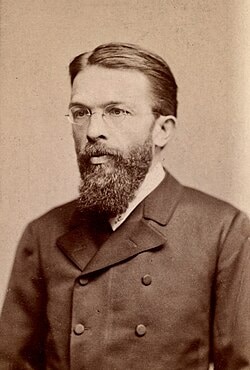
Carl Menger
 Austria
Also known as: Carl Menger Edler von Wolfensgrün
誕生日
February 28, 1840
星座
Pisces
出生地
Neu-Sandec, Kingdom of Galicia and Lodomeria, Austrian Empire (now Nowy Sącz, Poland)
年齢
80歳で死去
概要
Carl Menger was an Austrian economist who founded the Austrian school of economics. His 1871 book Principles of Economics introduced the subjective theory of value and marginal utility, reshaping how economists understand value. Menger argued that value is determined by individuals' preferences, not by labor costs or inherent properties of goods. This directly challenged classical economists like Adam Smith, David Ricardo, and Karl Marx.
Today, Menger's ideas continue to influence economic thought, particularly in entrepreneurship and market process theory. His disciples Eugen von Böhm-Bawerk and Friedrich von Wieser expanded his work, and Friedrich Hayek later stated that the Austrian school's fundamental ideas belong fully to Menger. Though he published relatively few works, their impact has been profound.
生い立ちと背景
カール・メンガーは、オーストリア帝国ガリツィア地方のノイ=ザンデツで、下級貴族の裕福な家庭に生まれました。父アントンは弁護士で、母カロリーネは裕福なボヘミア商人の娘でした。メンガーには二人の兄弟がおり、兄アントンは法学教授で社会主義作家、弟マックスは弁護士でオーストリア議会の自由党議員でした。メンガー家の構成員には職人、音楽家、公務員、陸軍将校が含まれ、全員が彼の生まれる一世代前にボヘミアから移住していました。
メンガーはプラハ大学とウィーン大学で法学と行政学を学びました。ウィーンでの教師の一人に限界価値理論の擁護者であるペーター・ミシュラーがいましたが、当時のメンガーは経済学や学者の道に興味を持っていませんでした。1867年にヤギェウォ大学で法学博士号を取得しました。
学業後、メンガーは1863年から『レンベルガー・ツァイトゥング』の記者として働き始め、1865年11月26日に初版が発行された『ウィーナー・タークブラット』を創刊しました。初期の号では、スキャンダラスなタイトル『ウィーンの永遠のユダヤ人』という匿名小説を掲載しました。1866年3月には政府系新聞『ウィーナー・ツァイトゥング』の経済部に加わり、政府職員として昇進の道を歩みました。
経済記者として働く中で、メンガーは既存の経済理論、特に古典派経済学と、実際の市場での買い手の推論との間に矛盾があることに気づきました。この観察が、彼自身の理論的枠組みを構築する原動力となりました。
キャリアの歩み
1871年、メンガーは主著『経済学原理』(Grundsätze der Volkswirtschaftslehre)を出版しました。この本は限界効用の概念と主観的価値論を導入し、財の価値は人間の欲求との関係から生じると主張しました。この著作はオーストリア学派を創設し、ウィリアム・ジェヴォンズやレオン・ワルラスと並んで限界効用革命の独立した三つの定式化の一つとなりました。
出版の翌年、メンガーはウィーン大学で教授資格を取得しました。1873年に准教授、1879年に正教授に任命され、早期退職までその地位にありました。外国の大学からの招聘は断りました。
1876年から1878年まで、メンガーはオーストリア皇太子ルドルフの個人家庭教師兼相談役を務め、ドイツ、フランス、スイス、イギリスを広く旅行しました。1883年には『社会科学の方法に関する研究』を出版し、理論研究をドイツ歴史学派から擁護して方法論争を引き起こしました。
1900年、メンガーはオーストリア貴族院の終身議員に任命されました。1903年に教授職を退き、1921年に亡くなるまで研究に専念しました。
キャリア年表
公的イメージとスタイル
名声とファンダム
Carl Menger, the founder of the Austrian School of Economics, is not currently ranked in iFANN's Global Fame Engine. Despite his monumental influence on economic thought, the engine has evaluated him as unranked, meaning he holds no placement in the published Global Top 1,000 or any Top-100 scope list. This absence reflects the quiet, academic nature of his legacy rather than any lack of significance.
His admirers form an intellectual community rather than a conventional fanbase, and no formal fandom name exists. The Austrian School tradition itself, with institutions like the Mises Institute and the Foundation for Economic Education, serves as the closest analogue, preserving and promoting his work with near-reverential dedication. Rituals such as the Carl Menger Essay Contest and scholarly conferences mark his legacy, but these are academic observances, not fan gatherings.
Menger's fame, then, is of a peculiar kind, profound within economics, yet largely invisible to the broader public. The legendary tales surrounding him are intellectual: the 1871 publication of Principles of Economics, the bitter Methodenstreit with the German Historical School, and his insights into spontaneous order. These stories are retold in classrooms and seminars, not in stadiums. His standing is that of a founding figure whose ideas continue to shape discourse, even as the global fame metrics pass him by.
興味深い事実と伝説
Carl Menger Edler von Wolfesgrün, though he and his brothers never used their title of nobility, was a true polymath in his youth, intellectually vigorous into old age. He founded the journal Wiener Tagblatt and published an anonymous novel titled Der ewige Jude in Wien in its early issues. Initially uninterested in economics or an academic career, he preferred non-academic writing.
Menger's 1871 Principles of Economics is the foundational legend of the Austrian School, born from his observations of real market behavior that contradicted classical theory. The Methodenstreit, his bitter methodological dispute with Gustav von Schmoller, became a heroic tale of theory versus bureaucratic establishment, cementing the school's outsider identity. His 1883 Investigations into the Method of the Social Sciences introduced the concept of spontaneous order, explaining how institutions like money emerge without design. A peculiar legend involves obituaries for other men named Carl Menger, occasionally surfacing and causing confusion about the economist's 1921 death.
注目の発言
“The value of goods arises from their relation to our needs, and is not something inherent in the goods themselves.”
“In real life there are only concrete goods and concrete wants.”
“The degree of mankind's economic progress will be proportional to the advancement of human knowledge.”
家族と私生活
注目の関係
恋愛関係と交際歴
カール・メンガーは結婚していたが、妻に関する詳細は標準的な伝記資料では広く記録されていない。夫妻には1902年生まれの一人息子カール・メンガーがおり、彼は数学者となった。メンガーは1921年2月26日にウィーンで死去した。信頼できる伝記資料には、他の恋愛関係は記録されていない。
- 既婚メンガーの妻に関する詳細は、標準的な伝記資料では広く記録されていない。
死去とその後
死没
February 26, 1921 (80歳没)
死没地
Vienna, Austria
死因
Natural causes associated with advanced age
Carl Menger spent his final days in Vienna, continuing his academic work and writing until shortly before his passing. He died on February 26, 1921, at the age of eighty following a long illness that was consistent with natural causes associated with advanced age. The circumstances were treated as a peaceful departure by those who witnessed them. The economic community responded with profound respect, recognizing him immediately as the founder of the Austrian School and a principal architect of the Marginalist Revolution. Tributes focused on his theoretical contributions, particularly the subjective theory of value and marginal utility, which he co-discovered alongside William Stanley Jevons and Léon Walras. While specific details regarding the date and location of his funeral service remain unrecorded in standard biographical sources, it is historically established that he was buried in Vienna.
Notable figures within his intellectual circle, including Ludwig von Mises and Friedrich Hayek, mourned his loss as the end of an era for classical liberal economic thought. His posthumous influence has been immense, with institutions such as the Samford University Brock School of Business establishing the Carl Menger Essay Contest to honor his legacy. The Mises Institute continues to publish extensively on his life and works, solidifying his status as the sole founder of the Austrian School. Modern commentary frequently cites his theories in relation to libertarian movements.
受賞 (1)
メンガーは1900年にオーストリア貴族院の終身議員に任命され、これは帝国議会上院に終身席を得る大きな栄誉であった。また、他にも多くの栄誉や賞を受けたが、具体的な称号は入手可能な資料には詳述されていない。
1900 · 名誉職
代表作
Principles of Economics
1871 · Author
Investigations into the Method of the Social Sciences
1883 · Author
キーワード
出典
クイック情報
- 職業
- economist, professor
- 生年月日
- +1840-02-28
- 出生地
- Neu-Sandec, Galicia, Austrian Empire
- 死没
- +1921-02-26
- 死没地
- Vienna, Austria
- 性別
- 男性
- 星座
- Pisces
- Education
- Doctorate in law, Jagiellonian University (1867)
個人情報
- 本名
- Carl Menger Edler von Wolfensgrün
- 子ども
- Karl Menger
- 学歴
- Doctorate in law from Jagiellonian University in Kraków (1867)
よくある質問
カール・メンガーは何で知られているか?
カール・メンガーは結婚していたか?子供はいたか?
カール・メンガーはどのように亡くなったか?
カール・メンガーの最も有名な著書は何か?
カール・メンガーは何歳で亡くなったか?
似た人物
コミュニティに参加
人のファンが話題に