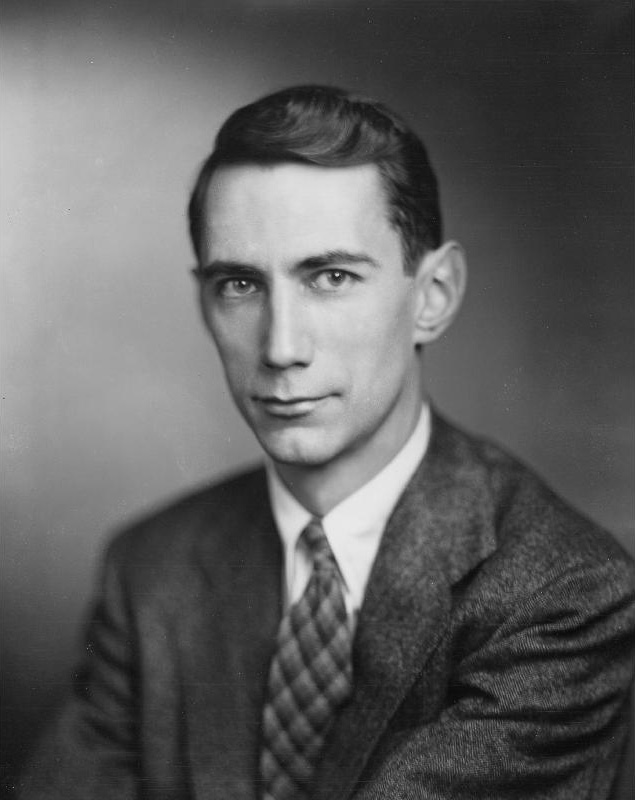
Claude Shannon
mathematician•electrical engineer•cryptographer
Also known as: Father of Information Theory, Claude Elwood Shannon
誕生日
April 30, 1916
星座
Taurus
出生地
Petoskey, Michigan
年齢
84歳で死去
身長
5 ft 10 in (178 cm)
概要
クロード・エルウッド・シャノンは、アメリカの数学者、電気技師、暗号研究者であり、情報理論の父、そしてデジタル時代の主要な設計者の一人として称賛されています。1948年の画期的な論文で示された彼の中心的な洞察は、あらゆる種類の情報が測定可能であり、彼がビットと呼ぶ単位で定量化でき、ノイズの多いチャネルでも確実に伝送できるというものでした。この枠組みは、データ圧縮や誤り訂正からインターネット自体の設計に至るまで、現代の通信の本質的にすべての基盤となっています。シャノンはそれ以前にも、若い大学院生として、ブール代数の論理が電気スイッチ回路で表現できることを示し、すべてのデジタルコンピュータの概念的基盤を築き、すでに歴史を作っていました。
同僚たちは、彼の厳密さと同じくらい遊び心のある好奇心を記憶しており、彼はジャグリングをしたり、ベル研究所の廊下を一輪車で走り回ったり、純粋な楽しみのために奇抜な機械を作ったりしました。深遠な理論と絶え間ない試行錯誤の融合が、彼の研究に独特の特徴を与えました。彼が可能にした技術よりも一般にははるかに知名度は低いものの、エンジニアや数学者の間では20世紀で最も重要な思想家の一人に数えられています。彼のアイデアは、コンピューティングと通信の基盤として今もなお重要です。
生い立ちと背景
シャノンはミシガン州ゲイロードという小さな町で育ちました。父親は実業家兼検認判事、母親は語学教師で高校の校長を務めていました。彼は幼い頃から機械的な才能を示し、模型飛行機、自宅から半マイル離れた友人の家とつなぐ電信システム、ラジコン船などを製作しました。夏休みにはウェスタンユニオンでメッセンジャーとして働きました。1932年にゲイロード高校を卒業後、ミシガン大学に入学し、1936年に電気工学と数学の二つの学士号を取得しました。
転機はMITで訪れました。シャノンはバネバー・ブッシュの微分解析機の研究助手として働いていました。1937年の修士論文『継電器とスイッチ回路の記号的解析』で、ブール代数を電気スイッチ回路の設計に応用できることを示しました。この洞察は、すべてのデジタルコンピュータの概念的基盤となりました。この論文は1938年に発表され、20世紀で最も重要な修士論文と呼ばれることがよくあります。
キャリアの歩み
シャノンは1941年にベル電話研究所に入社し、最も影響力のある研究を行いました。第二次世界大戦中はアラン・チューリングと協力して暗号研究に従事し、安全な音声暗号化システムに取り組みました。1948年、ベルシステム技術雑誌に『通信の数学的理論』を発表し、情報理論、ビットの概念、エントロピー、チャネル容量を導入しました。この論文は電気通信とデータサイエンスに革命をもたらしました。
翌年には『秘密システムの通信理論』を発表し、暗号学の数学的基礎を確立し、理論上解読不可能なワンタイムパッドシステムを証明しました。1950年には『チェスをプレイするためのコンピュータのプログラミング』を発表し、これは人工知能に関する初期の論文の一つです。1956年にはダートマス人工知能会議を共同開催し、同年MITの教授陣に加わり、1966年に退職するまで在籍しました。数多くの栄誉の中でも、1966年に国家科学勲章、1985年に京都賞を受賞しています。
キャリア年表
公的イメージとスタイル
シャノンは、だらしなくしわくちゃのスーツ、分厚い縁の眼鏡、パイプをくわえた、カジュアルでしばしばだらしない外見で知られていました。一輪車に乗ったりジャグリングをしている写真がよく撮られ、 brilliant だが風変わりな天才としてのイメージを固めました。情報理論コミュニティは彼を創設者として崇拝しており、主要な会議では毎年シャノン講演会が開催され、IEEE情報理論協会の最高賞は彼の名を冠しています。ドキュメンタリーや伝記は、彼の数学的厳密さと子供のような好奇心の組み合わせを強調しています。彼は、深遠であると同時に遊び心あふれる「マッドサイエンティスト」的な人物として描かれています。
名声とファンダム
Claude Shannon stands as the 21st most famous person in AI, a standing confirmed by the iFANN Global Fame Rankings for August 2026. This position holds steady from the previous cycle, cementing his status not merely as a historical figure but as a living presence in modern computation. The iFANN Global Fame Rankings track global attention across media coverage, search trends, and consumption signals worldwide to determine these placements.
While he lacks a formal fandom name, the community that reveres him is distinctively professional yet deeply devoted. Engineers, computer scientists, and historians of technology form his audience, engaging through scholarly admiration rather than chart pushes or birthday billboards. Their devotion manifests in projects like the biographical work A Mind at Play, which brought his life story to a broader public, and digital recreations of his inventions such as Greg Sadetsky's restoration of the Minivac 601 relay computer. A unique layer of modern folklore has emerged through the AI chatbot Claude, developed by Anthropic, which explicitly honors the mathematician who built the theoretical foundation for artificial intelligence. This connection introduces his name to new generations, bridging the gap between mid-century Bell Labs and contemporary machine learning without a single organized fan campaign.
興味深い事実と伝説
Shannon was an accomplished juggler who frequently rode a unicycle through the halls of Bell Labs while juggling. He constructed a device known as the "ultimate machine," a box with a switch that, when activated, triggered a mechanical hand to flip the switch off. His playful engineering also produced Theseus, a maze-solving mouse capable of learning navigation paths, and the Throbac computer, which performed calculations using Roman numerals.
Legends about his financial acumen persist alongside his eccentricities. It is widely retold that he outperformed 1,025 out of 1,026 mutual funds by applying information theory strategies, specifically the Kelly Criterion, though he never chased wealth for its own sake. Another enduring story highlights his role as the Father of Information Theory; his 1948 paper introduced the bit and established the mathematical laws of communication, effectively inventing the digital age. Today, the concept of the Shannon Limit remains a cornerstone of telecommunications, defining the maximum data transmission rate over any channel.
注目の発言
“Information is the resolution of uncertainty.”
“I visualize a time when we will be to robots what dogs are to humans, and I'm rooting for the machines.”
“The best way to have a good idea is to have lots of ideas.”
“I have always been interested in the relationship between information and entropy. The concept of information is a fundamental one, like energy.”
“I'm more interested in the problem than the solution.”
家族と私生活
シャノンの父クロード・シニアは実業家兼検認判事、母メイベル・ウルフ・シャノンは語学教師で高校の校長でした。妹のキャサリンが一人いました。祖父は発明家で農家であり、洗濯機やさまざまな農具を設計し、これがシャノンの幼い頃の工作に影響を与えました。シャノンは1940年にノーマ・バーズマンと結婚しましたが、1941年に離婚。1949年にメアリー・エリザベス(ベティ)・ムーアと結婚しました。ベティはベル研究所の技術アナリストで、支援的なパートナーであり協力者でもありました。3人の子供がいます:ロバート・ジェームズ(1952年生まれ)、アンドリュー・ムーア(1954年生まれ)、マルガリータ・キャサリン(1957年生まれ)。家族はマサチューセッツ州ウィンチェスターに住んでいました。
注目の関係
シャノンは第二次世界大戦中、ベル研究所で暗号理論に関してアラン・チューリングと協力しました。MITでの指導教官はヴァネヴァー・ブッシュであり、彼の微分解析機で研究しました。情報理論の論文の書籍版をウォーレン・ウィーバーと共著しました。ジョン・マッカーシーと共にダートマス会議を創設し、MITではマービン・ミンスキーやノーバート・ウィーナーと同僚でした。
恋愛関係と交際歴
シャノンは1940年にノーマ・バーズマンと結婚しました。彼女は数学者であり、後に脚本家になりました。結婚生活は短く、シャノンの仕事への集中とノーマの政治活動により緊張しました。1941年に子供なく離婚しました。1949年にベル研究所のテクニカルアナリストであったメアリー・エリザベス・“ベティ”・ムーアと結婚しました。3人の子供をもうけ、2001年にシャノンが亡くなるまで一緒にいました。ベティは研究を支える協力的なパートナーでした。2026年現在、シャノンは故人であり、死亡時にはベティと結婚していました。
- 既婚Norma Barzman1940 - 1941短い結婚生活。ノーマは数学者で脚本家。個人的な相違により離婚。
- 既婚Betty Shannon1949 - 2001現在ベル研究所で出会い、シャノンの死まで52年間結婚。3人の子供。
死去とその後
死没
February 24, 2001 (84歳没)
死没地
Bedford, Massachusetts
死因
Alzheimer's disease
Claude Elwood Shannon died on February 24, 2001, at his home in Bedford, Massachusetts. He was eighty-four years old when Alzheimer's disease claimed him, a condition diagnosed several years prior that marked the end of his long decline. His final days were spent in the quietude of the residence he had occupied since retiring from MIT in 1978, far removed from the laboratories where he once reshaped the world. The scientific community mourned with profound reverence, as MIT issued an immediate press release honoring him as a pioneer who laid the foundations for modern computing and the digital revolution.
John Horgan observed in Cross-Check that no scientist possessed a greater impact-to-fame ratio, highlighting the unique position of a genius who remained relatively obscure to the general public despite his monumental contributions., his legacy has continued to grow in the decades following his passing. The IEEE Information Theory Society established the Claude E. Shannon Award to honor recipients decades after his death, and his name became the eponym for the Claude family of large language models developed by Anthropic. Posthumous works like How Claude Shannon Invented the Future appeared in Quanta Magazine.
総資産(遺産評価額)
$25 Million
iFANN編集チームによる推定
Per iFANN's editorial analysis, Claude Shannon's estate is estimated at $25 million as of 2026. The bulk of this wealth originated from his salary at Bell Labs and his professorship at MIT, supplemented by patent royalties from inventions including a secure communications system. Known as a savvy investor, Shannon managed his finances with precision, and his estate continues to generate income through licensing of his information theory work and book sales. The estate is currently managed by his three children, Robert, Andrew, and Margarita. Revenue streams include posthumous reprints, licensing of the Shannon name and image, and distributions from the family trust.
受賞 (12)
シャノンは1939年に修士論文でアルフレッド・ノーブル賞を受賞。スチュアート・バランタイン・メダル(1955年)、IEEE栄誉賞(1966年)、国家科学勲章(1966年)、ハーヴェイ賞(1972年)、京都賞基礎科学部門(1985年)を受賞。IEEE情報理論学会は最高賞をクロード・E・シャノン賞と名付け、1972年に彼が最初の受賞者となりました。2004年に死後、全米発明家殿堂入りしました。
1985 · 基礎科学
Information theory
1982 · IEEE
Information theory and computing
代表作
Information Theory
1948 · Founder
Digital Circuit Design
1937 · パイオニア
Mathematical Cryptography
1949 · Founder
Artificial Intelligence
1956 · 共同創業者
キーワード
クイック情報
個人情報
- 本名
- Claude Elwood Shannon
- 身長
- 5 ft 10 in (178 cm)
- 配偶者
- Betty Shannon, Norma Barzman
- 子ども
- 3
- 学歴
- University of Michigan (B.S. in Electrical Engineering and Mathematics, 1936); MIT (M.S. in Electrical Engineering, 1937; Ph.D. in Mathematics, 1940)
よくある質問
クロード・シャノンは何を発明しましたか?
クロード・シャノンはノーベル賞を受賞しましたか?
クロード・シャノンはどのように亡くなりましたか?
クロード・シャノンの最も有名な論文は何ですか?
情報理論の父は誰ですか?
コミュニティに参加
人のファンが話題に