 Germany
概要
生い立ちと背景
1844年、プロイセン領ザクセンの小さな村レッケンで生まれたフリードリヒ・ニーチェは、ルター派牧師の長男でした。彼がわずか5歳のときに父が亡くなり、家族は敬虔な宗教的家庭で、母、祖母、そして叔母たちに育てられました。若きフリードリヒは非常に信心深く、クラスメートから「小さな牧師」と呼ばれていました。
彼は学業に優れ、1858年から1864年まで名門校プフォルタ寄宿学校に通い、ギリシャ語とラテン語の厳格な古典教育を受けました。その後、ボン大学で神学と古典文献学を学びましたが、学問的な雰囲気に窮屈さを感じ、ライプツィヒ大学に転校しました。そこで彼は才能を開花させ、ディオゲネス・ラエルティオスに関するエッセイで賞を受賞し、教授フリードリヒ・リッチュルの注目を集めました。
1867年、ニーチェはプロイセン騎兵隊に入隊しましたが、乗馬中の事故で慢性的な健康問題が悪化し、除隊となりました。彼の学問的将来性は非常に高く、1869年、わずか24歳で博士号を取得する前に、バーゼル大学の古典文献学教授に任命されました。
キャリアの歩み
ニーチェの経歴は、1872年の『悲劇の誕生』の出版で劇的に転換しました。これは文献学と哲学を融合させた挑発的な書で、ギリシャ芸術におけるアポロン的秩序とディオニュソス的混沌の融合を主張するものでした。この本は物議を醸し、一部の学者を遠ざけましたが、彼の哲学プロジェクトの始まりとなりました。
1879年に健康悪化のためにバーゼルを辞した後、ニーチェは最も多作な時期に入りました。1883年から1885年にかけて、彼の最も有名な著作『ツァラトゥストラはかく語りき』を執筆しました。これは詩的で聖書的な文体で書かれています。続いて『善悪の彼岸』(1886年)と『道徳の系譜』(1887年)を発表し、伝統的な道徳的前提を体系的に解体しました。
『偶像の黄昏』や『アンチクリスト』(ともに1888年)を含む後期の著作は、ますます過激になりました。1889年、トリノで精神崩壊を起こしました。伝えられるところによると、馬が鞭打たれるのを目撃したことがきっかけでした。彼は回復することなく、残りの11年間を母と妹の世話になって過ごしました。
キャリア年表
公的イメージとスタイル
名声とファンダム (iFAMOUS Rankings)
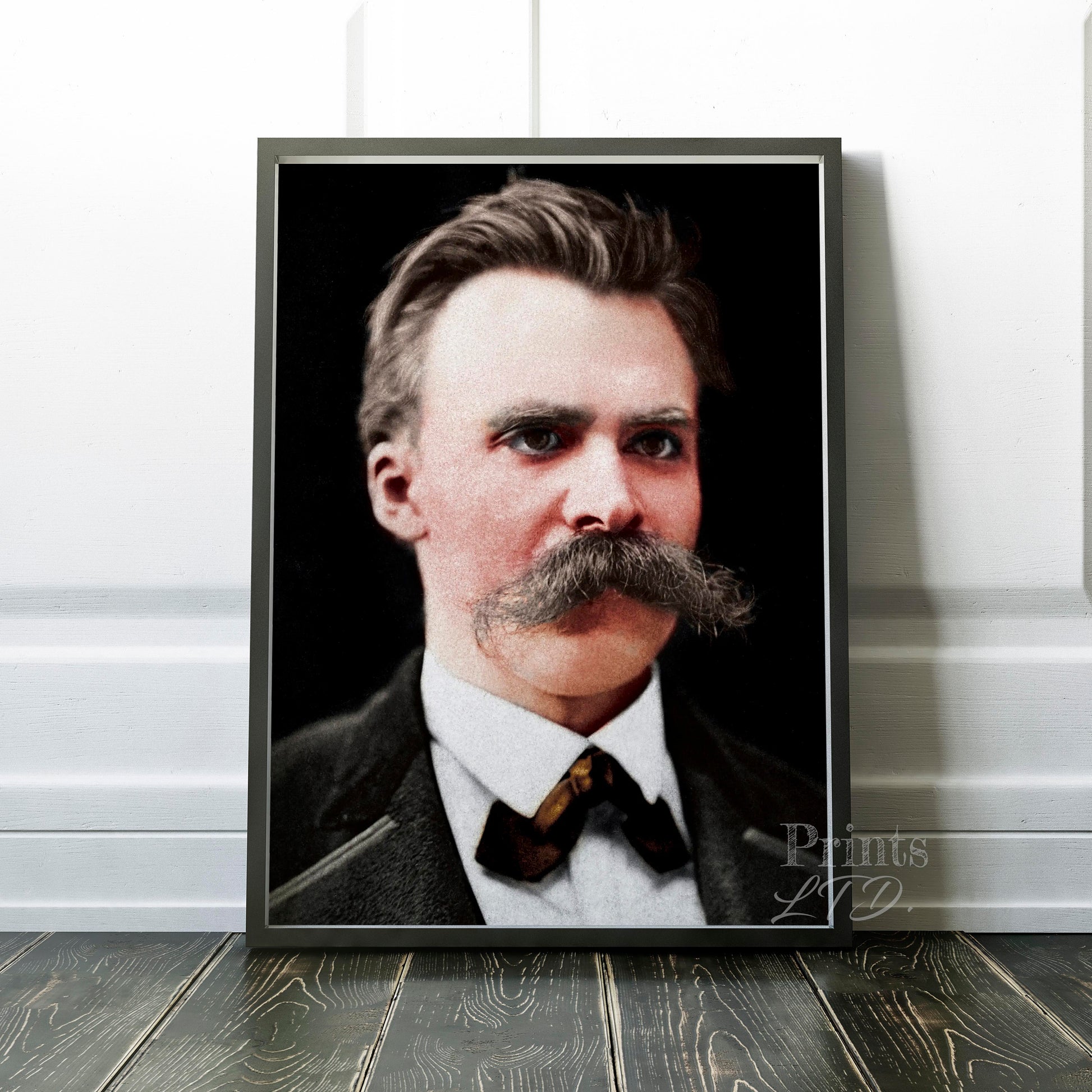
The stern gaze and massive mustache of Friedrich Nietzsche have become a global shorthand for intellectual rebellion, securing his place among the most recognizable figures in history. According to the iFANN Global Fame Rankings, he is the 374th most famous person in the world, holding steady from the previous cycle. His influence extends deep into German culture, where he ranks as the 15th most famous person in Germany and stands as the 14th most famous person from Germany. Within the specific realm of Art & Design, his provocative aphorisms and philosophical impact elevate him to the 6th most famous person in Art & Design. These placements reflect a legacy that transcends academic circles, resonating across media coverage and consumption signals worldwide. Unlike modern celebrities, Nietzsche never courted a fanbase with public appearances or tours. His followers exist as a scattered collective of readers rather than an organized movement with a formal name. Communities on platforms like Reddit and Goodreads serve as digital gathering points where users debate his texts and share interpretations, but these are informal clusters of self-directed study. There are no official fan clubs, charity drives, or centralized campaigns coordinating efforts in his honor. The closest equivalent to modern fandom rituals involves the viral sharing of his quotes on social media, often paired with images of his face, turning his words into personal branding tools for individuals navigating their own existential crises.
興味深い事実と伝説
Friedrich Nietzsche was born on October 15, a date that coincided with the birthday of King Friedrich Wilhelm IV of Prussia, the namesake who inspired the philosopher's first name; Nietzsche kept a photograph of this monarch on his desk throughout his life. An accomplished pianist, he improvised music during his student years, though he never formally composed a work. His famously bushy mustache, grown while serving in the military, became his trademark visage. Though he remained unmarried, he once proposed to the Russian intellectual Lou Salomé, only to be rejected. His friendship with composer Richard Wagner eventually soured over Wagner's Christian turn in Parsifal. Beyond these biographical facts, lore surrounds his final days in Turin, Italy, in January 1889. A widely retold story claims he threw his arms around a whipped horse, wept, and collapsed in Piazza Carlo Alberto, an event that cemented his image as a tragic madman. Another enduring legend implicates his sister, Elisabeth Förster-Nietzsche, in distorting his legacy by editing unpublished manuscripts like The Will to Power to align with German nationalism and anti-Semitism. Recent discussions also correct the misinterpretation of his maxim, "What doesn't kill you makes you stronger," clarifying it appeared in Twilight of the Idols as a complex psychological observation rather than a universal law of resilience.
注目の発言
“God is dead.”
“That which does not kill us makes us stronger.”
“He who has a why to live can bear almost any how.”
“Without music, life would be a mistake.”
“You must have chaos within you to give birth to a dancing star.”
家族と私生活
フリードリヒ・ニーチェは、ルター派牧師カール・ルートヴィヒ・ニーチェとフランツィスカ・エーラーの息子でした。父は1849年、フリードリヒがわずか5歳のときに亡くなりました。彼には1846年生まれの妹エリーザベトと、幼児期に亡くなった兄ヨーゼフがいました。
ニーチェは結婚せず、子供もいませんでした。最も親しい家族は妹のエリーザベトでしたが、彼の仕事をめぐってしばしば対立しました。1889年に彼が精神崩壊した後、エリーザベトが彼の世話を引き受け、後に彼の文学遺産を管理し、彼の著作を自分自身の国家主義的・反ユダヤ主義的見解に合わせて編集しました。
最晩年、ニーチェはナウムブルクで母と暮らし、1897年に母が亡くなるまでそこで過ごしました。その後、エリーザベトは彼をヴァイマルに移しました。
注目の関係
恋愛関係と交際歴
ニーチェは結婚しなかったが、いくつかの重要な関係を持っていた。1882年、彼は聡明なロシアの知識人ルー・サロメに求婚したが、彼女は拒否し、その拒絶は彼を深く打ちのめした。
それ以前には、リヒャルト・ワーグナーの妻コジマ・ワーグナーと親しく、一部の伝記作家は彼が彼女に深い片思いを抱いていたと示唆している。
- 噂ありLou Salomé1882 - 1882彼女に求婚したが、拒否された。
- 噂ありCosima Wagner1872 - 1876親しい友情を育み、おそらくは片思いだった。
死去とその後
死没
August 25, 1900 (55歳没)
死没地
Weimar, Germany
死因
Stroke or cerebral hemorrhage (reported)
The family of Friedrich Nietzsche and his attending physicians announced his passing on August 25, 1900, at their home in Weimar, Germany. The philosopher had spent the last eleven years of his life in a state of profound mental collapse following a catastrophic breakdown in Turin in 1889, leaving him unable to speak or recognize those around him until his final days. While contemporary records attributed the end to a stroke or cerebral hemorrhage, modern medical re-evaluations have since suggested alternative pathologies such as neurosyphilis, frontotemporal dementia, or a brain tumor. Public reaction remained subdued at the time due to his obscurity and the scandal of his condition, yet tributes soon emerged from intellectual peers like Sigmund Freud and Rainer Maria Rilke who recognized his penetrating insight into human nature.
A private funeral service followed two days later in the Protestant cemetery in Röcken, attended only by his mother Franziska, his sister Elisabeth, and a small circle of friends including the philologist Paul Deussen. Posthumously, his legacy exploded through the aggressive management of his estate by Elisabeth Förster-Nietzsche, who edited unpublished notes for works like The Will to Power to align with her own nationalist views before the rights eventually passed to academic institutions.
総資産(遺産評価額)
$5 Million
iFANN編集チームによる推定
Nietzsche lived modestly, often facing poverty, and earned little from his books during his lifetime. His income relied primarily on his university salary and a small pension following his resignation. After his death, his sister Elisabeth managed his estate and posthumously published works like The Will to Power, which she edited to fit her own agenda. The estate has generated significant revenue through royalties from his many published works, which remain in print today. Per iFANN's editorial analysis, the estate's value is estimated at $5 Million as of 2026, based on ongoing book sales and licensing of his writings.
受賞と栄誉
代表作
Thus Spoke Zarathustra
1883 · 作家
Beyond Good and Evil
1886 · 作家
On the Genealogy of Morals
1887 · 作家
The Birth of Tragedy
1872 · 作家
キーワード
出典
クイック情報
- 職業
- philosopher, poet, writer
- 生年月日
- October 15, 1844
- 出生地
- Röcken, Prussia
- 死没
- August 25, 1900
- 死没地
- Weimar, Germany
- 性別
- 男性
- 星座
- Libra
- Full Birth Name
- Friedrich Wilhelm Nietzsche
個人情報
- 本名
- Friedrich Wilhelm Nietzsche
- 学歴
- University of Bonn, University of Leipzig
よくある質問
フリードリヒ・ニーチェはいつ、どこで生まれたのですか?
フリードリヒ・ニーチェは何で知られていますか?
フリードリヒ・ニーチェの主な著作は何ですか?
フリードリヒ・ニーチェの死因は何ですか?
フリードリヒ・ニーチェには家族がいましたか?
コミュニティに参加
人のファンが話題に