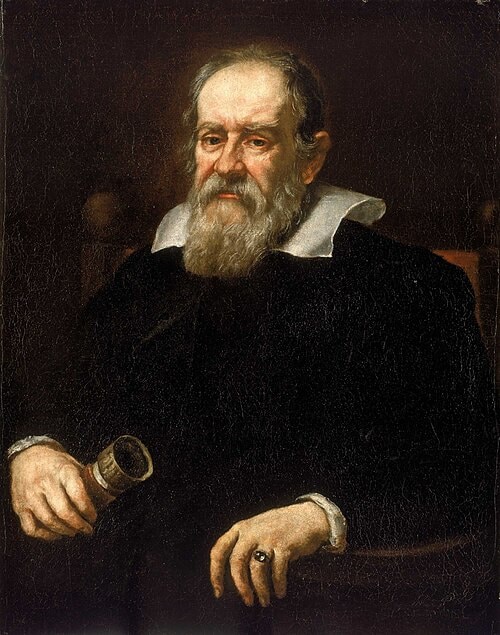
Galileo Galilei
 Italy
Italyastronomer•philosopher•mathematician
誕生日
February 15, 1564
星座
Aquarius
出生地
Pisa, Duchy of Florence (now Italy)
年齢
77歳で死去
身長
5 ft 6 in (168 cm)
概要
ガリレオ・ガリレイはイタリアの天文学者、物理学者、技術者であり、近代科学の父、そして科学的方法そのものの父と称されることが多い。科学革命の重要人物として、彼は自然を権威ではなく観察、測定、数学によって理解すべきだと主張し、そのアプローチは人類が世界を探求する方法を変革した。彼の業績は中世哲学と現代物理学の橋渡しをした。ガリレオは多くの分野で画期的な貢献をし、運動、自由落下、慣性を後の物理学を先取りする形で研究し、望遠鏡を劇的に改良して数々の驚くべき天文学的発見を行った。彼は月の山やクレーター、金星の満ち欠け、黒点、木星の四大衛星を観測し、これらの観測は太陽を中心とする宇宙モデルであるコペルニクス説を強力に裏付ける証拠となった。この地動説の擁護により、彼はカトリック教会と有名な対立を引き起こし、教会はその考えを聖書に反するとみなした。異端審問にかけられ、彼は棄教を強いられ、晩年を自宅軟禁下で過ごした。この対立は科学と教義の緊張を象徴する不朽のものとなった。彼の科学的遺産は消えることなく、ガリレオ・ガリレイは科学史における最も重要な人物の一人として記憶されている。
生い立ちと背景
ガリレオはピサで、著名なリュート奏者で音楽理論家のヴィンチェンツォ・ガリレイとジュリア・アンマナーティの間に生まれた。6人兄弟の長男だったが、成人したのは3人だけだった。父は経験的な調査を重視し、その特性をガリレオに受け継がせた。ガリレオはフィレンツェ近郊のヴァッロンブローザのサンタ・マリア修道院で教育を始め、文法、論理学、修辞学を学んだ。最初は聖職者になることを考えたが、父は彼を医学へと方向転換させた。1581年、17歳でピサ大学に入学し、医学を学んだ。転機は、ピサ大聖堂で揺れるランプを観察し、自分の脈拍でその揺れを計測した時に訪れた。彼は振り子の等時性、すなわち振れ幅に関わらず振動周期が一定であることを発見した。これが彼の最初の科学的洞察となった。すぐに医学を捨て、数学と自然哲学に専念し、アルキメデスの研究を紹介した数学者オスティリオ・リッチのもとで学んだ。1585年、学位を取得せずに大学を去ったが、数学の個人指導を始め、最初の著作『ラ・ビランチェッタ』(小さな天秤)を出版し、密度を測定するための流体静力学的天秤について記述した。
キャリアの歩み
1589年、25歳のとき、ガリレオはピサ大学の数学教授に任命されました。彼は落下体に関する有名な(おそらく伝説的な)ピサの斜塔実験を行い、アリストテレスの物理学に挑戦しました。1592年、彼はパドヴァ大学に移り、18年間にわたって非常に生産的な時期を過ごし、幾何学、力学、天文学を教え、国際的な名声を得ました。1604年、彼はケプラーの超新星を観測し、視差の議論を用いてそれが月の彼方にあることを証明し、天の不変性の教義を覆しました。1609年、彼は望遠鏡を3倍から20倍に劇的に改良し、それを天に向けました。彼は月の山々を発見し、天の川を星に分解し、木星を周回する4つの衛星(現在ガリレオ衛星と呼ばれる)を発見しました。1610年、彼は『星界の報告』(Sidereus Nuncius)を出版し、ヨーロッパ中で瞬く間に有名になりました。彼はフィレンツェのコジモ2世デ・メディチ大公の主席数学者兼哲学者に任命されました。1610年から1613年の間に、彼は金星の満ち欠け、黒点、土星の環(彼は耳と表現した)を発見しました。1616年、カトリック教会は地動説を愚かで不合理であると宣言し、彼にコペルニクス理論を放棄するよう正式に警告しました。1623年、彼は科学的方法論に関する論争的な著作『偽金鑑識官』(The Assayer)を出版しました。1632年、彼は『二大世界体系に関する対話』(Dialogue Concerning the Two Chief World Systems)を出版し、コペルニクス体系とプトレマイオス体系を比較しました。教皇の許可を得ていたものの、この本のコペルニクス寄りの偏向は明白でした。1633年、彼はローマ異端審問所で裁判にかけられ、異端の強い疑いがあるとされ、撤回を強要され、終身自宅軟禁の判決を受けました。アルチェトリの別荘での自宅軟禁中、彼は密かに『新科学対話』(Discourses and Two New Sciences)を執筆し、力学と材料強度に関する生涯の研究をまとめました。原稿はオランダに密輸され、1638年に出版されました。彼は1642年1月8日、アルチェトリで失明し、終身自宅軟禁のまま死去しました。教会は公の埋葬を拒否し、彼の遺体は最終的に1737年にフィレンツェのサンタ・クローチェ聖堂に改葬されました。
キャリア年表
公的イメージとスタイル
ガリレオは普遍的にルネサンス科学者の典型として描かれている。白いひげをたくわえ、ローブをまとい、天を指さす姿である。彼のイメージは科学的反逆と自由な探求の闘争の代名詞となっている。メディアでは、科学の殉教者、 brilliant だが頑固な天才、そして理性と教義の対立の象徴として描かれている。映画には『ガリレオ』(1975年、ジョセフ・ロージー監督)や多数のドキュメンタリーがある。公式なファンダム名は存在しないが、非公式に「ガリレアン」が使われる。学者、科学愛好家、歴史ファンは、フィレンツェの毎年恒例のガリレオ・フェスティバルや国際天文年のガリレオ・ナイトイベントを通じて彼の遺産を称えている。ソーシャルメディア上のトリビュートアカウントは、一人称で反抗的で科学的に好奇心旺盛な口調を採用するのが一般的である。
名声とファンダム
Galileo Galilei remains a towering figure in the annals of history, recognized not merely as a scientist but as a global icon whose influence spans four centuries. His enduring presence is quantified by the iFANN Global Fame Rankings, which place him as the 22nd most famous person from Italy. This ranking reflects a sustained level of attention that tracks global engagement across media coverage, historical study, and cultural consumption worldwide. While he does not command the modern fanbase rituals seen with contemporary celebrities, his legacy has cultivated a unique form of devotion among scholars, educators, and theatergoers who keep his story alive through academic productions and artistic reinterpretations.
The concept of a formal fandom for Galileo does not exist; there is no organized group of fans, no official nickname for his supporters, and no active campaigns driven by a living audience. Instead, his admirers are found within university departments, scientific societies, and audiences attending plays like Galileo on Broadway. These groups engage with his life through rigorous study and dramatic performance rather than social media trends or merchandise. The lack of a specific fandom name underscores the nature of his fame: it is a reverence for his intellect and his struggle against dogma, preserved in museums and classrooms rather than in digital communities. Yet, this absence of a structured fan club does not diminish his impact. His image as the defiant genius continues to resonate, ensuring that his story remains a central pillar of human intellectual history.
興味深い事実と伝説
Galileo never married, deeming the expense too great and a distraction from his scientific pursuits. His daughter Virginia, known as Sister Maria Celeste, was his steadfast supporter until her death in 1634, a loss that deeply devastated him. By 1638, he had lost his sight completely, likely due to cataracts and glaucoma worsened by his observations of the sun. He invented early versions of a thermometer and a hydrostatic balance while refining the geometric compass. A peculiar relic survives today: his middle finger, displayed upright at the Museo Galileo in Florence as a symbol of defiance. He was also a skilled lute player and wrote extensively on the aesthetics of painting.
Among the legends surrounding him, the tale of dropping weights from the Leaning Tower of Pisa stands out as a powerful piece of educational folklore, though historians debate whether the event ever occurred exactly as described. Another enduring myth involves his trial before the Holy Office in 1633, where he allegedly muttered "E pur si muove" ("And yet it moves") after recanting his heliocentric views, a phrase that captures the spirit of his defiance despite its disputed authenticity. These stories, alongside his discovery of Jupiter's moons, have cemented his place in the cultural imagination as the man who challenged the heavens.
注目の発言
“I do not feel obliged to believe that the same God who has endowed us with senses, reason, and intellect has intended us to forgo their use.”
“In questions of science, the authority of a thousand is not worth the humble reasoning of a single individual.”
“The universe is written in the language of mathematics, and its characters are triangles, circles, and other geometric figures.”
“And yet it moves (attributed, likely apocryphal).”
“I have never met a man so ignorant that I couldn't learn something from him.”
家族と私生活
ガリレオの父、ヴィンチェンツォ・ガリレイは著名なリュート奏者であり音楽理論家でした。母はジュリア・アンマンナーティ。6人兄弟の長男でしたが、成人したのは3人だけでした。ガリレオは1599年から1610年頃まで、ヴェネツィアの女性、マリーナ・ガンバと長期間にわたる関係を持ちました。結婚はしませんでしたが、これはガリレオの職業上の野心が立派な評判を必要としたためと考えられます。2人の間には3人の子供、ヴァージニア(1600年生)、リヴィア(1601年生)、ヴィンチェンツォ(1606年生)がいました。娘たちは修道女となり、ヴァージニアはマリア・チェレステ修道女、リヴィアはアルカンジェラ修道女となりました。ヴィンチェンツォは後に嫡出子と認められ、法律を学び結婚しました。ガリレオはアルチェトリにヴィッラ・イル・ジョイエッロと呼ばれる別荘を所有し、自宅軟禁状態でそこに住んでいました。ペットや同居する家族はいませんでした。
注目の関係
ガリレオは、彼の発見を支持したヨハネス・ケプラーと文通していた。彼は、パトロンであったフェデリコ・チェージが設立したアッカデーミア・デイ・リンチェイの会員だった。コジモ2世デ・メディチは彼のパトロンであり、『星界の報告』の献呈先である。ロベルト・ベラルミーノ枢機卿が1616年の警告を発した。元友人であった教皇ウルバヌス8世(マッフェオ・バルベリーニ)は、『天文対話』の後、彼に敵対するようになった。彼の弟子にはヴィンチェンツォ・ヴィヴィアーニとエヴァンジェリスタ・トリチェッリがいる。マリーナ・ガンバは彼の長年のパートナーであり、子供たちの母親である。
恋愛関係と交際歴
ガリレオは結婚しなかったが、ヴェネツィアの modest な出自の女性マリーナ・ガンバと長期的な関係を持った。彼らは1599年頃から1610年までパドヴァで同居し、ガリレオがフィレンツェへ去った。関係は友好的に終わり、彼女は後にジョヴァンニ・バルトルッツィと結婚した。二人の間には3人の子供がいた:ヴァージニア、リヴィア、ヴィンチェンツォ。マリーナ以降、歴史的に記録された関係はない。ガリレオは生涯独身を貫いた。2026年現在、彼は故人である。
- 交際歴ありMarina Gamba1599 - 1610長年のパートナー、3人の子供の母親。結婚はせず、ガリレオがフィレンツェに移った際に関係は終了。
死去とその後
死没
January 8, 1642 (77歳没)
死没地
Arcetri, Florence, Italy
死因
Fever and heart palpitations
Centuries after his passing, the Catholic Church formally acknowledged its error in condemning Galileo, leading to widespread apologies and a global resurgence of reverence for his work. In 1992, Pope John Paul II declared the judgment against him unjust, cementing a legacy that now spans from the crater named on the Moon to the Galileo Galilei Institute for Advanced Physics in Florence. This enduring honor stands in stark contrast to the somber reality of his final days, which unfolded at his villa in Arcetri near Florence on January 8, 1642. At seventy-seven years old, the astronomer passed away while confined to house arrest following his 1633 trial for heresy.
His health had deteriorated significantly by late 1641 due to severe sciatica, gout, and advanced age, leaving him bedridden until his death. The official cause of death was recorded as a combination of fever and heart palpitations, a determination established through family observation and the testimony of attending physicians rather than any modern forensic investigation or autopsy. He died in the presence of his son Vincenzo and his physician, remaining lucid enough to dictate final thoughts and correspondence until the end. The political climate of the time suppressed any immediate public mourning; as a man condemned by the Holy Office just nine years prior, open celebration was dangerous within Catholic territories.
Galileo was initially buried in the Chapel of the Pazzi within the Basilica of Santa Croce, though his remains were later moved to a central, honored position in 1737 where a grand mausoleum now commemorates him. His estate, managed by his son Vincenzo who inherited the library and manuscripts, left behind an intellectual fortune far exceeding his modest financial assets. Today, his life is celebrated through countless books, films like Bertolt Brecht's play The Life of Galileo, and ongoing discoveries of his handwritten notes, ensuring that the father of modern science continues to inspire generations long after his silence.
総資産(遺産評価額)
$10 Million
iFANN編集チームによる推定
As a 17th-century scientist, Galileo Galilei operated without a modern net worth metric. During his lifetime, he earned modest incomes from university positions, starting at 60 scudi per year at Pisa and later 320 florins at Padua, eventually rising to 1,000 scudi as Chief Mathematician in Florence. He supplemented his income through private tutoring and selling instruments such as telescopes and compasses. He owned a villa in Arcetri called Villa Il Gioiello and maintained modest savings. His estate today has no calculable monetary value, but his cultural legacy is priceless. Original manuscripts have sold for millions at auction, and his instruments are held by the Museo Galileo in Florence. As of 2026, no active estate management or revenue generation exists. Per iFANN's editorial analysis, his net worth is estimated at $10 Million, reflecting the cultural and historical value of his artifacts and legacy.
受賞 (4)
ガリレオは科学的賞の現代的な制度ができる前に生きていました。生前の栄誉としては、1610年にトスカーナ大公の首席数学者兼哲学者に任命され、1611年にアッカデーミア・デイ・リンチェイに選出されました。死後、1737年にサンタ・クローチェ大聖堂に改葬され、1758年にカトリック教会は地動説の書籍の禁止を解除しました。教皇ヨハネ・パウロ2世は1992年に正式な名誉回復を開始し、教会の誤りを認めました。
1610 · 宮廷任命
Sidereus Nuncius
1611 · アカデミー会員
代表作
Telescopic discoveries
1610 · Discoverer
Heliocentrism advocacy
1632 · Proponent
Pioneer of scientific method
1600 · Founder
キーワード
クイック情報
- 職業
- astronomer, philosopher, mathematician
- 生年月日
- +1564-02-15
- 出生地
- Pisa
- 死没
- +1642-01-08
- 死没地
- Arcetri
- 性別
- 男性
- 星座
- Aquarius
個人情報
- 本名
- Galileo di Vincenzo Bonaiuti de' Galilei
- 身長
- 5 ft 6 in (168 cm)
- 子ども
- Virginia Galilei (Sister Maria Celeste), Livia Galilei (Sister Arcangela), Vincenzo Galilei
- 学歴
- University of Pisa (studied medicine, left without degree)
よくある質問
ガリレオは何で有名ですか?
ガリレオには子供がいましたか?
ガリレオは何歳で亡くなりましたか?
ガリレオの総資産はいくらでしたか?
なぜガリレオは裁判にかけられたのですか?
コミュニティに参加
人のファンが話題に