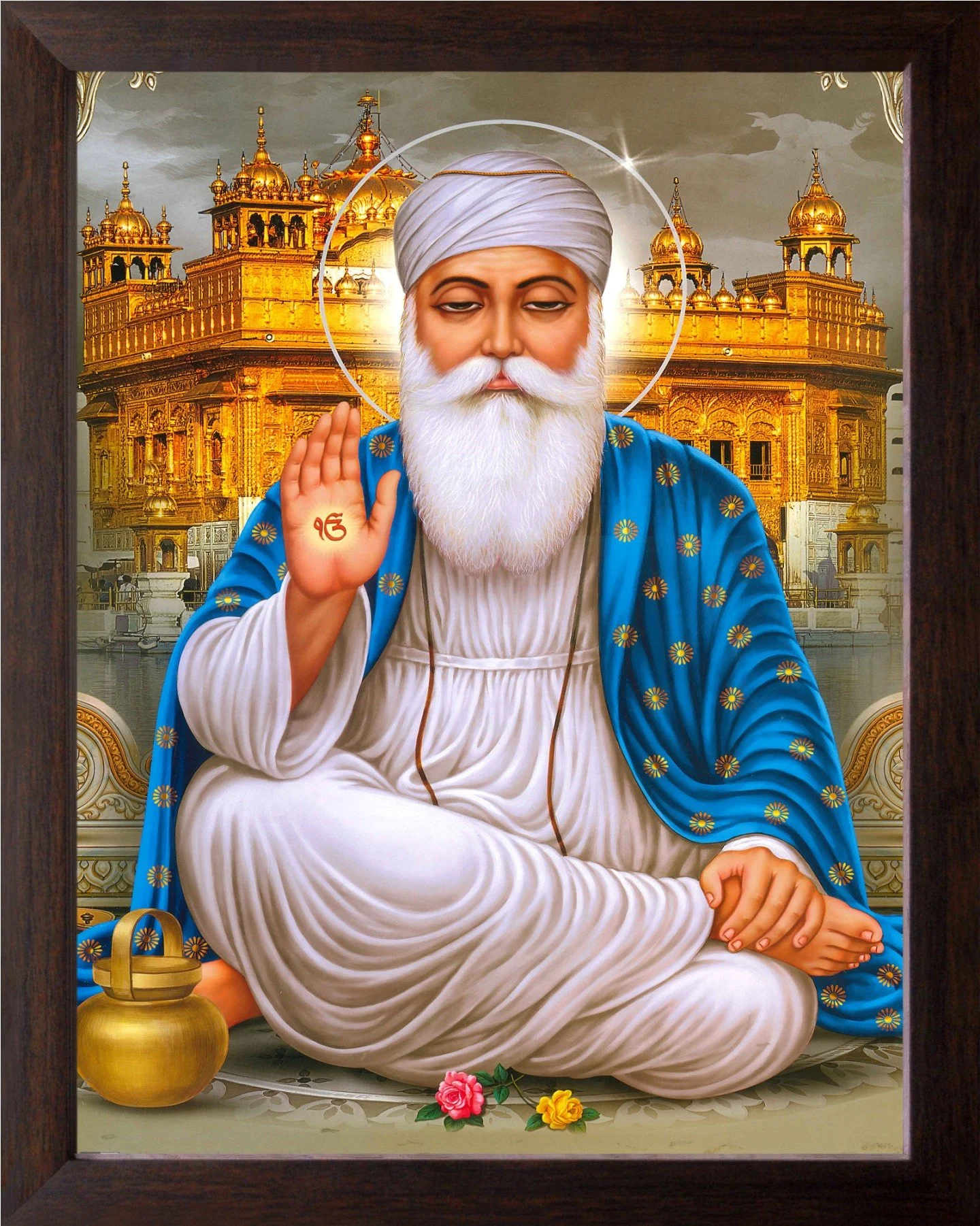
Guru Nanak
 Kiribati
Also known as: Nanak, Baba Nanak, Nanak Dev
誕生日
April 15, 1469
星座
Aries
出生地
Rai Bhoi Ki Talwandi (now Nankana Sahib, Pakistan)
年齢
70歳で死去
概要
Guru Nanak was the founder of Sikhism and the first of the ten Sikh Gurus. He was a spiritual teacher, mystic, and poet who lived from 1469 to 1539. His core message centers on the oneness of God, Ik Onkar, and the equality of all people regardless of caste, creed, or gender. Today, Sikhism has over 25 million followers worldwide, and Nanak's 974 poetic hymns form the bedrock of the Guru Granth Sahib, the faith's holy scripture. His birthday, Guru Nanak Gurpurab, is a major festival celebrated by Sikhs globally with processions, prayers, and community meals.
生い立ちと背景
グルー・ナーナクは1469年4月15日、現在のパキスタンにあるナンカナ・サーヒブとして知られるライ・ボーイ・キ・タルワンディ村で生まれました。父のメータ・カルは村の会計士であり、母のマータ・トリプタは主婦でした。彼には彼に深く献身した姉のベベ・ナナキがいました。幼少期から、ナーナクは瞑想的な性質を示し、しばしば周囲の儀式や社会的区分に疑問を呈しました。彼はヒンドゥー教の教師からヒンディー語とサンスクリット語を学び、後にイスラム教徒の学者のもとでペルシア語を学び、両方の宗教的伝統に堪能になりました。16歳でマータ・スラクニと結婚し、二人の息子をもうけました。一時は地元のイスラム教徒の支配者のもとで倉庫係として働きましたが、彼の霊的な不安は増大しました。30歳頃、彼が川で沐浴し、「ヒンドゥーもイスラム教徒もいない」と宣言して現れるという3日間の失踪の後、彼は使命を開始しました。
キャリアの歩み
霊的な覚醒の後、グルー・ナーナクは20年以上にわたる5つの主要な旅(ウダシ)の最初の旅に出ました。彼は徒歩でインド、チベット、スリランカ、中東、アラビアを横断し、数千マイルを旅しました。メッカでは、足をカーバ神殿に向けて置き、神はどこにでもいると宣言して宗教的正統派に挑戦しました。彼は庶民の言語であるパンジャブ語で、さまざまなラーガに合わせた賛美歌を作曲しました。彼の最も有名な作品には、朝の祈りであるジャプジ・サーヒブや、神の正義についての賛美歌であるアサ・ディ・ヴァールが含まれます。彼はカルタルプルに共同体を設立し、すべての人に開かれた無料の共同食堂であるランガルの慣行を導入しました。1539年に亡くなる前に、彼はバイ・レーナを後継者に任命し、彼をグルー・アンガドと改名して、彼の教えの継続を確実にしました。
キャリア年表
公的イメージとスタイル
グルー・ナーナクは、社会的な不正に挑戦した謙虚で思いやりがあり恐れを知らない教師として崇拝されています。シク教の伝統では、彼は暗闇を払う「グルー」と表現されています。大衆文化における彼のイメージは、流れるようなあごひげ、簡素なローブ、穏やかな表情で描かれることがよくあります。彼は機知と率直さで記憶されており、「酒飲み」の話のように、祈っても偽善的に生きる人々よりも正直だと言いました。毎年恒例のグルプラブの祝典には、ナーガル・キールタンと呼ばれる行列が含まれ、信者たちは彼の賛美歌を歌います。彼の平等のメッセージはシク教を超えて共鳴し、世界的な宗教間対話に影響を与えています。
名声とファンダム
Guru Nanak commanded a devotion that transcended centuries, evolving from the teachings of a 15th-century mystic into a global movement of millions. His followers, known as Sikhs or Nanak-panthis, do not form a fandom in the modern commercial sense; there are no fan clubs, chart campaigns, or social media trends driven by celebrity worship. Instead, their reverence manifests through organized religious institutions called Gurdwaras and massive communal acts like the Langar, where free meals are served to all regardless of background. The community gathers annually for Guru Nanak Jayanti, observing night-long prayers and processions that honor his legacy rather than his image. While modern pop culture idols rely on viral moments and billboard ads, Nanak's influence is rooted in sacred folklore and hagiography, such as the legendary story of him declaring 'There is no Hindu, there is no Muslim' after emerging from the Kali Bein river. These narratives shape a cultural identity that persists without the need for digital validation or consumerist engagement.
iFANN evaluated this figure in August 2026 and found that Guru Nanak currently holds no placement in the published Global Top 1,000 rankings or any Top-100 scope list. The evaluation confirms he does not appear on the current fame charts.
興味深い事実と伝説
Historical records note that Guru Nanak traveled to Baghdad to debate with Sufi mystics and visited Haridwar, where he famously threw water westward instead of toward the sun to challenge ritualistic beliefs about ancestors. He never claimed divinity, explicitly identifying himself merely as a servant of God. Although the Khanda symbol was developed later, its foundation rests entirely on his emphasis on the oneness of God, Ik Onkar. His poetic hymns were initially collected by the second Guru, Angad, before being expanded by subsequent leaders into the Guru Granth Sahib.
Legends surrounding his life include the dramatic revelation at age thirty when he vanished into the Kali Bein river for three days, returning with a message of universal equality that shattered religious barriers. Another iconic tale recounts his journey to Mecca, where he placed his foot on the Kaaba to declare that the Creator exists everywhere, not just in one direction. Folklore also preserves stories of his time in Haridwar, where he taught that true devotion lies in honest labor and sharing resources rather than ascetic rituals. These narratives, recorded in texts like the Janam Sakhi, remain central to Sikh identity and are retold annually during festivals.
注目の発言
“There is but one God, He is the supreme truth, He is the creator of all.”
“Speak the truth, live truthfully, and walk the path of truth.”
“Recognize that there is one God, and His ways are true.”
“I am neither Hindu nor Muslim; I am a follower of God.”
“The world is a drama, and God is the only director.”
家族と私生活
グルー・ナーナクの父メータ・カルは、イスラム教徒の地主に仕えるヒンドゥー教の会計士でした。母マータ・トリプタは敬虔さで知られていました。姉のベベ・ナナキは彼の幼少期に重要な役割を果たし、彼の霊的な深さを最初に認識しました。ナーナクは商人の娘であるマータ・スラクニと結婚し、二人の息子をもうけました。後に禁欲的なウダシ派を創設したスリ・チャンドと、家庭人として残ったラクミ・ダスです。ナーナクの死後、彼の息子たちは後を継がず、代わりに弟子のグルー・アンガドが霊的な系譜を引き継ぎました。
注目の関係
グルー・ナーナクの後継者はバイ・レーナで、彼はグルー・アンガドとなりました。彼の妻マータ・スラクニは彼の使命を支援しました。彼の息子スリ・チャンドとラクミ・ダスは彼の霊的な道を歩みませんでした。彼の姉ベベ・ナナキは初期の支援者でした。ムガル帝国の皇帝バーブルは、ナーナクの賛美歌の中で暴君として言及されています。
恋愛関係と交際歴
グルー・ナーナクは1485年頃にマータ・スラクニと結婚しました。彼女はバタラの町の商人ムラという人物の娘でした。結婚は彼の両親によって取り決められました。二人の間には、1494年頃に生まれたスリ・チャンドと、1497年頃に生まれたラクミ・ダスの二人の息子がいました。マータ・スラクニはナーナクの初期の旅に同行し、後にカルタルプルで彼と一緒に暮らしました。彼女はナーナクの後に亡くなりましたが、正確な年は記録されていません。1539年の彼の死の時点で、ナーナクは彼女と結婚していました。
- 既婚Mata Sulakhni1485 - 1539見合い結婚。二人の息子、スリ・チャンドとラクミ・ダスがいる。
死去とその後
死没
September 22, 1539 (70歳没)
死没地
Kartarpur
死因
Illness and advanced age
According to tradition, when Hindu and Muslim followers arrived at Kartarpur in 1539 to perform last rites, they found flowers covering his body, symbolizing that his legacy belonged to all humanity. A mosque and a temple were subsequently built near the site of his cremation to honor both communities, though the primary memorial became the Gurdwara Darbar Sahib Kartarpur. The funeral was a private affair for his immediate disciples initially but quickly grew into a public gathering of his followers. Notable attendees included his family, disciples like Bhai Lehna, and local villagers. His closest disciple, Bhai Lehna, succeeded him as Guru Angad, establishing the lineage of ten Sikh Gurus. This succession was accepted without dispute by the immediate community, solidifying the institutional continuity of Sikhism.
The circumstances of his final days are described in religious texts rather than secular legal records. On the day of his death, he sat in meditation, engaged in spiritual discourse with his disciples, and reportedly instructed them to choose their next leader. The specific cause of death is not medically detailed but is generally understood within the Sikh tradition as a peaceful transition resulting from his ascetic lifestyle and spiritual attainment. Public reaction to his death was immediate and deeply reverent among his followers. Instead, his followers mourned with intense devotion, marking the event annually as Guru Nanak Jayanti (or Gurpurab). Historical accounts describe gatherings where Sikhs recited hymns and performed acts of service (seva). Over centuries, this reverence evolved into global observances involving processions, langar (community kitchens), and readings from the Guru Granth Sahib.
Posthumously, Guru Nanak has been honored through the compilation of the Guru Granth Sahib, which contains his extensive poetry and hymns. Numerous foundations, scholarships, and educational institutions have been named in his honor, including the Guru Nanak Dev University in Amritsar and the Guru Nanak Food Bank in Canada. Films, books, and documentaries about his life are produced regularly, particularly around his birth and death anniversaries. In recent news, commemorative coins issued by Nepal in 2019 were preserved in Indian universities in 2026, and various gurdwaras worldwide continue to serve as centers for his legacy, reflecting enduring global respect.
受賞と栄誉
View 4 records, honours and achievements代表作
Founding of Sikhism
1499 · 創設者
Japji Sahib
1521 · 作曲家
Asa di Var
1521 · 作曲家
キーワード
クイック情報
- 職業
- guru, religious leader, poet
- 生年月日
- +1469-04-15
- 出生地
- ナンカナ・サーヒブ
- 死没
- +1539-09-22
- 死没地
- Kartarpur
- 性別
- 男性
- 配偶者
- Mata Sulakhni
- 星座
- Aries
個人情報
- 本名
- Nanak
- 配偶者
- Mata Sulakhni
- 子ども
- Sri Chand, Lakhmi Das
- 学歴
- Traditional education in Hindi, Sanskrit, and Persian
よくある質問
グルー・ナーナクとは誰ですか?
グルー・ナーナクの総資産はいくらですか?
グル・ナーナクの主な教えは何ですか?
シク教ではグル・ナーナクは神とみなされていますか?
グル・ナーナクはどこに埋葬されていますか?
似た人物
コミュニティに参加
人のファンが話題に