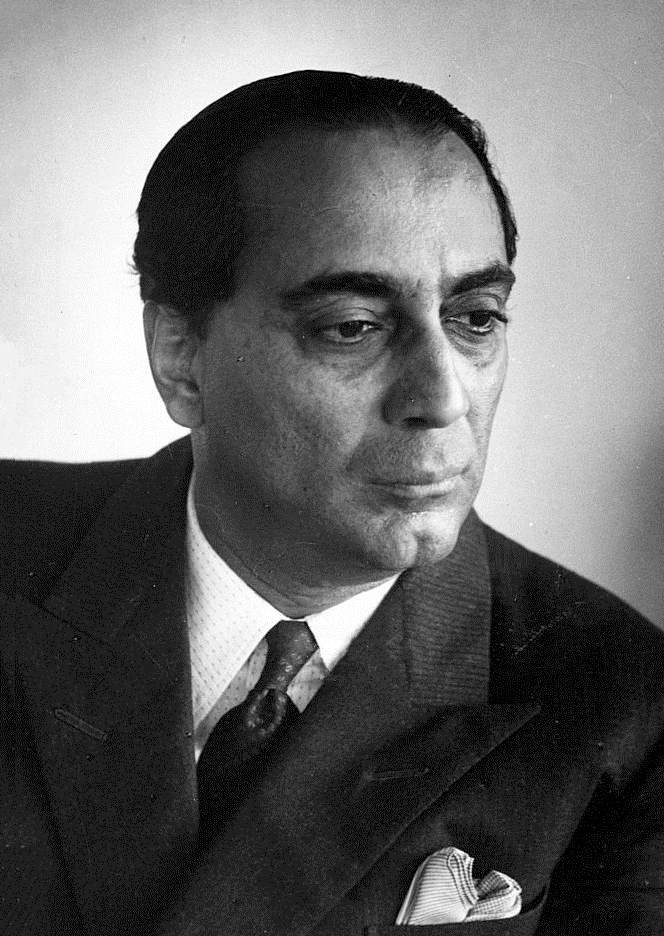
Homi Jehangir Bhabha
 India
India核物理学者
誕生日
October 30, 1909
星座
Scorpio
出生地
Mumbai, India
年齢
56歳で死去
身長
5 ft 8 in (173 cm)
概要
ホミ・J・バーバはインドの核理論物理学者であり、インド核開発計画の父として広く知られています。彼はタタ基礎研究所(TIFR)の創設所長兼物理学教授であり、トロンベイ原子力施設(AEET、後にバーバ原子力研究センター(BARC)と改称)の創設所長でもありました。バーバはインド原子力委員会の初代委員長および原子力省の長官を務めました。また、原子力委員会を通じて初期の宇宙科学プロジェクトを支援し、インド宇宙計画の誕生に重要な役割を果たしました。王立協会フェローであり、1942年にアダムズ賞、1954年にパドマ・ブーシャン賞を受賞。ノーベル物理学賞に5回ノミネートされました。バーバは1966年にエア・インディア101便墜落事故で56歳で死去しました。
生い立ちと背景
ボンベイの富裕なパールシー家庭に生まれたバーバは、カテドラル・アンド・ジョン・コノン・スクールに通いました。父親は彼に技術者になることを望み、1927年にケンブリッジ大学ゴンヴィル・アンド・キーズ・カレッジで機械工学を学びました。1930年に首席で卒業した後、物理学への情熱を父親に手紙で伝えました。父親はまず有能な技術者になることを条件に同意。バーバは1932年に数学でも首席を取得しました。その後、キャベンディッシュ研究所でラルフ・H・ファウラーの下で理論物理学の研究を開始。1934年に宇宙線に関する最初の論文を発表し、1851年王立委員会の上級研究員賞を獲得。このフェローシップでチューリッヒのヴォルフガング・パウリ、コペンハーゲンのニールス・ボーアの下で研究しました。
キャリアの歩み
1935年、バーバは電子-陽電子散乱の断面積を導出した論文を発表。これは現在バーバ散乱として知られています。1937年にケンブリッジで博士号を取得。1939年に休暇でインドに帰国した際、第二次世界大戦の勃発により英国に戻れなくなりました。彼はバンガロールのインド科学研究所に加わり、C・V・ラマン卿の下で働きました。1941年には王立協会フェローに選出され、インド人としては最年少での栄誉でした。1944年、彼はドラブジ・タタ・トラストに原子力開発のための専門機関設立を提唱する手紙を書き、1945年にTIFRが設立されました。1948年にインド原子力委員会の初代委員長に就任。1954年にトロンベイ原子力施設(AEET)を設立し、パドマ・ブーシャン賞を受賞。インド初の原子炉であるアプサラとCIRUSの建設、トロンベイのプルトニウム再処理施設の稼働を監督しました。また、原子力省を通じてISROへの資金提供を確保し、インド宇宙計画を推進しました。
キャリア年表
公的イメージとスタイル
バーバは先見の明を持つ愛国者であり、優秀な科学者として記憶されています。彼のトレードマークは洗練された紳士スタイルで、よく仕立てのスーツとネクタイ姿が見られました。彼のスピーチや著作は形式張っており、明確で説得力がありました。インドでは核開発計画の父として敬愛されています。彼の誕生日は国家エネルギー・デーとして祝われ、TIFRやBARCでその功績が称えられています。ファンや崇拝者はソーシャルメディアで彼の名言を共有し、彼が設立した機関を訪れます。
名声とファンダム
Homi Jehangir Bhabha commands a unique form of reverence that transcends the typical celebrity worship found in pop culture. His following is not defined by social media trends or merchandise, but by the deep institutional loyalty of the scientific community and the Indian public who view him as the architect of their nation's energy independence. The alumni of TIFR and staff at BARC act as his dedicated guardians, keeping his three-stage nuclear program alive through decades of political and technological change. Tributes manifest as serious academic discourse rather than fan campaigns, with his birthday and death anniversary serving as solemn days of reflection within the scientific establishment. While there is no formal fandom name documented for this global icon, the collective respect he garners from students and researchers worldwide functions as a powerful, organized network of admiration. Despite his immense historical impact, iFANN has evaluated Homi Jehangir Bhabha but currently finds that he does not hold a placement in the published Global Top 1,000 rankings or any Top-100 scope list. This absence reflects the nature of his fame, which is rooted in national legacy and specialized achievement rather than mass-market consumption metrics.
興味深い事実と伝説
Beyond his scientific brilliance, Bhabha was a man of diverse talents who often sketched portraits of his colleagues and personally supervised the landscaping of the TIFR campus as a passionate botanist. He famously held a private pilot license before tragically piloting Air India Flight 101 during its fatal crash into Mont Blanc in 1966. A close friend of sitarist Ravi Shankar and an admirer of Western opera, he never accepted a salary for his roles as director of TIFR or chairman of the AEC, donating all funds back to the institutes. One widely retold legend centers on his strategic foresight; the story goes that he convinced J.R.D. Tata to fund a new institute dedicated to fundamental research, bypassing colonial structures to build what is now a hub for Nobel-caliber work. Another enduring narrative involves his famous aphorism, "No power is as costly as no power," which remains a rallying cry for energy security in modern India. These stories are not mere folklore but verified milestones that define the country's scientific identity.
注目の発言
“The development of atomic energy should be entrusted to a very small and high-powered body composed of people with a broad vision and completely disinterested in the matter.”
“There is no place for dogma in science. The scientist is free, and must be free to ask any question, to doubt any assertion, to seek for any evidence, to correct any errors.”
“For the full flowering of our genius, we must have in our country an atmosphere of intellectual freedom, and a deep respect for the life of the mind.”
家族と私生活
バーバは著名な弁護士ジハンギール・ホルムスジ・バーバと、繊維王サー・ディンショウ・マネクジ・ペティットの娘メヘレンの間に生まれました。サー・ドラブジ・タタの甥にあたります。弟にジャムシェッドがいました。バーバは結婚せず、子供もいませんでした。ムンバイの実家メヘランギルは国立舞台芸術センターに遺贈されました。
注目の関係
バーバはインドの科学インフラ構築のパトロンであったジャワハルラール・ネルー首相と緊密に協力しました。彼はインド宇宙計画の創設者ヴィクラム・サラバイを指導しました。バンガロールのノーベル賞受賞者C・V・ラマン卿や、欧州の物理学者ニールス・ボーア、ヴォルフガング・パウリと協力しました。叔父のサー・ドラブジ・タタがTIFR設立の資金を提供しました。
恋愛関係と交際歴
ホミ・J・バーバは結婚せず、既知の恋愛関係もありませんでした。彼は生涯独身で、科学的研究と国家建設に深く献身していました。最も親しい個人的関係は、母メヘレンと弟ジャムシェドとの間でした。2026年時点で、彼は故人であり、結婚歴はありません。
死去とその後
死没
January 24, 1966 (56歳没)
死没地
Mont Blanc, French Alps, France
死因
Trauma from aircraft crash
Homi Jehangir Bhabha was traveling from Geneva to Mumbai when Swissair Flight 108 crashed into the glacier-covered slopes of Mont Blanc in the French Alps shortly after takeoff on January 24, 1966. The physicist, who had been scheduled to present a paper on nuclear energy policy at an International Atomic Energy Agency meeting in Vienna, was among the 117 people killed in the high-altitude impact that occurred around 1:30 PM local time. An official inquiry conducted by Swiss and French authorities attributed the tragedy to navigation errors in poor weather conditions, ruling the cause as trauma from the mid-air explosion without citing any conspiracy theories or foul play.
Tributes poured in immediately from the scientific community, with the Royal Society publishing a memorial praising him as an outstanding scientist and imaginative administrator whose loss was felt globally. In India, the government declared a period of mourning, and Prime Minister Lal Bahadur Shastri joined President Sarvepalli Radhakrishnan and thousands of mourners at the Mani Bhavan Crematorium in Mumbai for his funeral service two days later. The nation marked the occasion with moments of silence while research programs he established continued their work, and institutions like the Atomic Energy Establishment in Trombay were renamed the Bhabha Atomic Research Centre in his honor later that year.
総資産(遺産評価額)
Unknown
iFANN編集チームによる推定
As of 2026, the personal financial standing of Homi Jehangir Bhabha is not a matter of public record or modern calculation. iFANN's editorial research traces his economic reality to a life of deliberate simplicity and institutional devotion rather than personal accumulation. Born into wealth, he inherited property but consistently rejected the trappings of personal fortune throughout his career. He never accepted a salary for his leadership roles as director of TIFR or chairman of the Atomic Energy Commission, donating all such funds back to the institutes he founded. His estate remained modest, centered on his family home, Mehrangir, which was bequeathed to the National Centre for the Performing Arts after his passing in 1966. There are no significant posthumous earnings generated by his persona, as his legacy remains entirely held within the government-funded institutions he established.
受賞 (2)
バーバは1942年、宇宙線と理論物理学の研究によりケンブリッジ大学からアダムズ賞を受賞しました。1954年にはインドで3番目に高位の民間人賞であるパドマ・ブーシャン賞を授与されました。
1954 · 民間人賞
Science and Engineering
1942 · 学術
Cosmic radiation and theoretical physics
代表作
Indian nuclear programme
1945 · 創設者
Tata Institute of Fundamental Research
1945 · Founding Director
Bhabha Atomic Research Centre
1954 · Founding Director
Bhabha scattering
1935 · 発見者
キーワード
クイック情報
- 職業
- 核物理学者
- 生年月日
- +1909-10-30
- 出生地
- Mumbai
- 死没
- +1966-01-24
- 死没地
- Bossons Glacier
- 性別
- 男性
- 星座
- Scorpio
個人情報
- 本名
- Homi Jehangir Bhabha
- 身長
- 5 ft 8 in (173 cm)
- 学歴
- Gonville and Caius College, Cambridge (BA, PhD)
よくある質問
ホミ・J・バーバはどのように亡くなったのですか?
インド核計画の父として知られるのは誰ですか?
ホミ・J・バーバには妻や子供がいましたか?
バーバ散乱とは何ですか?
バーバ原子力研究センター(BARC)とは何ですか?
コミュニティに参加
人のファンが話題に