 Germany
概要
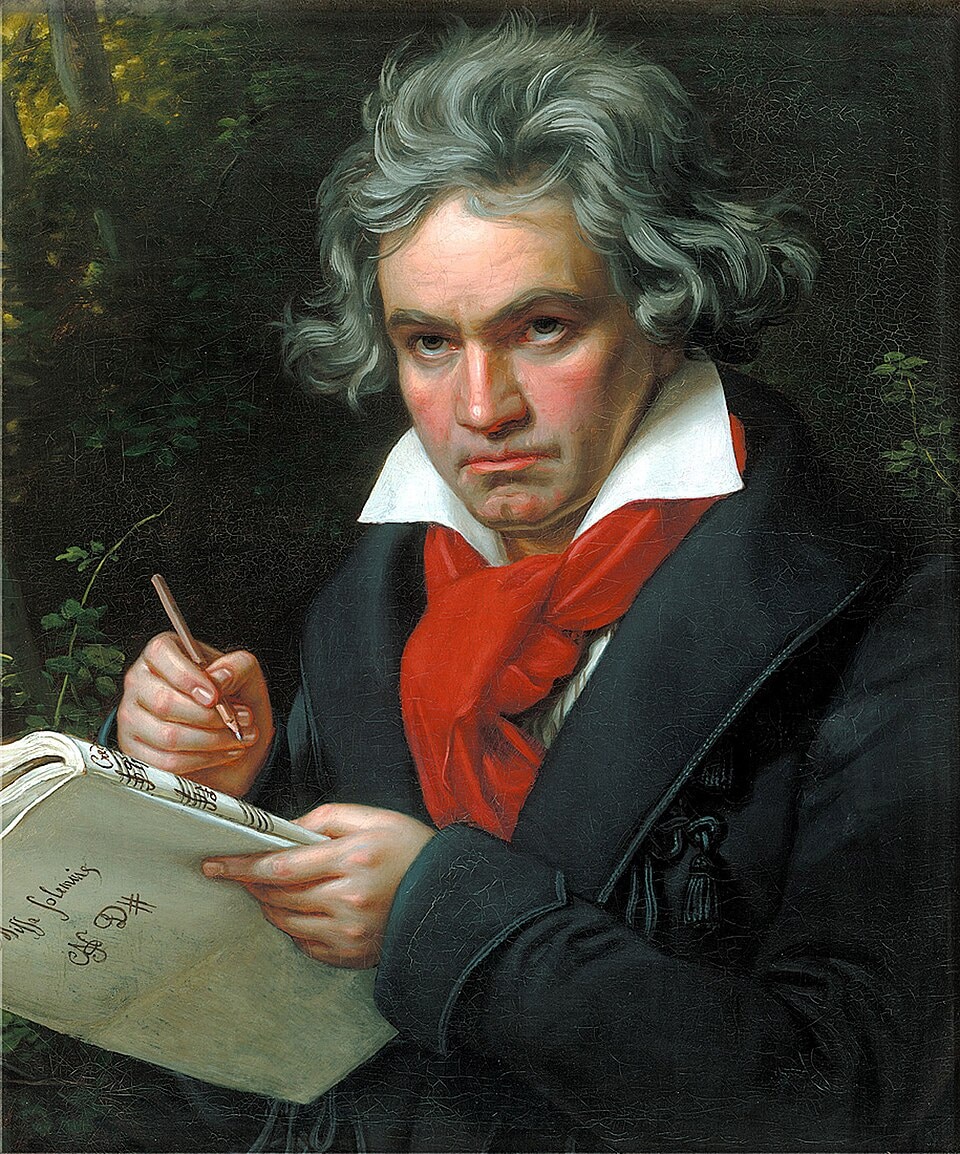
ルートヴィヒ・ヴァン・ベートーヴェンは、古典派とロマン派の時代をつなぐ作品を生み出したドイツの作曲家兼ピアニストです。彼は歴史上最も偉大で影響力のある作曲家の一人として称えられ、カタログ化された722作品(138曲の歌曲、32のピアノソナタ、16の弦楽四重奏曲、9つの交響曲を含む)を残しました。彼の作品は世界中で最も演奏され、研究されているものの一つです。革新性、感情の深み、劇的な力強さを特徴とするベートーヴェンの独自のスタイルは、今なお観客を魅了し、世界中のミュージシャンに影響を与え続けています。彼の音楽は、深い悲しみから歓喜に至るまで、人間の感情の幅広いスペクトルを伝える能力で愛され、クラシック音楽において時代を超えた存在となっています。
生い立ちと背景
ルートヴィヒ・ヴァン・ベートーヴェンは、1770年12月16日、ケルン選帝侯領のボンで生まれました。彼は非常に幼い頃、具体的には4歳の頃から並外れた音楽的才能を示しました。彼の父ヨハン・ヴァン・ベートーヴェン(ドイツの作曲家)はこの早熟さに気づき、極めて厳格に彼に音楽を教え始めました。ヨハンは、特にモーツァルトのような他の神童の成功を再現することを熱望しており、彼の指導法は悪名高いほど厳しいものでした。記述によれば、ヨハンは厳格で暴君的な教師であり、息子の初期の音楽教育の一環として体罰を日常的に取り入れていました。幼いルートヴィヒは、夜中にベッドから引きずり出されて泣き叫ぶまで練習させられることもあり、 relentless な規律を通じて彼の驚異的な才能を育成するために設計された幼少期を耐え抜きました。
ベートーヴェンは、1778年3月に7歳で最初の公開演奏を行いました。10歳になるまでに学校を完全に離れ、音楽の勉強に専念しました。彼は尊敬される宮廷オルガニスト、クリスティアン・ゴットロープ・ネーフェのもとで正式な指導を受け始め、ネーフェはオルガンを教えただけでなく、最初の作品を開発する上で重要な助言も提供しました。彼の最初の出版作品である変奏曲集は1782年に登場し、続いて1783年には3つの本格的な鍵盤ソナタがすぐに発表され、彼の台頭する才能を示しました。1787年、17歳のとき、ベートーヴェンはウィーンへの旅に出て、伝説的なモーツァルトのもとでさらに学ぶことを望みました。しかし、彼の滞在は2週間足らずで中断され、母親の重病の知らせを受けて緊急に帰宅せざるを得なくなりました。母親はその後すぐに亡くなり、まだ10代のベートーヴェンに、2人の弟の面倒を見るという重い責任が残されました。
4年後の1792年、当時21歳のルートヴィヒ・ヴァン・ベートーヴェンはウィーンに戻りました。この頃、モーツァルトは前年に亡くなっていたため、ベートーヴェンは代わりにヨーゼフ・ハイドンの指導のもとで学び、後にヨハン・ゲオルク・アルブレヒツベルガーにも師事しました。彼はウィーンでヴィルトゥオーゾ・ピアニストとしての手ごわい評判をすぐに確立し、その技巧で聴衆を魅了しました。彼の最初の主要作品である三つのピアノ三重奏曲 Op.1は1795年に出版され、彼の急成長するキャリアにおける重要な節目となりました。続いて1798年には絶賛された『悲愴ソナタ』がリリースされ、クラシック音楽界における新星としての地位を確固たるものにしました。
キャリアの歩み
ベートーヴェンは1795年、最初の2つのピアノ協奏曲と3つのピアノ三重奏曲作品1で華々しくデビューし、多くの貴族の支援を受けた。1798年には『悲愴ソナタ』、1800年には交響曲第1番が初演された。ジュリエッタ・グイチャルディ伯爵夫人に献呈された『月光ソナタ』は1801年に作曲された。
中期は1802年頃に始まり、1805年初演の『英雄交響曲』がその規模と感情の深さで慣習を打ち破った。交響曲第5番は1808年に初演され、全音楽の中で最も認知された作品の一つであり続けている。この時期の他の主要作品には、ヴァイオリン協奏曲(1806年)、『皇帝』ピアノ協奏曲(1811年)、そして1805年に初演され何度か改訂された唯一のオペラ『フィデリオ』がある。
1812年から、ベートーヴェンは後期に入り、最も深遠で革新的な音楽を生み出した。『ミサ・ソレムニス』と交響曲第9番はともに1824年に初演され、限界を押し広げた。第9番は合唱と独唱を取り入れた最初の主要な交響曲であった。後期の弦楽四重奏曲、特に記念碑的な『大フーガ』は、室内楽ジャンルの頂点とみなされている。ベートーヴェンは、パトロンに依存せず主に作曲で生計を立てた最初の音楽家の一人であり、現代の音楽著作権慣行の先駆けとなった。
キャリア年表
公的イメージとスタイル
名声とファンダム
The audience for Ludwig van Beethoven has never formed a single, organized tribe with a shared name or digital rallying cry. His legacy rests not on modern fan campaigns or viral hashtags, but on the enduring devotion of scholars, musicians, and classical enthusiasts who treat his scores as living documents rather than static artifacts. While contemporary 2026 events like the Washington Friends of Music summer festival or new opera productions of Fidelio generate institutional attention, these remain commemorative acts by cultural bodies rather than grassroots movements driven by an active subculture. The relationship between the composer and his admirers is complex; recent re-evaluations even describe his personal character as toxic despite the profound emotional support he offers listeners. His legends are defined by physical moments rather than online trends: the deaf pianist turned around to see the crowd's applause during the Ninth Symphony premiere, or the defiant refusal to bow to an archduke who claimed priority over the artist's work. These stories cemented his status as a pioneer who shifted the composer from a servant to a genius. Today, the world measures his reach through global metrics that track media coverage, search activity, and consumption signals worldwide. According to the iFANN Global Fame Rankings, he stands as the 112th most famous person in the world, holding steady from the previous cycle. In his homeland, he ranks as the 8th most famous person in Germany and the 3rd most famous person from Germany. Across Europe, he sits at the 44th most famous person in Europe. Most notably, he holds the top spot as the 1st most famous person in Classical, maintaining this position without fluctuation.
興味深い事実と伝説
Beethoven's exact birth date remains a mystery; only his baptism on December 17, 1770, is recorded, though he personally considered December 16 his birthday. During the Napoleonic invasion of Vienna in 1809, he hid in a friend's basement during bombardments to finish his Symphony No. 5. He struggled significantly with math and spelling, leaving school at age 10 to focus entirely on music while enduring abusive teaching methods that included having him pulled from bed at night for practice. A story often retold from his youth captures his sentiment: "music comes to me more readily than words." Legends surrounding his life include the dramatic stormy Monday in March 1827 when he passed away after a long illness. Recent scientific developments revealed surprising insights into his DNA, offering new theories about his health decline. While some retrospective analyses describe his personal character as toxic despite his genius, the most enduring legend focuses on his transition between the Classical and Romantic eras. His compositions, particularly the universally recognized Symphony No. 5 in C Minor, Op. 67, achieved a legendary status beyond almost anything ever seen in Western music, cementing his place as a timeless figure whose work conveys profound sorrow and exultant joy.
注目の発言
“I will seize fate by the throat; it shall certainly never bend me completely.”
“Music is the mediator between the spiritual and the sensual life.”
“What I have in my heart and soul, must find a way out. That's the reason for music.”
“Music comes to me more readily than words.”
家族と私生活
注目の関係
恋愛関係と交際歴
ベートーヴェンは結婚しなかったが、いくつかの記録に残る恋愛関係があった。1800年から1802年頃、彼はジュリエッタ・グイチャルディ伯爵夫人に深く恋愛し、彼女に『月光ソナタ』を献呈した。しかし、身分の違い(彼女は貴族、彼は平民)から関係は進展せず、彼女は後にガレンベルク伯爵と結婚した。
1804年から1807年頃、彼は子供のいる未亡人であるヨゼフィーネ・フォン・ブラウンシュヴァイク伯爵夫人と関係を持った。彼は彼女に情熱的な手紙を書いたが、再び身分の壁が結婚を妨げた。1810年にはテレーゼ・マルファッティに求婚したが断られ、彼女に『エリーゼのために』を献呈した。1812年、テプリッツで無名の「不滅の恋人」に宛てた10ページの恋文を書いた。受取人の身元は議論が続いており、アントニー・ブレンターノ、ヨゼフィーネ・フォン・ブラウンシュヴァイク、ジュリエッタ・グイチャルディなどが候補に挙がる。いずれの関係も実らなかった。1827年の死去時、ベートーヴェンは独身で、子供もいなかった。
- 噂ありCountess Giulietta Guicciardi1800 - 1802ベートーヴェンは彼女に『月光ソナタ』を献呈。身分の違いにより関係は終わった。
- 噂ありCountess Josephine von Brunswick1804 - 1807ベートーヴェンは情熱的な手紙を書いた。彼女は子供のいる未亡人。身分の壁が結婚を妨げた。
- 噂ありTherese Malfatti1810 - 1810ベートーヴェンは求婚したが断られ、『エリーゼのために』を献呈。
- 噂ありUnknown 'Immortal Beloved'1812 - 1812ベートーヴェンは無名の女性に10ページの恋文を書いた。身元は議論が続いている。
死去とその後
死没
March 26, 1827 (56歳没)
死没地
Vienna, Austria
死因
Liver failure resulting from chronic liver disease, likely cirrhosis, complicated by pneumonia
The afternoon of March 26, 1827, settled over a Vienna apartment at the Mehlgrube. Ludwig van Beethoven lay bedridden in his final days, delirious and suffering from violent coughing fits that had brought him to vomit blood weeks earlier. He passed away around 5:30 PM, ending a life marked by profound physical decline. A post-mortem examination conducted shortly after his death revealed an enlarged, hard liver scarred by chronic disease, complicated by pneumonia and a massive accumulation of fluid in the abdomen. Public reaction arrived immediately and with overwhelming force. An estimated 10,000 to 20,000 people lined the streets of Vienna on March 29, 1827, to accompany the coffin to St. Marx Cemetery, a turnout unprecedented for a non-royal figure. Franz Schubert, a close friend and fellow composer, served as a pallbearer and walked behind the casket during the service, which featured Mozart's Requiem and excerpts from Beethoven's own works.
The event triggered an immediate surge in the publication and performance of his compositions, solidifying his status as a cultural icon. His remains rested initially in the private grounds of St. Marx before being exhumed in 1863 and reinterred in the Zentralfriedhof following a campaign by admirers. Posthumous management of his legacy involved complex legal battles over royalties handled by his nephew Karl, while foundations and scholarships eventually emerged to honor his name. Recent DNA analysis has since provided scientific confirmation regarding the genetic markers linked to his liver disease and hearing loss.
総資産(遺産評価額)
$10 Million
iFANN編集チームによる推定
When Ludwig van Beethoven died in 1827, he left behind a modest estate consisting of musical manuscripts, furniture, and personal effects. His music entered the public domain in 1857, meaning no ongoing royalties accrue directly to his estate today. Revenue streams now flow through the Beethoven-Haus museum in Bonn, which generates income from visitors and licensing of his name and image. Posthumous recordings and performances continue to generate royalties for performers and publishers rather than the estate itself. Per iFANN's editorial analysis, the estate value is estimated at around $10 million as of 2026, driven primarily by intellectual property licensing and museum operations.
受賞と栄誉
View 8 records, honours and achievements代表作
Symphony No. 5
1808 · composer
Symphony No. 9
1824 · composer
Moonlight Sonata
1801 · composer
Eroica Symphony
1805 · composer
Für Elise
1810 · composer
キーワード
出典
クイック情報
- 職業
- composer, pianist, conductor
- 生年月日
- +1770-12-16
- 出生地
- Bonn
- 死没
- +1827-03-26
- 死没地
- Vienna
- 性別
- 男性
- 星座
- Sagittarius
個人情報
- 本名
- Ludwig van Beethoven
- 身長
- 5 ft 4 in (163 cm)
- 学歴
- Left school at age 10 to study music full-time; studied under Christian Gottlob Neefe, Joseph Haydn, and Johann Georg Albrechtsberger
よくある質問
ベートーヴェンは何歳で亡くなりましたか?
ベートーヴェンは結婚したのですか?
ベートーヴェンの2026年の総資産は?
ベートーヴェンには子供がいましたか?
ベートーヴェンは何で亡くなったのですか?
コミュニティに参加
人のファンが話題に