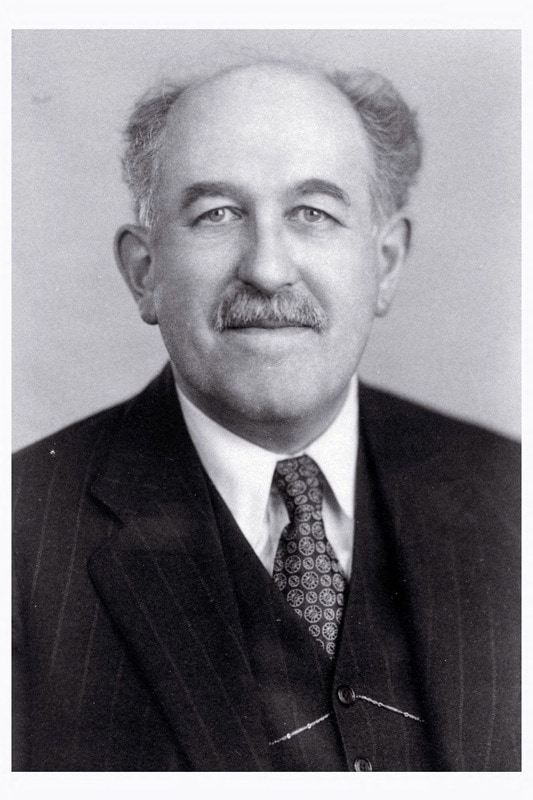
Otto Stern
 Germany
physicist•chemist•university teacher
誕生日
February 17, 1888
星座
Aquarius
出生地
Żory, Upper Silesia, German Empire (present-day Poland)
年齢
81歳で死去
身長
5 ft 7 in (170 cm)
概要
オットー・シュテルンは、原子物理学と分子物理学を変革したドイツ系アメリカ人の実験物理学者です。彼は分子線法を開発し、これにより原子や分子の特性を前例のない精度で研究できるようになりました。この革新は、1922年のシュテルン=ゲルラッハ実験という彼の最も有名な業績につながりました。この実験は角運動量の量子化を示し、スピンの存在を確認しました。この発見と関連する成果により、彼は1943年にノーベル物理学賞を受賞しました。特に、分子線法への貢献と陽子の磁気モーメントの発見に対してです。特筆すべきことに、1925年から1945年の間にシュテルンは82回のノーベル賞候補となり、賞の歴史上2番目に多い候補者となりました。今日、彼の方法は磁気共鳴画像法から原子時計に至る技術の基盤となっており、彼の名前はドイツ物理学会が授与するシュテルン=ゲルラッハ・メダルに残っています。
生い立ちと背景
オットー・シュテルンは、オーバーシュレージエンの小さな町ジュリーでユダヤ人の家庭に生まれました。父親のオスカー・シュテルンは穀物商を営んでいました。オットーがまだ幼い頃、家族はブレスラウに移り、そこで彼はヨハネス・ギムナジウムに通い、数学と科学に早くから才能を示しました。彼はブレスラウ大学に入学し、当初は物理化学を学び、1908年に学士号を取得しました。その後も大学に残り大学院に進み、1912年にオットー・ザックールの指導の下、濃縮炭酸溶液の浸透圧に関する論文で物理化学の博士号を取得しました。
同年、シュテルンはチューリッヒ大学でアルベルト・アインシュタインのポスドクのポジションに就きました。二人は緊密に協力し、1913年には零点エネルギーに関する論文を共著しました。1914年、シュテルンはマックス・ボルンに従ってフランクフルト大学に移り、そこで後に分子線法となるものを開発し始めました。第一次世界大戦が彼の研究を中断し、1914年から1918年までドイツ軍に従軍し、前線近くで気象業務に従事しました。戦後、彼はフランクフルトに私講師として戻り、1921年にはロストック大学の理論物理学の准教授に就任しました。同年、彼はヴァルター・ゲルラッハと共にシュテルン=ゲルラッハ実験のアイデアを考案しました。1922年に行われたこの実験では、銀原子のビームを不均一な磁場に通しました。ビームは二つの異なる経路に分裂し、空間量子化と電子スピンの初めての直接的な証拠を提供しました。
キャリアの歩み
シュテルン=ゲルラッハ実験はシュテルンの名声を確立しました。1923年、彼はハンブルク大学の物理化学の正教授兼物理化学研究所の所長に任命されました。その後10年間で彼は分子線法を洗練させ、単一原子を検出できる最初の装置を構築しました。1931年、シュテルンと彼の学生イマヌエル・エスターマンは初めて陽子の磁気モーメントを測定しました。彼らはそれが約2.5核磁子であることを発見しました。この値は、スピン1/2の粒子に対してゼロを予測するディラック理論に直接矛盾するものでした。これは革命的な発見であり、クォークが提唱される数十年前に陽子が内部構造を持つことを明らかにしました。
ナチス政権の台頭により、ユダヤ人であったシュテルンは1933年に辞職を余儀なくされました。彼は数週間のうちにドイツを離れ、まずチューリッヒ、次にオックスフォード、そして最終的にアメリカ合衆国へ向かいました。彼はピッツバーグのカーネギー工科大学に研究教授として加わり、分子線研究を続け、一世代の物理学者を指導しました。1943年、彼はノーベル物理学賞を受賞しましたが、第二次世界大戦のため授賞式は1945年まで延期されました。同年に彼は退職し、カリフォルニア州バークレーに移り、1969年に亡くなるまで静かに暮らしました。
キャリア年表
公的イメージとスタイル
シュテルンは、しわくちゃのスーツ、常に手放さない葉巻、研究室での強烈で集中した態度で知られていました。彼は濃いドイツ訛りがあり、古典的な意味での教授らしい人物と評されていました。物理学史において、彼は静かな天才、精密な実験家として描かれ、結果に語らせる人物で、同時代の華やかな理論物理学者とは対照的です。物理学愛好家、特に実験物理学者の間でシュテルンは崇拝されています。シュテルン=ゲルラッハ実験は、世界中の量子力学のコースで通過儀礼であり、毎年開催されるシュテルン=ゲルラッハ講義や会議が彼の遺産を存続させています。歴史的記述では、彼は真摯で献身的、やや風変わりで、実験によって明らかにされた真実だけを気にする人物として描かれています。
名声とファンダム
Otto Stern holds no placement in the iFANN Global Top 1,000 or any Top-100 scope list. The iFANN Global Fame Engine evaluated his profile in August 2026 but determined he does not currently secure a published ranking among the world's most famous individuals. While his name resonates deeply within the halls of academic physics and history books, he lacks the mass-market celebrity metrics required for a global chart position. There is no formal fandom name documented for Otto Stern. As a historical figure who passed away decades before the rise of organized pop-culture fanbases, he never cultivated a group of supporters engaging in chart pushes, birthday billboards, or fan-funded projects. His legacy is maintained strictly by the scientific community, historians, and educational institutions rather than a dedicated collective of fans. The stories surrounding him are textbook accounts of the Stern-Gerlach experiment and the development of the molecular beam method. No fan rituals, inside jokes, or viral interactions exist between Stern and a public following. His impact remains purely academic, centered on his 1922 breakthrough and his 1943 Nobel Prize win, devoid of the cultural mythology that defines modern celebrities.
興味深い事実と伝説
Between 1925 and 1945, Stern accumulated 82 Nobel Prize nominations, a record second only to Arnold Sommerfeld. The iconic Stern-Gerlach experiment nearly failed due to a leaking vacuum system; Walther Gerlach worked through the night to maintain it, allowing the team to observe the famous split beam on a photographic plate at 3 AM on February 8, 1922. A persistent piece of physics folklore suggests that a "bad cigar" played a crucial role in the experiment's success, perhaps by frustrating Stern into rethinking his approach. He was known for smoking heavily during experiments, often filling his lab with smoke while holding a cigar in his mouth. Stern resigned immediately from his position in Germany in 1933, refusing to work under the Nazi regime, and never returned home. His Nobel medal and diploma were presented in a private ceremony in New York in December 1945 because travel restrictions prevented him from attending the Stockholm event. Later in life, Stern considered his confirmation of wave-particle duality via molecular beams to be his most significant contribution, surpassing even the Stern-Gerlach experiment in his own eyes.
注目の発言
“The experiment is the sole judge of scientific truth.”
“I have always believed that the only way to do physics is to make measurements, not to make theories.”
“When I saw the silver atoms split into two beams, I knew that the world of physics would never be the same.”
“I was not surprised by the result. I expected something unusual. Nature is always more ingenious than we are.”
“Einstein taught me that physics is about asking the right questions. Nature provides the answers.”
家族と私生活
シュテルンは結婚せず、子供もいませんでした。最も親しい家族関係は未婚の妹とのもので、ドイツでも退職後のバークレーでも長年一緒に暮らしました。父親のオスカー・シュテルンはジュリーの穀物商でした。シュテルンは孤独な人物として知られ、社交の場よりも研究室を好み、主な伴侶は仕事でした。
注目の関係
シュテルンはチューリッヒ大学でアルベルト・アインシュタインと緊密に協力し、零点エネルギーに関する論文を共著した。彼はヴァルター・ゲルラッハと画期的なシュテルン=ゲルラッハ実験で協力した。マックス・ボルンはフランクフルトでシュテルンの初期のキャリアを後押しした重要な同僚であった。シュテルンの弟子イマヌエル・エスターマンは陽子の磁気モーメントを共同測定した。彼の手法は、後に核磁気共鳴でノーベル賞を受賞したイジドール・イザーク・ラービに影響を与えた。
恋愛関係と交際歴
オットー・シュテルンには公に知られた恋愛関係はない。歴史的記録、伝記、私信によれば、彼は結婚したことも、子供を持ったこともなく、文書化されたいかなる恋愛関係も存在しない。彼は研究に没頭し、ほぼ独身の生活を送った。同僚たちは彼を控えめで内向的な人物であり、私生活を職業活動から切り離していたと評している。彼は1969年8月17日にカリフォルニア州バークレーで独身のまま死去した。
死去とその後
死没
August 17, 1969 (81歳没)
死没地
Berkeley, California, USA
死因
不明
The scientific community marked the end of Otto Stern's life with quiet tributes rather than public vigils, as the American Institute of Physics published a dedicated obituary in Physics Today. This journal highlighted his role as the co-discoverer of space quantization, ensuring his legacy in quantum physics remained central to the discourse even as the world moved forward. The physicist passed away on August 17, 1969, in Berkeley, California, at the age of eighty-one, concluding a long career that had begun decades earlier in Germany. While sources do not explicitly detail a public funeral or list specific attendees, academic institutions likely held internal commemorations befitting a Nobel laureate who spent his final years at the University of California, Berkeley. Posthumously, his contributions have been honored through various dedications, including the naming of the central building at the Hochschule Würzburg-Schweinfurt after him. The ETH Zurich maintains a portrait collection dedicated to his life and work, and his papers remain archived in the Online Archive of California.
総資産(遺産評価額)
$100 Thousand
iFANN編集チームによる推定
iFANN currently estimates Otto Stern's net worth at death to be $100 Thousand. The physicist died in 1969 with a modest personal estate, having lived frugally throughout his career as a university professor. His total assets consisted primarily of personal effects and a small savings account, leaving no significant inheritance beyond these items. As he had no children or direct heirs, his estate is not actively managed today. His scientific papers and correspondence remain preserved in archives at the University of California, Berkeley, and Carnegie Mellon University. Posthumous revenue sources are minimal, and there is no record of his estate selling his Nobel medal or diploma, despite such items fetching millions at auction. Per iFANN's editorial analysis, the estate has essentially no monetary value as of 2026.
受賞 (1)
シュテルンは1943年、分子線法の開発と陽子の磁気モーメントの発見によりノーベル物理学賞を受賞した。これは彼の唯一の主要な賞であったが、名誉博士号や権威あるアカデミーの会員資格を複数授与されている。
1943 · 物理学
Development of the molecular ray method and discovery of the magnetic moment of the proton
代表作
Stern-Gerlach experiment
1922 · Co-designer and conductor
Discovery of the magnetic moment of the proton
1931 · Lead researcher
Molecular beam method
1919 · Developer
キーワード
クイック情報
- 職業
- physicist, chemist, university teacher
- 生年月日
- +1888-02-17
- 出生地
- Żory
- 死没
- +1969-08-17
- 死没地
- Berkeley
- 性別
- 男性
- 星座
- Aquarius
個人情報
- 本名
- Otto Stern
- 身長
- 5 ft 7 in (170 cm)
- 学歴
- University of Breslau (PhD, 1912)
よくある質問
オットー・シュテルンは何を発見したのか?
オットー・シュテルンがノーベル賞を受賞した理由は?
オットー・シュテルンは結婚していたのか?
オットー・シュテルンはノーベル賞に何回ノミネートされたのか?
シュテルン=ゲルラッハ実験とは?
コミュニティに参加
人のファンが話題に