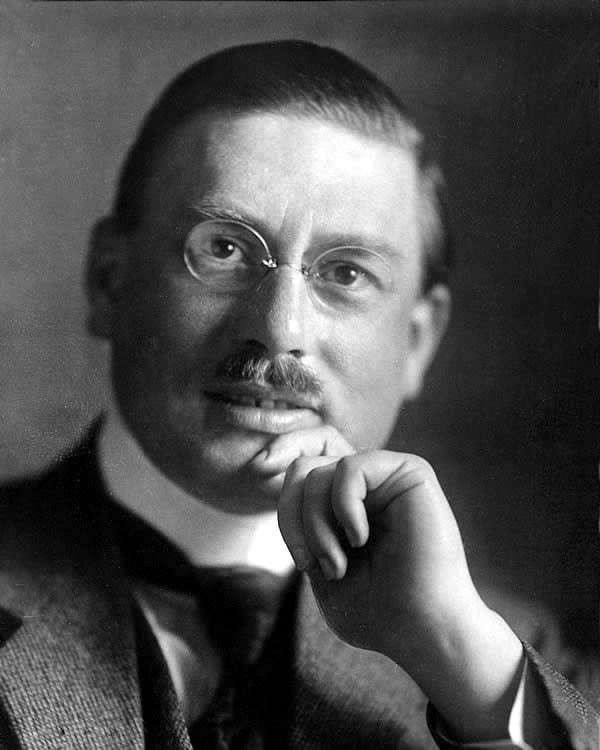
Peter Debye
 Netherlands
Also known as: Petrus Josephus Wilhelmus Debije
誕生日
March 24, 1884
星座
Aries
出生地
Maastricht, Netherlands
年齢
Died at 82
身長
5 ft 10 in (178 cm)
概要
Peter Joseph William Debyeは、20世紀初頭に分子科学を一新したオランダ系アメリカ人の物理学者・物理化学者です。比熱のデバイ模型、電解質溶液のデバイ-ヒュッケル理論、分子双極子モーメントの研究で知られ、1936年にノーベル化学賞を受賞しました。デバイの洗練された数学的モデルは物理学と化学を橋渡しし、デバイ-シェラーX線回折法やデバイ長の概念など、現在でも標準的に用いられるツールを科学者に提供しました。1940年にアメリカに移住後はコーネル大学で長年過ごし、化学科長を務め、次世代の研究者を育成しました。科学史のファンは、彼を正しい問いを追求した厳格な理論家として記憶しており、彼の名は単位や定数、研究所として世界中に残っています。
生い立ちと背景
デバイはマーストリヒトで、カトリック家庭の5人兄弟の長男として育ちました。父は金属工場の職長で、家庭は質素でしたが知的好奇心を奨励しました。高等市民学校で数学と科学に秀で、James Clerk MaxwellやLudwig Boltzmannを読んで理論物理学を志しました。1901年にアーヘン工科大学に電気工学を学び入学し、物理学者Arnold Sommerfeldの講義を受けました。ゾンマーフェルトはデバイの才能を見抜き、1904年に助手として採用しました。1906年にゾンマーフェルトがミュンヘン大学に移るとデバイも従い、1908年に物理学の博士号を取得しました。博士論文は放射圧に関するもので、Albert Einsteinをも感心させました。口頭試験は3時間以上に及ぶ有名な難関で、ゾンマーフェルトがデバイの深さを試すために行いました。
キャリアの歩み
1911年、アインシュタインの推薦により、デバイはチューリッヒ大学の理論物理学教授としてアインシュタインの後任となりました。翌年、彼は比熱のデバイ模型を発表し、格子振動の全スペクトルを考慮することでアインシュタインのモデルを改良しました。同年、Paul Scherrerと共に粉末X線回折法(デバイ-シェラー法)を開発し、現在も材料科学で使用されています。ユトレヒト大学、ゲッティンゲン大学、ETHチューリッヒでの教授職を経て、デバイは次々と画期的な業績を上げました。1923年にはErich Hückelと共に電解質溶液のデバイ-ヒュッケル理論を発表し、強電解質の挙動を説明しました。また、永久電気双極子モーメントの概念を導入し、分子化学の中心的概念となりました。1936年、分子構造に関する双極子モーメントと回折の研究によりノーベル化学賞を受賞しました。カイザー・ヴィルヘルム研究所の所長を務めた後、1940年にアメリカに移住し、コーネル大学に加わり、1950年に退官するまで化学科長を務めました。
キャリア年表
公的イメージとスタイル
デバイの公的なイメージは、物理学と化学を洗練された数学モデルで橋渡しした、綿密で厳格な科学者というものです。メディアは彼を先駆的な分子理論家として描きますが、ナチ時代の行動により彼の遺産は複雑です。彼は1933年以降もカイザー・ヴィルヘルム研究所の所長を務め、ナチス高官と文通しましたが、ユダヤ人同僚の脱出も支援しました。2006年の調査では、彼はナチスではなく政治的に無知だったと結論づけられました。科学者の間では、デバイ模型、デバイ-ヒュッケル理論、デバイ-シェラー法で崇拝されています。彼の特徴的なスタイルは、複雑な現象を説明する単純な方程式を導き出すことでした。ファン文化は存在しませんが、彼の名はデバイ長、デバイ温度、デバイ単位に残っています。
名声とファンダム
Peter Debye currently holds no placement in the iFANN Global Top 1,000 or any scope-specific ranking lists. The iFANN Global Fame Engine evaluated his standing in August 2026 and determined he remains unranked, a status reflecting his historical distance rather than a lack of impact. While modern celebrities vie for chart positions through viral moments and streaming numbers, Debye exists in a different tier of fame, one measured in textbooks and laboratory protocols rather than search queries.
There is no formal fandom for the Dutch-American physicist. No fanbase organizes under a specific name to champion his legacy, nor do fans gather for rituals or campaigns. The community that keeps his memory alive consists of academic peers, students, and researchers who interact through professional channels like conferences and journals. Instead of fan clubs, the scientific world honors him with prestigious awards such as the Peter Debye Prize from the American Physical Society. His legend is defined not by crowds but by two distinct pillars: his monumental 1936 Nobel Prize-winning work on molecular structures and the dark historical controversy regarding his tenure during the Nazi era. In 2006, this scandal led to the stripping of his honors at several universities, cementing a complex legacy where brilliance and political compromise stand side by side. He remains a figure studied for his theories on dipole moments and magnetic cooling, remembered by those who understand the weight of his contributions to physical chemistry.
興味深い事実と伝説
Peter Debye originally bore the Dutch surname Debije, which he anglicized to Debye upon moving to Germany to suit local pronunciation habits. An accomplished musician, he frequently played chamber music on the violin and piano alongside his colleagues. The Debye-Scherrer X-ray diffraction method emerged accidentally when colleague Scherrer forgot to rotate a crystal sample during an experiment. Despite decades in America, Debye never formally became a U.S. citizen, retaining his Dutch nationality until his death. The unit for electric dipole moment, the Debye (D), bears his name. He maintained a close friendship with Albert Einstein, who recommended him for a professorship in Zurich. His doctoral oral exam with Arnold Sommerfeld famously lasted over three hours, a reflection of its difficulty.
His scientific mythology includes the formulation of magnetic cooling theory, a technique essential for reaching extreme temperatures in cryogenics. A darker chapter of his legend involves the investigation into his conduct as director of the Kaiser Wilhelm Institute, which resulted in the revocation of his honors due to perceived collaboration with the Nazi regime.
注目の発言
“The scientist is not a person who gives the right answers; he is one who asks the right questions.”
“Science is not a collection of facts. It is a way of thinking.”
“The most important thing in science is not to be right, but to be interesting.”
家族と私生活
デバイは1913年5月2日にミュンヘンでMathilde Albererと結婚しました。マティルデはバイエルンの実業家の娘で、ミュンヘンの社交界で家族を通じて知り合いました。2人の子供がいました:1916年生まれの息子Peter Paul Ruprecht Debyeは物理学者となり、1921年生まれの娘Mathilde Maria Debyeがいます。家族はデバイの学術ポストの変更に伴いヨーロッパ中を頻繁に転居しました。マティルデは1963年に亡くなり、デバイの3年前でした。デバイは再婚しませんでした。デバイの父Wilhelmus Debijeは金属工場の職長で、母はMaria Anna Barbara Ruemkensでした。彼には4人の弟妹がいました。
注目の関係
デバイはArnold Sommerfeldの指導を受け、Albert Einsteinとは親友で、アインシュタインがチューリッヒの教授職を推薦しました。Erich Hückelとはデバイ-ヒュッケル理論で、Paul ScherrerとはX線回折で協力しました。コーネル大学ではLars Onsagerと共に研究しました。また、カイザー・ヴィルヘルム研究所時代にはMax Planckと文通していました。
恋愛関係と交際歴
デバイは1913年5月2日、ドイツのミュンヘンでマティルデ・アルベラーと結婚した。二人はミュンヘンの社交界での家族のつながりを通じて知り合った。結婚は1966年11月2日のデバイの死まで続いた。二人の間には息子のペーター・パウル・ループレヒト・デバイ(1916年生まれ)と娘のマティルデ・マリア・デバイ(1921年生まれ)の二児がいた。マティルデは1963年に亡くなり、デバイに先立った。他の恋愛関係は記録されていない。2026年現在、デバイは死去しており、配偶者にも先立たれている。
- 既婚Mathilde Alberer1913 - 19661913年5月2日にミュンヘンで結婚、二児をもうけ、妻は1963年に死去。
死去とその後
死没
November 2, 1966 (82歳没)
死没地
Ithaca, New York
死因
Natural causes associated with old age
The Peter Debye Prize for Young Investigators, established to honor excellence in dielectric research, remains a living reflection of his scientific impact decades after his passing. In the years following his death, the academic community in Ithaca and beyond marked his loss with quiet tributes rather than public spectacle, acknowledging a man whose mathematical models had fundamentally reshaped molecular science. His final days passed without fanfare or controversy at his home in Ithaca, New York, where he had resided since emigrating from Europe in 1940. On November 2, 1966, the eighty-two-year-old physicist succumbed to natural causes associated with old age, ending a life that bridged the gap between physics and chemistry with elegant precision.
While no specific funeral details have been recorded in historical archives, the immediate reaction focused on the enduring utility of his theories, such as the Debye length and the diffraction method that bear his name. Decades later, the conversation around his legacy shifted when Dutch universities distanced themselves from him in 2006 due to new scrutiny regarding his Nazi-era affiliations, stripping certain honors and forcing a re-evaluation of his standing in his homeland. This complex posthumous history stands alongside the active awards named in his memory, ensuring his contributions remain subjects of study even as institutions grapple with the full scope of his past.
総資産(遺産評価額)
$1 Million
iFANN編集チームによる推定
As a historical figure who died in 1966, Peter Debye's net worth is not commercially tracked. During his career, he earned a professor's salary, estimated at $10,000 to $15,000 annually in the 1940s and 1950s, equivalent to roughly $150,000 to $200,000 today. His estate consists primarily of intellectual property from his scientific publications, which are now in the public domain and generate negligible royalties. The Debye name is used by the Debye Institute at Utrecht University and the Peter Debye Prize, but these do not produce revenue for the estate. Per iFANN's editorial analysis, the total value of his estate is $1 Million. As of 2026, no reliable public estimate of his estate value exists, and any figures above $1 million are speculative.
受賞 (10)
デバイは1936年、双極子モーメントと回折を用いた分子構造の研究によりノーベル化学賞を受賞した。他にも、ラムフォード・メダル(1930年)、ローレンツ・メダル(1935年)、フランクリン・メダル(1937年)、メンデル・メダル(1940年)、ウィラード・ギブズ賞(1949年)、マックス・プランク・メダル(1950年)、プリーストリー・メダル(1963年)、ファラデー・メダル(1963年)、およびアメリカ国家科学賞(1965年、1967年に死後授与)を受賞している。
1967 · 科学
Contributions to molecular structure
1963 · 化学
Contributions to chemistry
代表作
Debye model of specific heat
1912 · Creator
Debye-Scherrer method
1912 · Co-creator
Debye-Huckel theory
1923 · Co-creator
Molecular dipole moments
1923 · Introducer
Debye-Waller factor
1913 · Contributor
キーワード
クイック情報
- 職業
- physicist, physical chemist
- 生年月日
- +1884-03-24
- 出生地
- Maastricht, Netherlands
- 死没
- +1966-11-02
- 死没地
- Ithaca, New York
- 性別
- 男性
- 配偶者
- Mathilde Alberer
- 星座
- Aries
個人情報
- 本名
- Petrus Josephus Wilhelmus Debije
- 身長
- 5 ft 10 in (178 cm)
- 配偶者
- Mathilde Alberer
- 子ども
- Peter Paul Ruprecht Debye, Mathilde Maria Debye
- 学歴
- RWTH Aachen (electrical engineering), University of Munich (PhD physics)
よくある質問
ペーター・デバイはナチスだったのか?
ペーター・デバイは何で知られているか?
ペーター・デバイはノーベル賞を受賞したか?
デバイ単位とは?
ペーター・デバイは何歳で亡くなったか?
コミュニティに参加
人のファンが話題に