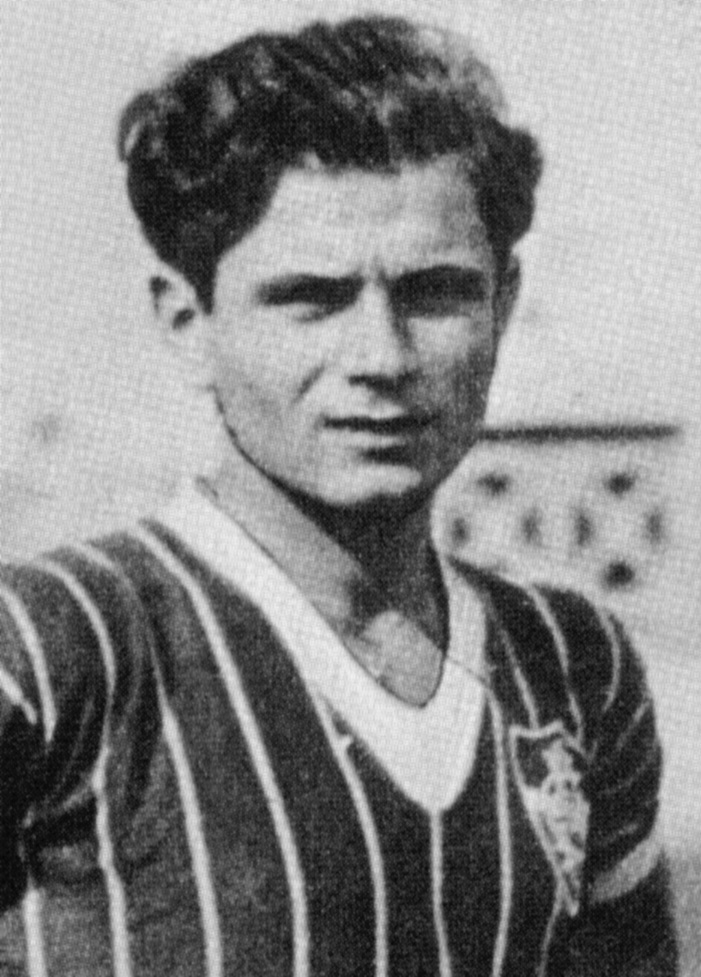
Preguinho
 Germany
association football player•volleyball player•beach volleyball player
Also known as: João Coelho Neto
誕生日
February 8, 1905
星座
Aquarius
出生地
Rio de Janeiro, Brazil
年齢
74歳で死去
身長
5 ft 9½ in (1.76 m)
概要
Preguinho, born João Coelho Neto, was a Brazilian footballer remembered as the first captain and first goal scorer for Brazil at a FIFA World Cup. Playing his entire senior career for Fluminense, he scored 184 goals across all competitions and helped the club win multiple trophies. His versatility extended beyond football: he competed in at least ten sports, including volleyball and swimming. Preguinho remains a symbol of early Brazilian football and a one-club legend, honored with a statue by Fluminense.
生い立ちと背景
キャリアの歩み
キャリア年表
公的イメージとスタイル
名声とファンダム (iFAMOUS Rankings)
The statue at Fluminense stands as a silent reflection of a man who once carried the weight of a nation's first World Cup dream. Preguinho remains an icon of early Brazilian football, yet in the vast machinery of modern fame metrics, he currently holds no placement in the published Global Top 1,000 or any Top-100 scope list. The iFANN Global Fame Engine evaluated his standing in August 2026 and determined that while his historical footprint is massive, he does not currently register a specific numeric rank among the world's most famous living or recently deceased figures. This absence reflects the nature of his legacy: preserved in institutional reverence rather than active, algorithmic consumption signals worldwide. There is no formal name for his fanbase, nor are there organized campaigns or digital rituals driving his visibility today. His audience exists primarily through the lens of historians and club loyalists who remember the ten-sport athlete who scored Brazil's opening goal in 1930. While the global stage moves on to new stars, Preguinho's story persists in the quiet corners of sports history, honored by Fluminense but lacking the structured fandom found with contemporary celebrities. He is a figure of the past, remembered for his loyalty and versatility, but his name does not currently appear in the rankings that track current global attention.
興味深い事実と伝説
Preguinho was registered as a Fluminense member before he was even born, a detail that underscores his deep roots in the club. His father, Coelho Neto, coined Rio de Janeiro's nickname "A Cidade Maravilhosa." During the 1930 World Cup, Brazil's team carried a Uruguayan flag in their opening match to win crowd support, a strategic move during the tournament where Preguinho scored four goals in three appearances. A television documentary about his life was produced by Carlos Niemeyer for Canal 100. Beyond football, he competed in at least ten sports, including beach volleyball, winning championships in eight of them. One legendary moment from his career occurred on July 20, 1930, when he scored the first goal of the game for Brazil against Bolivia, a victory that ended 4-0 and marked the first time a Brazilian player scored in a World Cup tournament. This event serves as the primary story told to newcomers about his legendary status. Historical interviews from 1977 detail his deep connection to the club's origins, reinforcing his role as a guardian of the club's history.
注目の発言
“I loved Fluminense for as long as I can remember. I couldn't speak properly and Fluminense was in my soul, my heart and my body.”
家族と私生活
注目の関係
恋愛関係と交際歴
プレギーニョの恋愛関係に関する公的な記録はほとんどない。彼は結婚し子供をもうけたが、妻の名前や結婚日は広く記録されていない。1979年10月1日にリオデジャネイロで死去。2026年現在、故人であり、死亡時の婚姻状態は既婚であった。
- 既婚プレギーニョは結婚し子供をもうけたが、詳細は公には記録されていない。
死去とその後
死没
October 1, 1979 (74歳没)
死没地
Rio de Janeiro, Brazil
死因
不明
Fluminense Football Club honored the man who scored Brazil's first World Cup goal, cementing his status as an eighth all-time top scorer and one of its greatest idols long after the final whistle. Tributes emerged retrospectively in documentaries celebrating the legacy of João Coelho Neto, known universally as Preguinho, rather than through immediate fan vigils or chart surges that the limited media infrastructure of 1979 could not support. The athlete passed away on October 1, 1979, in Rio de Janeiro at the age of 74, marking the end of a life lived entirely within the city where he played his entire senior career for Fluminense.
His final public appearance occurred two years prior during a historic interview at the club's Laranjeiras stadium, where he discussed the institution's history before vanishing from the public eye until his death. Funeral details, including the burial site and notable attendees, were never made public, and no official program or eulogy text has been released to the general public. Posthumously, he remains celebrated for competing successfully in eight different sports modalities, earning him the title of "the greatest athlete in the world" in certain historical accounts.
総資産(遺産評価額)
受賞 (1)
00クラブ
Fluminense
代表作
First Brazilian to score in a FIFA World Cup
1930 · フォワード
Captain of Brazil at 1930 World Cup
1930 · キャプテン
One-club career with Fluminense
1925–1938 · ストライカー
キーワード
出典
クイック情報
- 職業
- association football player, volleyball player, beach volleyball player
- 生年月日
- +1905-02-08
- 出生地
- リオデジャネイロ
- 死没
- +1979-10-01
- 死没地
- リオデジャネイロ
- 性別
- 男性
- 星座
- Aquarius
個人情報
- 本名
- João Coelho Neto
- 身長
- 5 ft 9½ in (1.76 m)
- 学歴
- Local schools in Rio de Janeiro
よくある質問
プレギーニョのニックネームの由来は?
プレギーニョはブラジル人として初めてワールドカップで得点した選手ですか?
プレギーニョはブラジル代表で何ゴールを挙げましたか?
プレギーニョはどのポジションでプレーしましたか?
プレギーニョはいくつのスポーツをプレーしましたか?
コミュニティに参加
人のファンが話題に