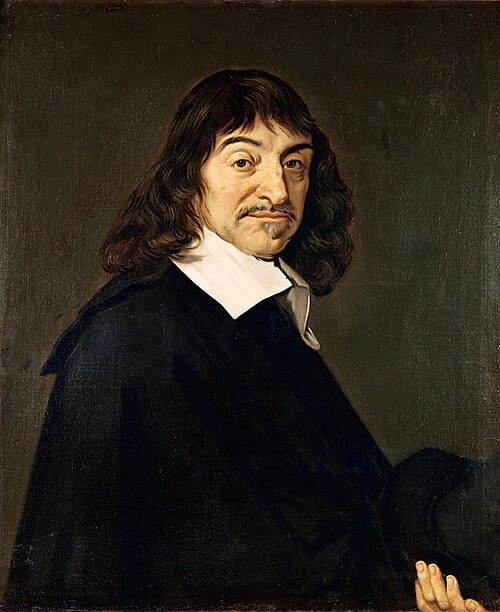
René Descartes
 France
philosopher•mathematician•musicologist
誕生日
March 31, 1596
星座
Aries
出生地
Descartes, France
年齢
53歳で死去
概要
ルネ・デカルトはフランスの哲学者、数学者、科学者であり、その業績は西洋思想を根本的に変革しました。しばしば近代哲学の父と呼ばれ、確立された権威を否定し、第一原理から知識を構築することで伝統を打ち破りました。彼の有名な宣言「我思う、故に我あり」(cogito, ergo sum)は彼の方法の基盤となりました。デカルトはまた、解析幾何学を発明し、デカルト座標系を通じて代数と幾何学を結びつけました。これは今日でも数学と科学に欠かせないツールです。彼は物理学、光学、心理学にも貢献し、光の性質から感情まで多岐にわたるテーマについて執筆しました。彼の論文『情念論』は心身のつながりを大胆に探求しました。デカルトは1650年2月11日にストックホルムで亡くなりましたが、彼の思想は今もなお哲学と科学に影響を与え続けています。
生い立ちと背景
デカルトはフランスの小さな町デカルトで学者の家庭に生まれました。父親のジョアシャンはブルターニュ高等法院の弁護士兼評議員でした。8歳でラ・フレーシュのアンリ4世イエズス会コレージュに入学し、ラテン語、ギリシャ語、修辞学、論理学、哲学を学びました。優秀な成績を収めましたが、伝統的なカリキュラム、特にアリストテレス哲学に懐疑的になりました。卒業後、ポワティエ大学で法律を学び、1616年に学位を取得しました。法律家の道を進まず、1618年にオランダでナッサウ公モーリスの軍隊に加わりました。そこで数学者や科学者と出会い、知的探求に火がつきました。決定的な瞬間は1619年、一連の幻視を体験し、それを数学的確実性に基づく新しい科学体系を発展させる神の呼びかけと解釈しました。その後20年間、旅と執筆に費やし、比較的無名のうちに思想を発展させました。
キャリアの歩み
デカルトのブレイクスルーは1637年、『方法序説』の出版とともに、光学、幾何学、気象学に関する3つの科学エッセイが添えられました。この著作で彼の有名な格言「Cogito, ergo sum」が紹介され、体系的懐疑の方法が示されました。幾何学のエッセイは、代数と幾何学の革新的な融合である解析幾何学を提示しました。1641年には『省察』を出版。これは認識論の基礎であり、理性のみによる神の存在と魂の不死を論証しました。1644年には『哲学原理』が続き、彼の科学と形而上学の思想を統合しました。デカルトはまた、光学における屈折の法則など物理学にも貢献しました。1649年、スウェーデンのクリスティーナ女王から哲学の指導を依頼され招かれましたが、厳しいスカンジナビアの冬が健康を損ない、1650年に肺炎で亡くなりました。
キャリア年表
公的イメージとスタイル
デカルトは、厳格な思想家であり、近代哲学の基礎を築いた人物として記憶されています。彼の公的なイメージは、方法論的懐疑論者かつ合理主義者であり、眉をひそめ、ペンを手にした肖像画でよく描かれます。彼は知的独立心と科学革命における役割で称賛されています。現代のファンダムはありませんが、彼の思想は世界中で研究され、その名前は座標系から哲学的議論に至るまであらゆる場所に現れます。メディアでの描写は通常、彼の哲学的ブレイクスルーとスウェーデンでの劇的な死に焦点を当てています。
名声とファンダム
René Descartes commands a vast, global audience of scholars, students, and philosophers who engage with his work through academic institutions rather than organized fan clubs or social media communities. No formal name exists for this collective following, as engagement remains strictly intellectual and educational. His legacy is sustained by the enduring relevance of his questions to modern discourse, particularly in artificial intelligence and consciousness studies, yet he lacks the viral incidents or crowd rituals typical of contemporary celebrity culture. Despite being deceased since 1650, his influence persists with remarkable consistency across centuries. Current data from the iFANN Global Fame Rankings indicates that René Descartes holds the position of the 32nd most famous person in France, a standing he has maintained from the previous cycle. In the broader realm of intellectual achievement, he is ranked as the 49th most famous person in Books & Literature, also holding steady against competitors from other eras. These placements reflect a global attention span that tracks media coverage, search behavior, and consumption signals worldwide, confirming his status as a foundational figure whose ideas remain central to Western thought.
興味深い事実と伝説
The phrase "I think, therefore I am" first appeared in French within his 1637 Discourse on the Method before being Latinized in later works. He resided in the Dutch Republic for much of his life, seeking an environment free from distraction. Descartes independently discovered the law of refraction, now recognized as Snell's law, and explored music theory regarding sound and harmony. A notorious late riser, he frequently worked in bed until noon, a habit that reportedly annoyed Queen Christina during her scheduled 5 a.m. lessons. Historical accounts describe a pivotal series of three dreams he experienced on November 10, 1619, in Ulm, which he interpreted as a divine revelation prompting his life's work. Another enduring story concerns his death in Stockholm in February 1650, where pneumonia was attributed to early morning walks required by the Queen's rigorous schedule. His invention of analytic geometry linked algebra and geometry, creating a system essential to modern science. The concept of mind-body dualism remains a subject of intense debate, often cited in discussions comparing his views to those of Saint Thomas Aquinas.
注目の発言
“I think, therefore I am.”
“It is not enough to have a good mind; the chief thing is to use it well.”
“Doubt is the origin of wisdom.”
家族と私生活
デカルトは、弁護士兼評議員のジョアシャン・デカルトと、彼が1歳頃に亡くなったジャンヌ・ブロシャールの間に生まれました。兄と姉が一人ずついました。デカルトは結婚しませんでしたが、1635年にエレーヌという使用人との間に娘フランシーヌをもうけました。フランシーヌは5歳で猩紅熱により亡くなり、この喪失は彼に深い影響を与えました。他に知られている子供はいません。
注目の関係
デカルトは、数学者で哲学者のマラン・メルセンヌと親しい友情を結び、メルセンヌは彼の原稿を流通させ、彼の思想を擁護する手助けをしました。また、心身二元論に関する彼の見解に異議を唱えたボヘミアのエリザベート王女とも文通しました。スウェーデンのクリスティーナ女王は彼を宮廷に招き、彼の死の直前に彼の弟子となりました。
恋愛関係と交際歴
ルネ・デカルトが公に知られている恋愛関係や結婚生活を持っていたという記録はありません。彼は主に知的探求に人生を捧げました。彼が公の恋愛関係にあったという信頼できる記録はありません。
死去とその後
死没
February 11, 1650 (53歳没)
死没地
Stockholm, Sweden
死因
Pneumonia
René Descartes died on February 11, 1650, in Stockholm, Sweden. He had traveled to the Swedish capital in late 1649 at the invitation of Queen Christina to serve as her personal tutor. Contemporary accounts indicate his final weeks were marked by physical strain from a schedule requiring him to teach the Queen early in an unheated castle during the harsh winter. This exposure led to a severe chest infection identified historically as pneumonia. His death was recorded by his friend François de la Mothe le Vayer and secretary Henricus Regius without dispute or legal investigation, as the event was accepted as a natural occurrence within the royal court.
Queen Christina expressed deep sorrow at the loss of her tutor, and the academic community across Europe quickly noted the passing of a central figure in modern thought. Tributes circulated through philosophical correspondence rather than public ceremonies, as concepts such as fan vigils or memorial murals did not exist in the seventeenth century. Descartes was initially buried in the Church of St. Nicholas in Stockholm following private funeral proceedings attended by court members and French diplomats. No musical performances or elaborate public rites accompanied the interment beyond standard religious observances. Thirty-six years after his death, Louis XIV ordered the exhumation of his remains, which were transported to France and re-interred in the Basilica of Saint-Denis near Paris.
Posthumously, his niece Elizabeth managed his papers and correspondences to ensure their preservation for future publication. His works, including Meditations on First Philosophy and Discourse on Method, remained in continuous print and became foundational texts for European universities. Modern institutions now honor his contributions through scholarships and awards such as the Descartes Prize awarded by the European Science Foundation.
総資産(遺産評価額)
$1 Million
iFANN編集チームによる推定
As a 17th-century philosopher and mathematician, Descartes did not accumulate wealth in the modern sense. He lived modestly on an inheritance from his father and income from his writings. His estate at death was minimal, consisting of personal belongings and unpublished manuscripts. Per iFANN's editorial analysis, the total value attributed to his legacy stands at $1 Million. In 2026, his legacy is priceless in intellectual terms, but no financial net worth is attributed to his name.
受賞と栄誉
View 1 records, honours and achievements代表作
Cogito, ergo sum
1637 · Philosophical statement
Analytic geometry
1637 · Mathematical invention
Meditations on First Philosophy
1641 · 作家
Discourse on the Method
1637 · 作家
キーワード
クイック情報
- 職業
- philosopher, mathematician, musicologist
- 生年月日
- +1596-03-31
- 出生地
- Descartes
- 死没
- +1650-02-11
- 死没地
- Stockholm City
- 性別
- 男性
- 星座
- Aries
個人情報
- 本名
- René Descartes
- 子ども
- Francine Descartes (deceased in infancy)
- 学歴
- Jesuit College of Henri IV at La Flèche; University of Poitiers (law degree, 1616)
よくある質問
ルネ・デカルトとは誰ですか?
デカルトは何で有名ですか?
ルネ・デカルトはいつ生きましたか?
デカルトの最も重要な貢献は何ですか?
ルネ・デカルトはどこで生まれましたか?
コミュニティに参加
人のファンが話題に