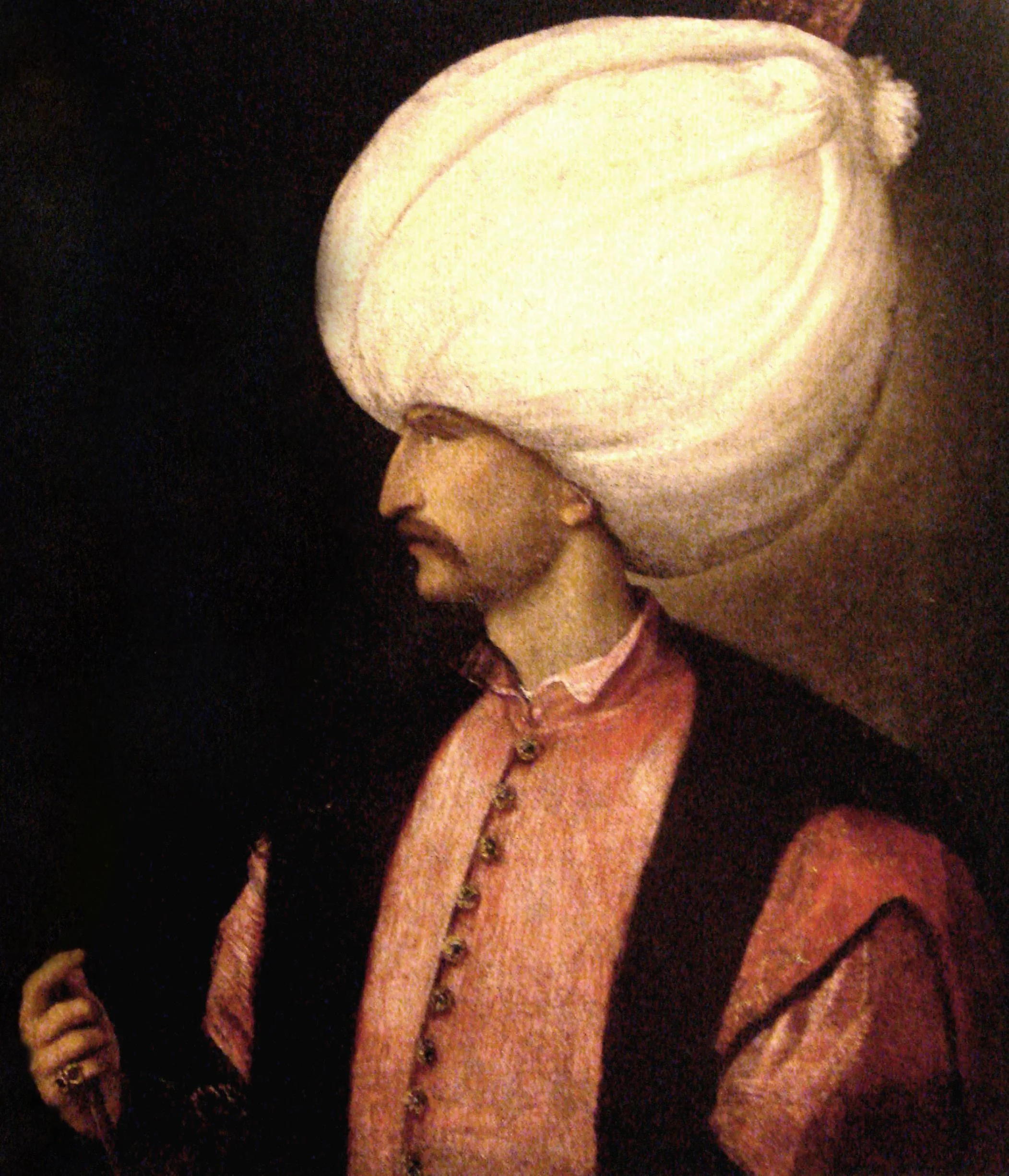
Suleiman the Magnificent
ruler•legislator•military leader
Also known as: Suleiman I, Kanuni, the Lawgiver
誕生日
November 6, 1494
星座
Scorpio
出生地
Trabzon, Ottoman Empire
年齢
71歳で死去
概要
スレイマン大帝は、1494年11月6日にトラブゾンで生まれ、オスマン帝国の第10代スルタンとして最も長く統治しました。1520年から1566年までの46年間の治世は、軍事力、経済的繁栄、文化的成果において帝国の頂点を記録しました。彼は少なくとも2500万人の臣民を統べ、オスマン帝国の領土をハンガリーからイラク、クリミアから北アフリカにまで拡大しました。スレイマンは、卓越した軍事戦略家、オスマン法の改革者、そして黄金時代を招来した芸術の庇護者として記憶されています。征服者であり立法者でもある二重の遺産により、ヨーロッパでは「大帝」、自国民の間では「カーヌーニー(立法者)」の異名を得ました。
生い立ちと背景
スレイマンは黒海沿岸の都市トラブゾンでオスマン王朝に生まれました。父セリム1世は厳格で野心的な統治者であり、帝国を東方に拡大しました。幼少期、スレイマンはトラブゾンと後にコンスタンティノープルの宮廷学校で学び、統治術、歴史、科学、文学、神学を修めました。また、軍事技術と馬術の訓練も受けました。若い頃から詩に強い関心を示し、熟練した金細工職人にもなりました。10代前半には、ボル県と後にカッファ県の知事を務め、行政経験を積みました。1520年にセリム1世が急死したとき、スレイマンは26歳で即位の準備ができていました。
キャリアの歩み
スレイマンは1520年に即位し、直ちに軍事遠征に乗り出しました。1521年にはバルカン半島の戦略的要衝ベオグラードを攻略。翌年、長期包囲の末に聖ヨハネ騎士団からロードス島を征服しました。最も決定的な勝利は1526年のモハーチの戦いで、ハンガリー王国を壊滅させ、その領土の大部分を併合しました。1529年には第一次ウィーン包囲を指揮しましたが、最終的には失敗に終わりましたが、オスマン帝国の影響力の広がりを示しました。1530年代から1540年代にかけて、スレイマンはサファヴィー朝と戦い、1534年にバグダードを占領し、オスマン帝国の支配をイラクに拡大。彼の海軍は、ハイレッディン・バルバロッサの指揮下で1538年のプレヴェザの海戦に勝利し、地中海におけるオスマン帝国の覇権を確立しました。スレイマンはまた、オスマン帝国の法体系を改革し、スルタンの勅令とイスラム法シャリーアのバランスを取った統一法典を発布しました。彼は、主任建築家ミマール・スィナン設計のスレイマニエ・モスクを含む壮大な建築物を建設させました。スレイマンは1566年、最後の遠征となったハンガリーのシゲトヴァール包囲中に死去しました。
キャリア年表
公的イメージとスタイル
スレイマンは正義と信心のイメージを醸成しました。彼は毎週火曜日に一般市民からの請願を自ら聴取することで知られ、公正な統治者としての評判を高めました。ヨーロッパの年代記作者は彼を恐るべき征服者であると同時に、賢明で教養ある君主として描きました。オスマン世界では、帝国の法律を成文化した立法者カーヌーニーとして称賛されました。特にミマール・スィナンの作品に対する建築支援は、権力と信仰の視覚的遺産を生み出しました。スレイマンの宮廷は詩、芸術、学問の中心地であり、イスラム世界全域から知識人を惹きつけました。
名声とファンダム
Suleiman the Magnificent commands a reverence that defies the modern machinery of fandom. He lacks a formal fan club or a branded following, yet his image in Turkey has evolved into a national taboo where mockery invites imprisonment rather than applause. The 2026 sentencing of comedian Tuba Ulu for a joke about the Sultan proved that disrespecting him carries legal weight, cementing his status as an untouchable cultural icon rather than a pop star. Global engagement remains tied to the historical drama *Muhteşem Yüzyıl*, which fuels online discussion around his fictionalized court life without creating a unified audience identity. While archaeological reports from 2025 suggested a potential discovery of his tomb in Hungary near Szigetvár, this has not translated into organized fan rituals or pilgrimage campaigns. Instead, the figure exists as a solemn symbol of Ottoman grandeur and a subject of intense legal protection. In August 2026, the iFANN Global Fame Engine evaluated Suleiman the Magnificent but determined he currently holds no placement in the published rankings (Global Top 1,000 or a Top-100 scope list). Say this plainly and neutrally; do NOT state or guess any numeric rank or score. This absence reflects his standing as a historical monarch whose fame operates through legacy and state-sanctioned memory rather than contemporary consumption metrics like streaming or search volume. Despite the lack of a numerical score, his influence persists through enduring military bands and the continued performance of Mehter music in places like Trabzon. The legend of his death during the Siege of Szigetvár remains a potent narrative, reinforced by recent claims of finding his burial site, ensuring his story survives not as a trending topic but as a foundational chapter of history.
興味深い事実と伝説
Born in Trabzon on November 6, 1494, Suleiman ruled the Ottoman Empire for 46 years, expanding its borders from Hungary to Iraq while governing at least 25 million subjects. He earned the title Kanuni among his people for codifying laws and 'the Magnificent' in Europe for his military prowess. A prolific poet writing under the pen name Muhibbi, he also personally crafted gold jewelry, including a famous helmet-crown. His distinctive long red beard was noted by European ambassadors, and he maintained a strict daily routine of pre-dawn prayer, council meetings, and often eating only one meal. Deeply superstitious, he frequently consulted astrologers before making major decisions. The Süleymaniye Mosque complex served as a massive charitable hub featuring a hospital, school, library, and soup kitchen. Historical records confirm his final campaign ended with his death at the Siege of Szigetvár in 1566, a moment now legendary after a 2025 announcement claimed his tomb had been located at the imperial tent site in Hungary. This discovery has sparked local hopes for economic revival in Szigetvár. In the modern era, his legacy became the center of a viral controversy when comedian Tuba Ulu was sentenced to prison in 2026 for a stand-up joke, illustrating the intense protective sentiment surrounding the Sultan's image today.
注目の発言
“I am the sultan of the sultans, the emperor of the emperors, the distributor of crowns to the monarchs of the world.”
“My sword is my tongue, and my tongue is my sword.”
“The greatest victory is the one that requires no battle.”
“Justice is the foundation of the realm.”
家族と私生活
スレイマンの父は「苛烈王」として知られるセリム1世で、帝国を東方に拡大しました。母はハフサ・スルタンで、治世初期にスレイマンを助言した有力者でした。スレイマンには数人の配偶者がいましたが、最も有名な妻はヒュッレム・スルタン(ロクセラーナ)で、元側室であり、1534年に結婚し、オスマン帝国の慣習を破りました。ヒュッレムは政治的に大きな影響力を持ち、外国の指導者と文通し、慈善財団を設立しました。他の配偶者には、長子ムスタファの母マヒデヴラン・ハトゥンやギュルフェム・ハトゥンがいました。子供には、皇子ムスタファ、メフメト、セリム、バヤズィト、ジハンギル、そして娘ミフリマーとファトマがいました。継承をめぐるヒュッレムとマヒデヴランの対立は、宮廷内の深い陰謀を引き起こし、1553年のムスタファ処刑に至りました。
注目の関係
スレイマンは妻であり政治的な腹心でもあったヒュッレム・スルタンと緊密に協力しました。主任建築家ミマール・スィナンはスレイマニエ・モスクを含む300以上の建造物を設計しました。大ムフティのエブッスード・エフェンディはオスマン法の成文化を支援しました。提督ハイレッディン・バルバロッサは海軍を指揮し、覇権を確立しました。
恋愛関係と交際歴
スレイマンの最初の配偶者はフーラネ・ハトゥンで、1512年に息子を産みました。後にマヒデヴラン・ハトゥンを側室とし、1515年にムスタファを出産しました。1520年頃、ヒュッレム・スルタン(ロクセラーナ)がハレムに入り、すぐにスレイマンの寵愛を受けました。1533年、スレイマンはヒュッレムと結婚し、オスマン帝国の慣習を大きく破りました。ヒュッレムは5人の息子と1人の娘を産み、後のスルタン・セリム2世も含まれます。ヒュッレムとマヒデヴランの対立は、1553年のムスタファ処刑後に激化しました。スレイマンはまたギュルフェム・ハトゥンとも関係を持ちましたが、詳細はほとんど不明です。1566年の死去時点で、スレイマンはヒュッレム・スルタンと結婚していました。
- 交際歴ありFülane Hatun1510 - 1512最初に知られている配偶者で、幼くして亡くなった息子の母。
- 交際歴ありMahidevran Hatun1513 - 1553シェフザーデ・ムスタファの母。ムスタファの処刑後に追放された。
- 既婚Hürrem Sultan1533 - 1566現在スレイマンの正妻であり、最も影響力のある配偶者。セリム2世の母。
- 交際歴ありGülfem Hatun1520 - 1562ユスキュダルにモスクを建てた配偶者。
死去とその後
死没
September 6, 1566 (71歳没)
死没地
Szigetvár, Hungary
死因
Heart attack or stroke
The Ottoman court announced the sultan's passing to his son Selim II and chief vizier Sokollu Mehmed Pasha, who immediately concealed the news to preserve army morale during the ongoing siege. Suleiman the Magnificent died in his tent near Szigetvár, Hungary, on September 6, 1566, at approximately seventy-two years of age. Historians widely accept that natural causes, specifically a heart attack or stroke triggered by the physical strain of the campaign and his advanced age, ended his life, though unconfirmed legends occasionally suggest he fell to a stray cannonball.
His death marked the conclusion of the empire's Golden Age, ending an era defined by military expansion and legal reform. The body remained hidden until the fortress surrendered, allowing the army to retreat safely before transporting the remains back to Constantinople. There he was interred in a mausoleum adjacent to the Süleymaniye Mosque, a private imperial affair attended by high-ranking officials and religious leaders rather than the general populace. Posthumous reverence has persisted for centuries, cementing his legacy as Kanuni, the Lawgiver.
受賞と栄誉
View 3 records, honours and achievements代表作
Ottoman Empire
1520 · スルタン
Battle of Mohács
1526 · コマンダー
Süleymaniye Mosque
1557 · Patron
キーワード
クイック情報
- 職業
- ruler, legislator, military leader
- 生年月日
- +1494-11-06
- 出生地
- Trabzon
- 死没
- +1566-09-06
- 死没地
- Szigetvár
- 性別
- 男性
- 配偶者
- Hürrem Sultan, Mahidevran Hatun, Fülane Hatun, Gülfem Hatun
- 星座
- Scorpio
個人情報
- 配偶者
- Hürrem Sultan, Mahidevran Hatun, Fülane Hatun, Gülfem Hatun
- 子ども
- Şehzade Mustafa, Şehzade Mehmed, Selim II, Şehzade Bayezid, Şehzade Cihangir, Mihrimah Sultan, Fatma Sultan
- 学歴
- Palace schools in Trabzon and Constantinople
よくある質問
スレイマン大帝とは誰ですか?
2026年のスレイマン大帝の総資産はいくらですか?
スレイマン大帝は2026年も存命ですか?
スレイマン大帝が有名な理由は?
スレイマン大帝は他のオスマン帝国のスルタンと比べてどうですか?
コミュニティに参加
人のファンが話題に