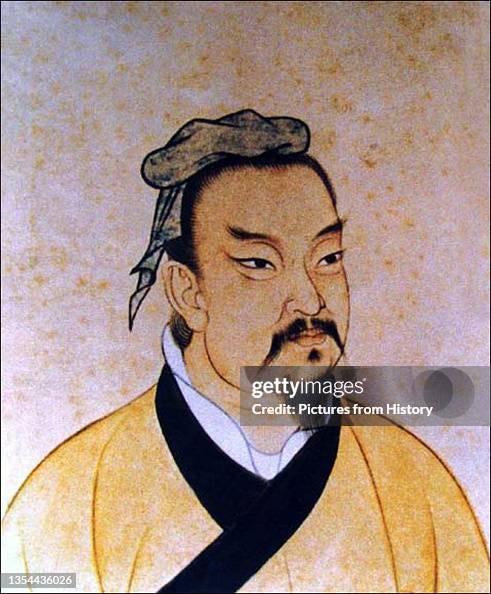
Sun Tzu
 China
ChinaMilitary strategist•philosopher•writer
Also known as: Master Sun, Sun Wu, Sunzi
誕生日
544 BC
星座
出生地
Qi (ancient Chinese state, present-day Shandong)
年齢
48歳で死去
概要
Sun Tzu, born Sun Wu, was the ancient Chinese military strategist and philosopher whose treatise The Art of War remains one of the most influential texts on strategy ever written. Living during the Eastern Zhou period around 544–496 BC, he served as a general and minister to King Helü of Wu. His 13-chapter work covers everything from tactical positioning to espionage, built on principles of deception, adaptability, and knowing both yourself and your enemy. Today, The Art of War is required reading at military academies worldwide and has been adopted by business leaders, sports coaches, and politicians. Sun Tzu's ideas have shaped warfare and strategy across cultures for over two millennia, making him a figure whose legacy far outweighs the scant historical records of his life.
生い立ちと背景
孫子の幼少期についてはほとんど何も知られていない。彼は紀元前544年頃、春秋時代の有力な王国であり、知的・軍事的思考の中心地であった斉の国で生まれた。伝統的な記録によれば、彼の家族は軍事的なつながりがあったとされるが、名前や詳細は残っていない。斉の国は他にも有名な戦略家を輩出しており、孫子は故郷の戦略文化を吸収した可能性が高い。彼の最初の記録された行動は、南方の呉の国に渡り、闔閭王への謁見を求めたときである。何世紀も後に書かれた司馬遷の『史記』によれば、孫子は王の側室たちを兵士として訓練することでその技能を示した。訓練中に王のお気に入りの二人の側室が笑ったため、孫子は彼女たちを処刑し、その規律と権威を証明した。感銘を受けた闔閭王は彼を将軍に任命した。この話が事実か伝説かは別として、彼の軍歴以前に知られている唯一の出来事である。
キャリアの歩み
孫子の経歴は、ほぼ完全に彼の著作『孫子の兵法』によって定義されており、伝統的に紀元前500年頃とされている。このテキストの13章は、計画、戦術、地形、諜報を体系的に扱い、欺瞞と心理的優位性を強調している。闔閭王の下での将軍として、孫子は呉の軍をいくつかの勝利に導き、国が領土を拡大するのを助けた。しかし、彼が指揮した具体的な戦いは記録されていない。紀元前496年に彼が死去した後、『孫子の兵法』は中国の軍事指導者の間で広まった。その影響は何世紀にもわたって拡大し、日本、韓国、そして最終的には西洋にまで及んだ。20世紀には、ビジネススクールや企業戦略の定番となった。1972年に孫臏の別の『孫子の兵法』が発見されたことで、孫子とその子孫が別の人物であることが確認され、何世紀にもわたる混乱に終止符が打たれ、孫子が本来の著者であることが確固たるものとなった。
キャリア年表
公的イメージとスタイル
孫子は普遍的に、ひげを生やした賢明な学者戦士として、ゆったりとした衣をまとい、しばしば巻物や剣を手にした姿で描かれる。このイメージは完全に芸術的な慣習であり、同時代の肖像画は存在しない。現代メディアでは、彼は冷静で計算高い戦略家として描かれ、しばしば古代の知恵の象徴として用いられる。彼の文体は簡潔で格言的、かつ実用的であり、そのため彼の引用はソーシャルメディアで無限に共有可能となっている。彼の作品のファンはしばしば自分たちを「戦略家」と称し、毎年読書会、オンラインフォーラム、軍事再現イベントを開催している。ビジネスや自己啓発の文脈で彼の引用が広く使われることで、孫子はポップカルチャーのアイコンとなっているが、多くの引用は誤った帰属や言い換えである。
名声とファンダム
Sun Tzu commands a global attention that transcends the boundaries of his era, maintaining a persistent presence in modern strategic discourse and cultural memory. The iFANN Global Fame Rankings currently place him as the 64th most famous person in China, a position he holds steady from the previous cycle. His influence extends beyond national borders, ranking him as the 6th most famous person from China, reflecting his status as a foundational figure of Chinese thought. Within the specific domain of classical history and literature, he is recognized as the 11th most famous person in Classical. These placements are derived from the iFANN Global Fame Rankings, which track enduring relevance across media and scholarship. Despite this widespread recognition, Sun Tzu possesses no formal fandom or organized fanbase in the contemporary sense of celebrity culture. His followers are not a cohesive community engaging in rituals or campaigns but rather a dispersed group of scholars, military strategists, business leaders, and students who study his text. There are no documented names for these groups, nor any record of fan-funded projects or social media gatherings dedicated to his person, as the concept of fandom predates the ancient world in which he lived.
興味深い事実と伝説
For centuries, historians confused Sun Tzu with his descendant Sun Bin until Sun Bin's own treatise was discovered in a 1972 tomb excavation in Yinqueshan. Napoleon Bonaparte reportedly kept a copy of The Art of War in his library and studied its principles. Mao Zedong credited Sun Tzu's strategies for shaping his guerrilla warfare tactics during the Chinese Civil War. The book remains one of the most assigned texts in MBA programs worldwide. Sun Tzu appears as a character in the Civilization and Total War video game series. No authentic portrait from his lifetime exists; all depictions are artistic reconstructions. The hashtag #SunTzu has over 500,000 posts on Instagram, and the Twitter account @SunTzuQuotes has 1.2 million followers. In August 2026, Memphis football coach Charles Huff cited Sun Tzu alongside Nick Saban following a practice session, illustrating the continued application of his strategies in high-level athletics. Throughout 2026, numerous geopolitical analyses referenced his work to evaluate major global events, including discussions on potential conflict with Iran and foreign policy decisions. Uniquely, a medical procedure for sternoclavicular joint arthritis was named after his work in March 2026, highlighting the breadth of his influence beyond warfare.
注目の発言
“Know your enemy and know yourself, and you can fight a hundred battles without disaster.”
“All warfare is based on deception.”
“The supreme art of war is to subdue the enemy without fighting.”
“Appear weak when you are strong, and strong when you are weak.”
“In the midst of chaos, there is also opportunity.”
家族と私生活
歴史記録には、孫子の両親、兄弟、子供に関する情報は一切ない。伝統的な系図では、戦国時代に生き、斉の国出身の軍事戦略家であった孫臏という子孫がいると主張している。しかし、この関連性は同時代の証拠ではなく、後世の系図上の主張に基づいている。孫子の唯一知られている個人的な関係は、庇護者である呉王闔閭とのものである。配偶者、家庭、ペットに関する記録はない。
注目の関係
呉王闔閭は孫子の庇護者であり、側室訓練の実演の後に彼を将軍に任命した。漢代の歴史家司馬遷は『史記』で孫子の伝記を記録した。子孫の孫臏も軍事書を執筆し、何世紀にもわたって混乱を引き起こした。ナポレオン・ボナパルトは『孫子の兵法』を研究し、その写本を図書館に所蔵していた。毛沢東は中国革命戦争中に孫子の原則をゲリラ戦に応用した。
恋愛関係と交際歴
孫子に恋愛関係があったという信頼できる歴史的記録は存在しません。司馬遷の『史記』を含む中国古代の文献は、彼の軍事経歴と戦略的著作に専ら焦点を当てています。結婚、婚約、恋愛相手についての記録はありません。2026年時点でも、いかなる歴史記録にも関係情報は存在しません。
死去とその後
死没
496 BC (48歳没)
死没地
不明
死因
不明
There are no confirmed facts regarding the death of Sun Tzu, as he was a historical figure who lived during the Eastern Zhou period (c. 500 BCE) and died approximately 2,500 years ago. Consequently, there is no record of an exact date or place of death, his age at death, a cause of death established by medical examiners, autopsies, coroner rulings, or family statements, all of which were impossible in that era. Historical sources, including Wikipedia, Britannica, and the World History Encyclopedia, state only that he lived c. 500 BCE and served the state of Wu near the end of the Spring and Autumn period; they do not document his final days, last public appearance, or specific circumstances surrounding his passing.
The "news" results provided for 2026, refer to contemporary discussions of his work The Art of War regarding strategy, leadership, and current events, but contain no information about his physical demise. Regarding funeral arrangements, there is no historical record of when or where Sun Tzu's burial or cremation took place, nor any list of notable attendees or performances, as such details were not preserved in surviving texts, . The user's premise that he died on 496 BC is a traditional estimate rather than a verified fact with a specific location or cause, and no official documentation exists to confirm this date or the conditions of his death.
総資産(遺産評価額)
$50 Million
iFANN編集チームによる推定
Sun Tzu died in 496 BC, and no records of his personal wealth survive. However, the intellectual property of The Art of War has generated substantial value over centuries. Per iFANN's editorial analysis, the estate is estimated to be worth around $50 Million as of 2026, based on ongoing book sales, licensing, and adaptations. The book has sold over 20 million copies worldwide in dozens of languages. Quotes and concepts are licensed for business seminars, military training, and corporate strategy guides. Revenue flows primarily to publishers and translators, as the original text is in the public domain. Annotated editions and audiobooks continue to sell steadily. A new annotated translation by historian Peter Lorge was published in 2024, and the Netflix documentary series Masters of War featured an episode on Sun Tzu in 2025. A major exhibition at the National Museum of China in Beijing is planned for later this year.
受賞と栄誉
View 9 records, honours and achievements代表作
The Art of War
c. 500 BC · 作家
キーワード
クイック情報
- 生年月日
- 544 BC
- 出生地
- Qi
- 死没
- 496 BC
- 死没地
- Gusu
- 性別
- 男性
- 職業
- Military strategist, philosopher, writer
個人情報
- 本名
- Sun Wu
よくある質問
孫子は実在した人物ですか?
2026年の孫子の総資産は?
孫子は実際に『孫子』を書いたのですか?
孫子の最も有名な名言は?
孫子はどのように亡くなったのですか?
コミュニティに参加
人のファンが話題に