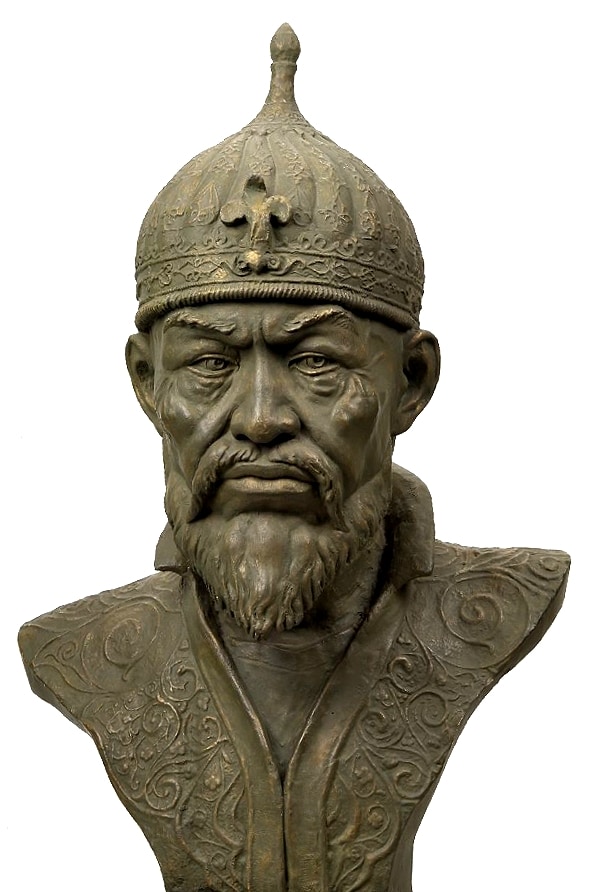
Timur
Also known as: Tamerlane, Timur the Lame, Amir Timur
誕生日
April 9, 1336
星座
Aries
出生地
Khoja-Ilgar, near Kesh (modern-day Shahrisabz, Uzbekistan)
年齢
68歳で死去
概要
西方でタメルランとして知られるティムールは、14世紀後半にティムール朝を建国したテュルク・モンゴル系の征服者である。マー・ワラー・アンナフルのバルラス部族連合に生まれ、下級貴族からイスラム世界で最も強力な統治者へと上り詰めた。1370年までに西チャガタイ・ハン国を掌握し、ロシアの草原からインダス川に至るアジアを変貌させる一連の軍事遠征を開始した。戦場で無敗を誇り、ジョチ・ウルス、マムルーク朝、オスマン帝国、デリー・スルタン朝などを打ち破った。彼の征服は極度の残虐行為で知られ、学者は彼の遠征により数百万人が死亡したと推定する一方、文化を育み、サマルカンドを中心とした芸術、科学、建築の開花であるティムール朝ルネサンスを引き起こした。彼は同時代の知識人、歴史家イブン・ハルドゥーンや詩人ハーフェズなどと交流した。ティムールはチャガタイ語、古典モンゴル語、ペルシア語など複数の言語を話し、外交に用いた。1405年、中国遠征の途上で死去し、断片的な帝国を残したが、後の火薬帝国への道を開いた。
生い立ちと背景
ティムールは、中央アジアにおけるチンギス・ハン帝国の後継国家であるチャガタイ・ハン国の崩壊期に育った。ハン国は戦争状態の派閥に分裂し、若きティムールは襲撃、移り変わる同盟、絶え間ない暴力の世界に生きた。彼はケシュの山々で幼少期と青年期を過ごし、羊飼いの環境で育ったが、シャフリサブズがバルラス部族に支配されていたため、都市と農村の両方の生活に精通していた。チャガタイ・ウルスは1347年にマー・ワラー・アンナフルとモグーリスタンの二つに分裂した。初期の襲撃で、ティムールは重傷を負った。右手への剣撃で二本の指が不自由になり、右足への矢で永久の足を引きずるようになり、西方名タメルラン(跛行のティムール)の由来となったが、彼はこの呼称を嫌っていたという。彼は遊牧民の一団のリーダーとしてキャリアを開始し、戦術の才覚と冷酷さで次第に名声を築いた。
キャリアの歩み
ティムールの権力台頭は1370年、西チャガタイ・ハン国を掌握し、ティムール朝を建国したことに始まる。その後30年にわたり、彼はアジアで最も恐れられる征服者となる一連の遠征を開始した。1380年代から1390年代にかけてジョチ・ウルスを破り、サライを略奪してロシアにおけるモンゴル勢力を弱体化させた。1398年にはデリー・スルタン朝に侵攻し、デリーを略奪して住民を虐殺した。1400年から1401年にかけてマムルーク朝を破り、ダマスカスとアレッポを占領した。最大の勝利は1402年のアンカラの戦いで、オスマン帝国のスルタン・バヤズィト1世を捕らえ、オスマン帝国を内戦状態に陥れた。これらの遠征を通じて、ティムールは芸術の保護者でもあり、壮麗な建築物、図書館、マドラサを備えた学問の中心地としてサマルカンドを変貌させた。歴史家イブン・ハルドゥーンや詩人ハーフェズなどの知識人と交流し、ティムール朝ルネサンスを引き起こした。1405年、明への遠征に向けて進軍中、オトラルで高熱による重病にかかり死亡した。
キャリア年表
公的イメージとスタイル
ティムールの公的なイメージは矛盾に満ちている。彼は brilliant な軍事戦術家であると同時に、冷酷な軍閥として記憶されている。西洋では、しばしば野蛮な征服者として描かれ、タメルランの名は髑髏のピラミッドや廃墟と化した都市を想起させる。中央アジア、特にウズベキスタンでは、国民的英雄であり、強さと団結の象徴として崇敬されている。タシケントやシャフリサブズには彼の記念碑が立ち、サマルカンドの霊廟グル・エ・アミールは主要な観光名所となっている。歴史家は、戦争における極度の残虐性とは対照的に、彼の芸術保護と学者との交流を指摘する。彼の遺産は複雑で、異なる文化圏で恐怖と賞賛の両方を引き起こしている。
名声とファンダム
Timur commands a legacy that transcends the typical boundaries of historical celebrity, existing instead as a towering figure of geopolitical mythology and national identity. In Central Asia, particularly within Uzbekistan, he is revered not merely as a past ruler but as a foundational symbol of strength and unity, with his monuments anchoring the cultural landscape of Tashkent and Shahrisabz. This deep-seated reverence functions less like a modern fanbase and more like a state-sponsored historical devotion, where scholars, strategists, and citizens engage with his life as a continuous narrative of power rather than a static chapter in a textbook. There is no organized global fandom with specific nicknames, fan-funded campaigns, or viral rituals comparable to contemporary pop culture phenomena; his audience remains rooted in academic study and regional commemoration rather than the energetic mobilization seen in digital eras. The absence of a formal fan name reflects the nature of his influence, which operates through enduring institutions like the Gur-e-Amir mausoleum in Samarkand rather than social media trends or subscription drives. Despite this lack of a unified modern following, his reputation as a brilliant tactician and ruthless warlord ensures he remains a subject of intense fascination for historians and military enthusiasts worldwide. According to the iFANN Global Fame Engine evaluation from August 2026, Timur does not currently hold a placement in the published rankings, including the Global Top 1,000 or any Top-100 scope list. While he lacks a numerical standing among living celebrities or recently deceased figures who dominate current search metrics, his cultural footprint remains immense across the regions he once conquered. The iFANN assessment confirms that while he is evaluated as a significant historical entity, his fame does not translate into the quantifiable daily engagement required for a ranked position in the modern system.
興味深い事実と伝説
Timur's name shares a linguistic root with Genghis Khan's birth name Temüjin, both deriving from the Common Turkic word for blacksmith. Despite his reputation for extreme brutality, he was a dedicated patron of the arts who engaged with leading intellectuals of his time, including the historian Ibn Khaldun. The Timurid dynasty endured in Central Asia for a century, and his descendant Babur would later found the Mughal Empire in India. Throughout his entire military career, Timur remained undefeated in battle, having defeated the Golden Horde, the Mamluk Sultanate, the Ottoman Empire, and the Delhi Sultanate. The Western name Tamerlane comes from the Persian Timur-i-Lang (Timur the Lame), a nickname he reportedly despised. When Soviet archaeologist Mikhail Gerasimov opened Timur's tomb on June 19, 1941, he allegedly found an inscription warning that opening the tomb would unleash a terrible invader; three days later, Nazi Germany invaded the Soviet Union. A widely retold story describes how Timur ordered the construction of a tower made from the skulls of his enemies during his conquest of Delhi, cementing his image as the Scourge of the East. Folklore also preserves the dramatic account of the Battle of Ankara, where Timur sat on a golden throne while the captured Ottoman Sultan Bayezid I served him water, symbolizing total dominance over a rival empire.
注目の発言
“Timur reportedly described his mother's descent to Ibn Khaldun as being from the legendary Persian hero Manuchehr.”
家族と私生活
ティムールの父はタラガイで、イスラム教に改宗したテュルク化したモンゴル集団であるバルラス氏族の小部族長であった。バルラス氏族はトゥンビナイ・ハンを通じてチンギス・ハンの子孫を称していたが、ティムールの存命中にこれを直接裏付ける文書証拠は存在しない。母はテキナ・ハトゥンで、その出自は不明である。イブン・ハルドゥーンは、ティムールが母の血統を伝説的なペルシアの英雄マヌチェフルに遡ると語ったと伝えている。ティムールには複数の妻がおり、正妻のサライ・マリク・カトゥン(チャガタイ・ハン国の王女)をはじめ、ウルジャイ・トゥルカン・アガ、チョルパン・ムルク・アガ、ディルシャド・アガがいた。息子には後継者シャー・ルフ、ミーラーン・シャー、ウマル・シャイフ、ジャハーンギールがいる。子孫のバーブルは後にインドにムガル帝国を建国した。
注目の関係
恋愛関係と交際歴
14世紀のテュルク・モンゴル征服者として、ティムールの関係は主に恋愛関係ではなく政治的な結婚でした。彼の既知の結婚には、チャガタイ・ハン国の王女で正室となったサライ・マリク・カトゥン、バルラス部族連合の貴婦人ウルジャイ・トゥルカン・アガ、チョルパン・ムルク・アガ、ディルシャード・アガが含まれます。全員が彼の権力台頭前に結婚し、1405年の彼の死まで共にいました。これらの結婚は同盟を強化し、彼の統治を正当化するのに役立ちました。2026年現在、ティムールは1405年に死去しており、故人です。
- 既婚Saray Malik Katun? - 1405政治同盟。彼女はチャガタイ・ハン国の王女でした。
- 既婚Uljay-Turkan aga? - 1405バルラス部族連合の貴婦人。
- 既婚Cholpan-Mulk Aga? - 1405
- 既婚Dilshad aga? - 1405
死去とその後
死没
February 19, 1405 (68歳没)
死没地
Otrar
死因
Reported as severe fever or illness
Timur departed this world in the chill of winter while encamped near Otrar on the Syr Darya river, far from his capital of Samarkand as he prepared a massive expedition against the Ming dynasty. The conqueror had been marching since late 1404 and fell seriously ill with a severe fever or cold contracted during the harsh conditions before passing away in his tent. While most authoritative records place the event on February 19, 1405, some contemporary chronicles suggest the night of February 17 or 18, marking the end of a life defined by relentless campaigning. News of the emperor's passing was kept secret for several weeks to prevent the collapse of his army and empire, allowing his grandson Pir Muhammad to secure power before the announcement was made.
Upon release, the body was transported back to Samarkand where it was interred in the Gur-e-Amir mausoleum, a grand structure Timur had commissioned for himself shortly after his death in March 1405. The funeral drew surviving family members, high-ranking emirs, and religious leaders, though the immediate aftermath saw a violent succession crisis as grandsons like Khalil Sultan and Shah Rukh fought for control of the fractured territories. Today, the Gur-e-Amir stands as a UNESCO World Heritage site and a primary memorial to the conqueror, serving as a focal point for historical commemoration in Uzbekistan. Timur remains a national hero celebrated through cultural events and statues rather than modern tributes, while his vast estate was partitioned among his descendants leading to the eventual fragmentation of the Timurid Empire.
受賞と栄誉
代表作
Founding the Timurid Empire
1370 · Emperor
Battle of Ankara
1402 · Commander
Sack of Delhi
1398 · Conqueror
Defeat of the Golden Horde
1395 · Commander
キーワード
出典
クイック情報
- 職業
- Conqueror, Emperor
- 生年月日
- April 9, 1336
- 出生地
- Khoja-Ilgar, near Kesh (modern-day Shahrisabz, Uzbekistan)
- 死没
- February 19, 1405
- 死没地
- Otrar, modern-day Kazakhstan
- 性別
- 男性
- 配偶者
- Saray Malik Katun, Uljay-Turkan aga, Cholpan-Mulk Aga, Dilshad aga
- 星座
- Aries
個人情報
- 本名
- Timur ibn Taraghai Barlas
- 配偶者
- Saray Malik Katun, Uljay-Turkan aga, Cholpan-Mulk Aga, Dilshad aga
- 子ども
- Shah Rukh, Miran Shah, Umar Shaikh, Jahangir
よくある質問
ティムールはどのように死んだのですか?
ティムールはチンギス・ハーンと関係がありましたか?
なぜティムールはタメルレーンと呼ばれたのですか?
ティムールは何人を殺しましたか?
タメルレーンの呪いとは何ですか?
コミュニティに参加
人のファンが話題に