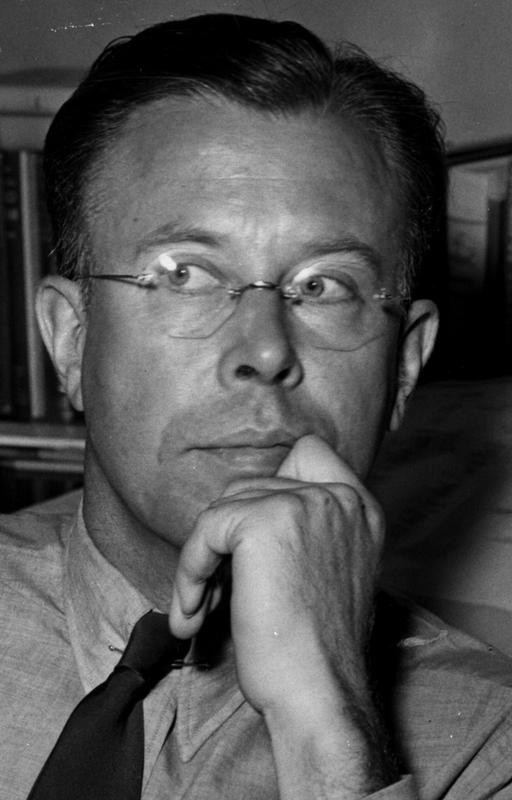
Ernest Orlando Lawrence
 United States
physicist•nuclear physicist•university teacher
誕生日
August 8, 1901
星座
Leo
出生地
Canton, South Dakota, USA
年齢
57歳で死去
身長
5 ft 10 in (178 cm)
概要
アーネスト・オーランド・ローレンスは、現代科学を変革したアメリカの物理学者です。彼はサイクロトロンを発明し、核物理学の基盤となる粒子加速器を開発した功績により、1939年にノーベル物理学賞を受賞しました。また、マンハッタン計画において電磁気的ウラン同位体分離の開発に重要な役割を果たし、ローレンス・バークレー国立研究所とローレンス・リバモア国立研究所という2つの主要な国立研究所を設立しました。
ローレンスは、サウスダコタ大学とミネソタ大学で学んだ後、1925年にイェール大学で博士号を取得しました。1928年、カリフォルニア大学バークレー校の准教授に就任し、2年後には同大学で最年少の正教授になりました。ある夜、図書館で線形加速器の図を見た彼は、それをコンパクトにする方法を考えました。そのひらめきが、電磁石の極の間にある円形のチャンバーで粒子を高エネルギーに加速するサイクロトロンにつながりました。
彼は次第に大型のサイクロトロンを製作し、1936年には自身の放射線研究所がカリフォルニア大学の正式な学部となり、ローレンスが所長に就任しました。彼は放射性同位体の医療利用を推進しました。第二次世界大戦中、彼の研究所はウラン濃縮のためのカロトロン(質量分析器とサイクロトロンのハイブリッド)を開発しました。テネシー州オークリッジにはY-12という巨大な施設が建設されましたが、効率は低かったものの、最初の原子爆弾に使用されるウランを生産しました。
戦後、ローレンスは大型機械と多額の資金を必要とする大規模プロジェクト「ビッグサイエンス」の強力な提唱者となりました。彼はエドワード・テラーの、カリフォルニア州リバモアに第二の核兵器研究所を設立するという提案を支持しました。ローレンスは1958年8月27日に57歳で死去しました。カリフォルニア大学はリバモア研究所とバークレー研究所の両方を彼の名にちなんで改名しました。1961年にバークレーで発見された元素103番、ローレンシウムも彼の名に由来しています。
生い立ちと背景
ローレンスはサウスダコタ州カントンで、ノルウェー移民の父カール・グスタヴス・ローレンスと母グンダ・レジーナ・ヤコブソンの間に生まれました。父は教育長、母は教師でした。10代の頃に一家はピアに移住しました。幼い頃から科学に興味を持ち、地下室で簡単な化学実験を楽しんでいました。1918年にサウスダコタ大学に入学し、当初は医学を志望しましたが、ルイス・アケリー教授に触発されて物理学に転向しました。1922年に学士号を取得し、その後ミネソタ大学で大学院研究を行い、1923年に修士号を取得しました。イェール大学で博士号を追求し、1925年に光電効果に関する論文で博士号を取得しました。イェール大学時代に、新興分野である核物理学に興味を持つようになりました。転機となったのは1929年、カリフォルニア大学バークレー校の若い准教授だったローレンスが図書館の雑誌で線形加速器の図を見て、コンパクトな円形粒子加速器であるサイクロトロンの概念を思いついたことでした。このひらめきが彼の飛躍への舞台を整えました。
キャリアの歩み
ローレンスの飛躍は1931年、カリフォルニア大学バークレー校で最初の実用的なサイクロトロンを製作したときに訪れました。直径4.5インチの装置で、水素イオンを8万電子ボルトに加速しました。無線送信機のスペアパーツを使って約25ドルの費用で製作しました。この装置により1939年にノーベル物理学賞を受賞しました。第二次世界大戦中は、マンハッタン計画の電磁気的ウラン同位体分離を指揮し、テネシー州オークリッジのY-12プラントでカロトロンを使用しました。1952年には核兵器研究を目的としてローレンス・リバモア国立研究所を共同設立しました。また、1946年にメリット勲章、1957年にエンリコ・フェルミ賞を受賞しました。彼の研究は現代の素粒子物理学と医療用同位体生産の基盤を築きました。
キャリア年表
公的イメージとスタイル
ローレンスは、実験室用白衣を着て直接装置を操作するなど、精力的で実践的な科学アプローチで知られていました。彼は先見性があり、大規模研究を精力的に推進する人物、ビッグサイエンスの擁護者として描かれました。メディアの報道では、マンハッタン計画での役割と国立研究所の設立が強調されました。彼のファン層は主に物理学コミュニティ内にあり、愛好家は彼の生誕と命日の記念日にローレンス・バークレー国立研究所で講演会を開催しています。公式なファンダム名はありません。彼はインターネット時代以前に亡くなったため、ソーシャルメディアでの存在はありません。
名声とファンダム
Ernest Orlando Lawrence never sought fame, yet his name echoes through the halls of science. The man who built the first cyclotron from spare radio parts in 1929 became the architect of Big Science, transforming physics from a solitary pursuit into a national enterprise. His legacy is not measured in fan clubs or chart positions, it's measured in the laboratories, awards, and elements that bear his name.
In the world of physics, Lawrence is a towering figure, but outside of it, his fame is a quieter, more diffuse thing. iFANN's Global Fame Engine, which evaluates public recognition across media and cultural signals, has assessed Lawrence but found him currently unranked, he holds no placement in the global top 1,000 or any top-100 scope list. This is not a slight; it's a reflection of his sphere of influence, which lies in textbooks and institutional memory rather than daily headlines.
His fanbase, such as it is, has no formal name. There are no fan campaigns, no birthday billboards, no hashtag movements. Instead, his most devoted followers are the physicists and historians who study his work, and the institutions he founded, Lawrence Berkeley National Laboratory and Lawrence Livermore National Laboratory, that keep his memory alive through exhibits and the Ernest Orlando Lawrence Award. The Lawrence Hall of Science in Berkeley also preserves his story for curious visitors.
This is a different kind of fame, one built on achievement, not spectacle. Lawrence's name may not trend on social media, but it is etched into the periodic table and the history of science. That, perhaps, is the most enduring form of recognition.
興味深い事実と伝説
Lawrence's first cyclotron cost about $25 and used spare radio parts. He was a close friend of J. Robert Oppenheimer and supported Oppenheimer's security clearance during the 1954 hearings. An avid sailor, he owned a yacht named The Cyclotron. He turned down an offer to become the first director of the Manhattan Project in 1942, recommending Oppenheimer instead. The element lawrencium (Lr) was named in his honor in 1961, three years after his death. He was inducted into the National Inventors Hall of Fame in 1988.
One of the most retold stories from his career is the moment of inspiration for the cyclotron. In 1929, Lawrence reportedly glanced at a paper by Norwegian physicist Rolf Widerøe in a university library and had a sudden flash of insight, the idea for a machine that could accelerate particles in a spiral. He and graduate student M. Stanley Livingston built the first working model in 1931, a device just four inches across that could be held in one hand, yet it successfully accelerated hydrogen ions to 80,000 electron volts. The story of this tiny machine, assembled with sealing wax and brass in a cramped basement workshop, is a favorite among physicists and science enthusiasts.
Another legendary episode is the saga of the 184-inch cyclotron, designed to be the world's most powerful accelerator. Construction was interrupted by World War II, and after the war, Lawrence redesigned it using new synchrotron principles. Completed in 1946, it became the prototype for all subsequent high-energy accelerators, cementing his reputation as a pioneer of large-scale physics.
注目の発言
“The cyclotron is a machine that will enable us to explore the nucleus of the atom.”
“We are entering an era of big science. The problems are too large for a single man to solve.”
“I have never been able to understand why a man should be afraid of a little hard work.”
家族と私生活
ローレンスは1932年5月14日にメアリー・K・ブルーマーと結婚しました。メアリーはイェール大学の物理学者の娘で、学界の交流を通じて知り合いました。夫婦には6人の子供(ジョン、マーガレット、メアリー、ロバート、バーバラ、スーザン)がいました。家族はローレンスが働くカリフォルニア州バークレーに住んでいました。彼は献身的な父親で、週末には子供たちを研究所に連れて行くなど、科学への興味を共有していました。結婚生活は1958年のローレンスの死まで続きました。その他の重要な家族の詳細は公には記録されていません。
注目の関係
ローレンスはJ・ロバート・オッペンハイマーの親友であり同僚で、彼をマンハッタン計画のリーダーに推薦しました。水素爆弾についてエドワード・テラーと協力し、テラーの第二の兵器研究所設立の提案を支援しました。ルイス・アルバレスは放射線研究所の学生であり同僚で、後にノーベル賞受賞者となりました。グレン・T・シーボーグは同研究所で働き、プルトニウムを発見し、後に原子力委員会の委員長を務めました。妻のメアリー・K・ブルーマーは生涯のパートナーでした。
恋愛関係と交際歴
アーネスト・ローレンスは1932年5月14日にメアリー・K・ブルーマーと結婚しました。関係は1920年代後半、両名がイェール大学にいたときに始まり、メアリーは物理学教授の娘でした。二人には6人の子供がいました。結婚は1958年のローレンスの死まで続きました。他の公的な恋愛関係は記録されておらず、ローレンスの私生活はプライベートで、家族と仕事に集中していました。2026年現在、ローレンスは故人であり、現在の恋愛関係はありません。
- 既婚Mary K. Blumer1932 - 19581932年5月14日に結婚。6人の子供をもうけ、結婚はローレンスの死まで続いた。
死去とその後
死没
August 27, 1958 (57歳没)
死没地
Palo Alto, California
死因
不明
The University of California announced the passing of Ernest Orlando Lawrence on August 27, 1958, confirming his death at a medical facility in Palo Alto, California. The physicist, who had spent decades driving the boundaries of nuclear science, succumbed to an illness that authorities never publicly detailed in specific terms. Tributes flowed immediately from the highest levels of American science and government. The scientific community marked his loss with a significant memorial event on May 1, 1959, where the American Institute of Physics hosted invited lectures dedicated to the history of the cyclotron. Articles in Physics Today and Chemistry World reflected on his dual legacy as the inventor of the particle accelerator and a key architect of the Manhattan Project.
These publications avoided sensationalism, focusing instead on the technical and historical weight of his contributions to nuclear physics. His legacy was cemented through immediate institutional action rather than traditional funeral rites. The Department of Energy established the Ernest Orlando Lawrence Award to recognize outstanding contributions in science and technology, a honor bestowed annually since his death. The University of California honored him by naming its premier research facility after him, ensuring his name remained central to the field he helped create.
総資産(遺産評価額)
$1 Million
iFANN編集チームによる推定
Ernest Lawrence died in 1958, and his estate was modest by modern standards. Research by the iFANN Editorial Team puts his estate's value at approximately $1 million, a figure that reflects his life as a public servant and academic rather than a commercial figure. The estate's worth is primarily tied to ongoing royalties from patents, such as the cyclotron patent, and licensing of his name. The Ernest Orlando Lawrence Award, funded by the U.S. government, is a separate legacy that honors mid-career scientists. The estate is managed by the Lawrence family trust, and no posthumous releases or merchandise generate significant revenue. Lawrence's true wealth lies in his scientific contributions, which continue to shape physics and national laboratories.
受賞 (6)
ローレンスはサイクロトロンを発明した功績により1939年にノーベル物理学賞を受賞しました。また、コムストック物理学賞(1937年)、功労勲章(1946年)、ヒューズ・メダル(1951年)、エンリコ・フェルミ賞(1957年)、シルバヌス・セイヤー賞(1958年)も受賞しています。これらの栄誉は、核物理学と国家安全保障への彼の貢献を認めたものです。
1937 · 物理学
Cyclotron
1939 · 物理学
Cyclotron
代表作
Invention of the cyclotron
1931 · Inventor
Manhattan Project
1942 · Director of electromagnetic isotope separation
Lawrence Berkeley National Laboratory
1936 · Founder and director
Lawrence Livermore National Laboratory
1952 · 共同創業者
キーワード
クイック情報
- 職業
- physicist, nuclear physicist, university teacher
- 生年月日
- +1901-08-08
- 出生地
- Canton
- 死没
- +1958-08-27
- 死没地
- パロアルト
- 性別
- 男性
- 配偶者
- Mary K. Blumer
- 星座
- Leo
個人情報
- 本名
- Ernest Orlando Lawrence
- 身長
- 5 ft 10 in (178 cm)
- 配偶者
- Mary K. Blumer
- 子ども
- 6
- 学歴
- University of South Dakota (BA, 1922); University of Minnesota (MS, 1923); Yale University (PhD, 1925)
よくある質問
アーネスト・ローレンスはどのように亡くなったのですか?
2026年のアーネスト・ローレンスの総資産はいくらですか?
アーネスト・ローレンスには子供がいましたか?
アーネスト・ローレンスは何で有名ですか?
アーネスト・ローレンスはローレンス・リバモア研究所と関係がありますか?
コミュニティに参加
人のファンが話題に