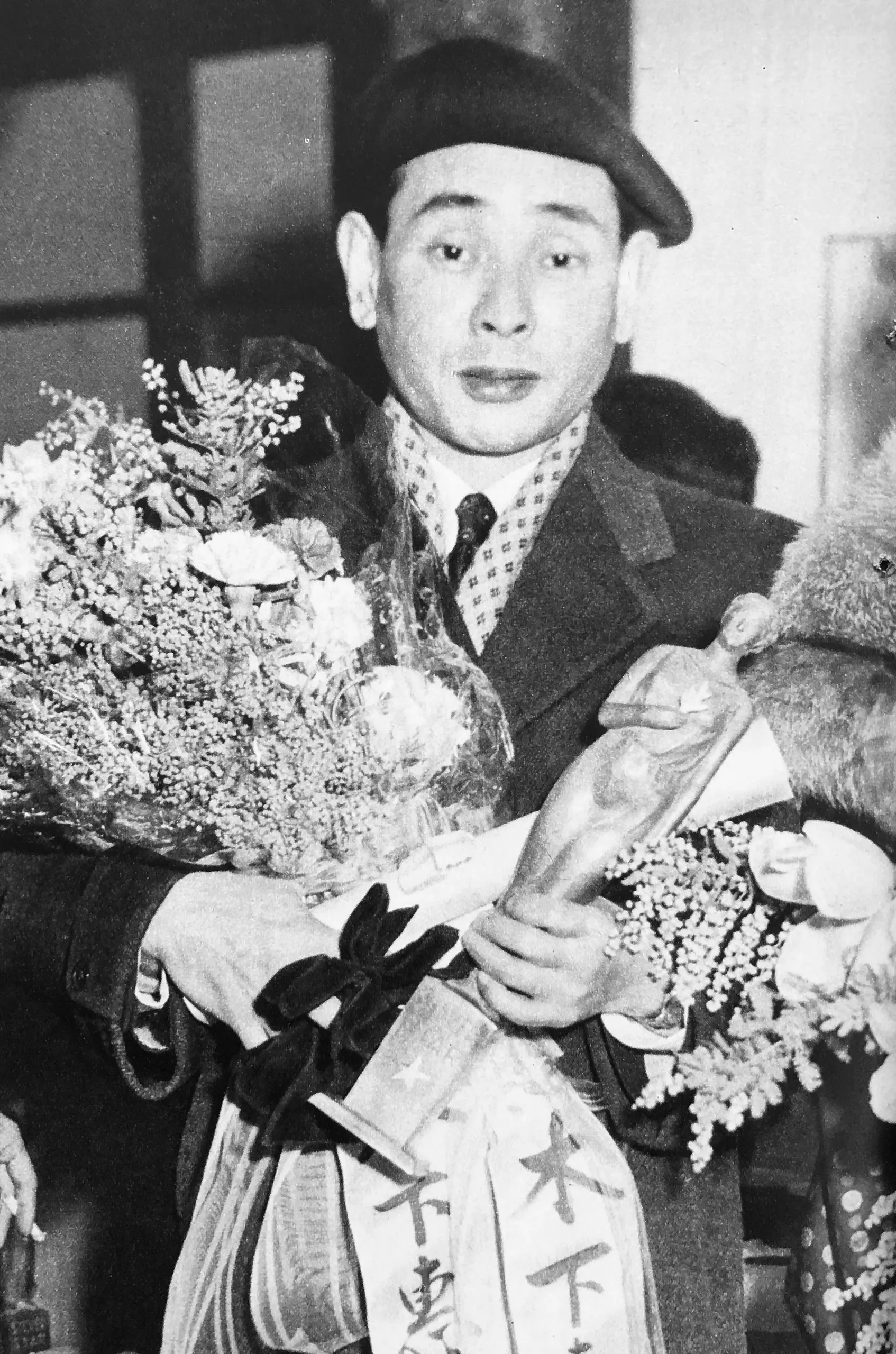
Keisuke Kinoshita
 Japan
Japanfilm director•screenwriter•film producer
誕生日
December 5, 1912
星座
Sagittarius
出生地
Hamamatsu, Shizuoka Prefecture, Japan
年齢
86歳で死去
身長
5 ft 6 in (168 cm)
概要
木下惠介は、1940年代から1960年代にかけて日本の観客の心に深く響いた映画監督・脚本家です。国際的には黒澤明や小津安二郎ほど知られていませんが、日本では国民的な存在であり、ヒューマニズムあふれる物語性と技術的な冒険心で称賛されました。彼の作品は、日本初のカラー映画『カルメン故郷に帰る』(1951年)から、歌舞伎に着想を得た『楢山節考』(1958年)まで、感傷性と視覚的実験をしばしば融合させました。最も愛された作品『二十四の瞳』(1954年)は日本映画の礎であり、ゴールデングローブ賞 外国語映画賞を受賞しました。40年以上にわたるキャリアで48本の映画を監督し、その多くは現在も回顧展で上映され、新たな世代のために修復されています。1998年に86歳で死去し、一般の日本人の感情生活を優雅さと誠実さで捉えた監督としての遺産を残しました。
生い立ちと背景
木下は、繊維工場とピアノ工場で知られる浜松市で育ちました。父は着物の生地店を営んでいましたが、木下が幼い頃に亡くなり、家族は質素な暮らしを強いられ、母が彼と兄弟を一人で育てました。この母の犠牲の経験は、後に彼の作品で繰り返し描かれるテーマとなりました。浜松中学校に通い、地元の映画館で洋画や邦画を観て映画への情熱を育みました。卒業後、1933年に上京し、日本を代表する映画スタジオの一つである松竹に入社。現像所でフィルム処理係として働きました。製作現場では最も低い地位でしたが、カメラ助手、助監督と昇進。巨匠・小津安二郎や木村恵吾のもとで技術を学びました。1943年、10年にわたる見習い期間を経て松竹から監督に昇格し、デビュー作『花咲く港』を発表。港町を舞台にしたヒューマニスティックなドラマで、まずまずの成功を収め、日常に根ざした物語性で評価を確立しました。
キャリアの歩み
木下の躍進は1951年、実験的な富士フイルムのカラープロセスを使用した日本初の長編カラー映画『カルメン故郷に帰る』で訪れました。この作品は、東京でストリッパーになった田舎娘が故郷の農村に戻るという喜劇ドラマで、商業的にも批評的にも成功しました。3年後、彼は『二十四の瞳』を監督。1928年から戦後にかけての一人の教師と12人の生徒の姿を描いた壮大な感動作で、ゴールデングローブ賞 外国語映画賞と毎日映画コンクール日本映画大賞を受賞し、現在も彼の最も有名な作品です。1958年、木下は『楢山節考』を発表。老婆が山に捨てられる民話を様式化し、人工的なセット、描かれた背景、歌舞伎に着想を得た劇場的な照明を用いた作品で、再びゴールデングローブ賞 外国語映画賞を受賞しました。1960年代も『笛吹川』(1960年)や『香華』(1964年)など精力的に監督を続けました。1967年にはテレビに進出し、いくつかの高い評価を得たドラマを監督。最後の作品はテレビ映画『生命の河』(1986年)でした。
キャリア年表
公的イメージとスタイル
日本では、木下は国民的財産として敬愛され、大衆に訴えかける作品から「国民監督」とも呼ばれます。批評家は彼のスタイルをヒューマニスティックで感傷的と評し、母性愛、戦争が一般人の生活に与える影響、時間の経過といったテーマを繰り返し描きました。色彩、様式化されたセット、歌舞伎に着想を得たデザインなど、大胆な視覚的実験で知られました。西洋の批評家はメロドラマ的なアプローチから、しばしばダグラス・サークと比較します。ファンは毎年3月3日のひな祭りに『二十四の瞳』の上映会を開き、彼の作品の回顧展は世界中の映画祭で常に人気を集めています。ソーシャルメディア上の存在はファングループや松竹スタジオの公式アカウントによって維持されています。
名声とファンダム
Keisuke Kinoshita commands a legacy defined not by the fervor of modern idol worship, but by the enduring reverence of film scholars and cinephiles who study the golden age of Japanese cinema. Unlike contemporary stars with organized fan clubs bearing specific monikers, his audience consists of historians and general enthusiasts who engage with his work through institutional channels like The Criterion Collection and museum retrospectives rather than grassroots campaigns or social media rituals. His cultural footprint remains anchored in the global appreciation for post-war humanism and technical innovation, with commemorative tributes appearing sporadically on significant anniversaries of his birth. While no formal fandom name exists to unify these disparate groups, the collective memory of his films serves as a unifying thread for those dedicated to preserving cinematic history. This quiet, academic devotion stands in stark contrast to the chaotic adoration seen in pop culture, reflecting a relationship built on artistic merit rather than celebrity spectacle. Despite his profound impact on domestic audiences and international recognition from peers like Akira Kurosawa, iFANN's Global Fame Engine has evaluated this person, but they do not currently hold a placement in the published rankings (Global Top 1,000 or a Top-100 scope list). Consequently, no numerical ranking or score is assigned to his current global fame status within the system.
興味深い事実と伝説
Keisuke Kinoshita directed Japan's first color film, Carmen Comes Home (1951), utilizing Fujicolor technology that produced such vivid hues it reportedly caused eye strain for some viewers. His 1944 film The Army contained subtle anti-war messages that drew the ire of military censors during production. He served as a mentor to Masaki Kobayashi, who worked under him as an assistant director on The Morning of the Osone Family. Among his own body of work, Kinoshita held She Was Like a Wild Chrysanthemum (1955) as his personal favorite. He consistently turned down offers to direct in Hollywood, preferring to remain at Shochiku studio throughout his career. His final words, according to his wife, expressed a desire to make one more film before passing. A notable piece of industry lore involves Akira Kurosawa naming Kinoshita as his favorite Japanese director, a reflection of his standing among peers. His 1958 adaptation of The Ballad of Narayama sparked intense cultural discourse regarding ancient folklore and social customs, often cited for its kabuki-inspired design and controversial themes. These elements combine to form a legacy where the films themselves are the primary ritual for fans, rather than organized fan events.
注目の発言
“I wanted to make films that would make people cry, but also make them think.”
“The war took everything from us, but it could not take away our humanity.”
“I never wanted to go to Hollywood. My stories are Japanese stories.”
“A film should be like a poem: concise, beautiful, and full of feeling.”
“My mother was the strongest person I ever knew. I put her into every film.”
家族と私生活
木下は幼い頃に父を亡くし、母が彼と兄弟を一人で育てました。1956年に女優の久我美子と結婚。当時彼女は25歳、彼は43歳でした。夫婦に子供はいませんでした。久我は『楢山節考』を含む彼の作品数本に出演。木下の死後、久我は彼の遺産の主要な管理者となり、修復や映画祭を監督しました。インタビューで彼女は、仕事への献身と東京での静かな家庭生活について語っています。
注目の関係
木下は女優の高峰秀子と緊密に協力し、彼女は『二十四の瞳』や『野菊の如き君なりき』など数本の作品に主演しました。また、作曲家の木下忠司(血縁関係なし)や脚本家の野田高梧とも協力。指導者としては、助監督としてキャリアをスタートさせた小林正樹監督に影響を与えました。
恋愛関係と交際歴
木下は1956年に女優の久我美子と結婚しました。2人は久我が木下の映画『楢山節考』(1958年)にキャスティングされた際に出会いましたが、結婚は公開の2年前でした。久我は25歳、木下は43歳でした。2人には子供はなく、1998年に木下が亡くなるまで結婚生活は続きました。久我は後に、木下を仕事を優先しながらも深い愛情を持った献身的な夫だったと語っています。木下の死後、久我は彼の遺産の主要な管理者となりました。信頼できる情報源に他の恋愛関係は記録されていません。
- 既婚Yoshiko Kuga1956 - 1998久我が『楢山節考』にキャスティングされた際に出会い、木下の死まで結婚生活が続いた。
死去とその後
死没
December 30, 1998 (86歳没)
死没地
不明
死因
不明
The Cannes Film Festival honored the late director by selecting The Ballad of Narayama for its Cannes Classics program in 2012, a retrospective gesture acknowledging his contribution to cinema long after his passing. The Criterion Collection further sustained this appreciation with an Eclipse Series dedicated to Kinoshita and World War II in 2014, while a comprehensive critical volume titled The Cinema of Kinoshita Keisuke: Films of Joy and Sorrow appeared in August 2025. A biographical film named Dawn of a Filmmaker: The Keisuke Kinoshita Story, starring Ryo Kase and directed by Keiichi Hara, served as a major cultural commemoration during the early 2010s. These posthumous releases maintained the visibility of his fifty feature films, which spanned from 1943 to 1988, ensuring his legacy remained active within global archives.
Keisuke Kinoshita passed away on December 30, 1998, at the age of eighty-six. Available records do not specify the exact location where he died, nor do they provide an official statement regarding the cause of death or details concerning his final days. His widow, actress Yoshiko Kuga, managed the estate following his death, overseeing restorations and film festivals while preserving their quiet domestic history in Tokyo., institutions continued to recognize his work through curated screenings and publications. The Keisuke Kinoshita Memorial Museum in Hamamatsu City stands as a physical tribute to his life, though the specific arrangements of his funeral, including whether it was held there or how his remains were interred, remain unrecorded in the historical data.
総資産(遺産評価額)
$5.5 Million
iFANN編集チームによる推定
Per iFANN's editorial analysis, the estate of Keisuke Kinoshita is valued at $5.5 Million as of 2026. During his lifetime, Kinoshita earned a salary as a contract director at Shochiku, estimated at ¥1-2 million per film in the 1950s and 1960s. After his death, his widow Yoshiko Kuga managed the estate, which generates revenue from film restorations, DVD and Blu-ray sales by distributors such as the Criterion Collection, television broadcasts in Japan, and screening fees from film festival retrospectives. A major retrospective at the Museum of Modern Art in New York in 2023 and ongoing restorations by Shochiku and the National Film Archive of Japan have boosted licensing income. The estate does not include significant real estate or business ventures, as Kinoshita focused entirely on his film career.
受賞 (18)
木下は外国語映画賞で2つのゴールデングローブ賞(『二十四の瞳』1955年、『楢山節考』1959年)を受賞しました。また、複数の毎日映画コンクール賞(『大曽根家の朝』、『二十四の瞳』、『野菊の如き君なりき』、『楢山節考』で日本映画大賞と監督賞)を受賞。『二十四の瞳』と『楢山節考』でブルーリボン賞の作品賞と監督賞も受賞しています。
1959 · 外国映画賞
The Ballad of Narayama
1955 · 外国映画賞
Twenty-Four Eyes
1958 · 最優秀映画賞
The Ballad of Narayama
1958 · 最優秀監督賞
The Ballad of Narayama
1955 · 最優秀映画賞
She Was Like a Wild Chrysanthemum
1955 · 最優秀監督賞
She Was Like a Wild Chrysanthemum
1954 · 最優秀映画賞
Twenty-Four Eyes
1954 · 最優秀監督賞
Twenty-Four Eyes
1951 · 最優秀監督賞
Carmen Comes Home
1947 · 最優秀映画賞
The Morning of the Osone Family
代表作
Twenty-Four Eyes
1954 · 監督
The Ballad of Narayama
1958 · 監督
Carmen Comes Home
1951 · 監督
She Was Like a Wild Chrysanthemum
1955 · 監督
A Japanese Tragedy
1953 · 監督
キーワード
クイック情報
- 職業
- film director, screenwriter, film producer
- 生年月日
- December 5, 1912
- 出生地
- Hamamatsu, Shizuoka, Japan
- 死没
- December 30, 1998
- 死没地
- Tokyo, Japan
- 性別
- 男性
- 星座
- Sagittarius
- 身長
- 5 ft 6 in (168 cm)
- 配偶者
- Yoshiko Kuga (m. 1956)
- Children
- None
- Education
- Hamamatsu Middle School
個人情報
- 本名
- Keisuke Kinoshita
- 身長
- 5 ft 6 in (168 cm)
- 配偶者
- Yoshiko Kuga
- 学歴
- Hamamatsu Middle School
フィルモグラフィー
48
合計
43
映画
5
テレビ
よくある質問
木下惠介は何歳で亡くなりましたか?
木下惠介は何で最も知られていますか?
木下惠介は賞を受賞しましたか?
木下惠介は結婚していましたか?
木下惠介は何本の映画を監督しましたか?
ソーシャルメディア
コミュニティに参加
人のファンが話題に