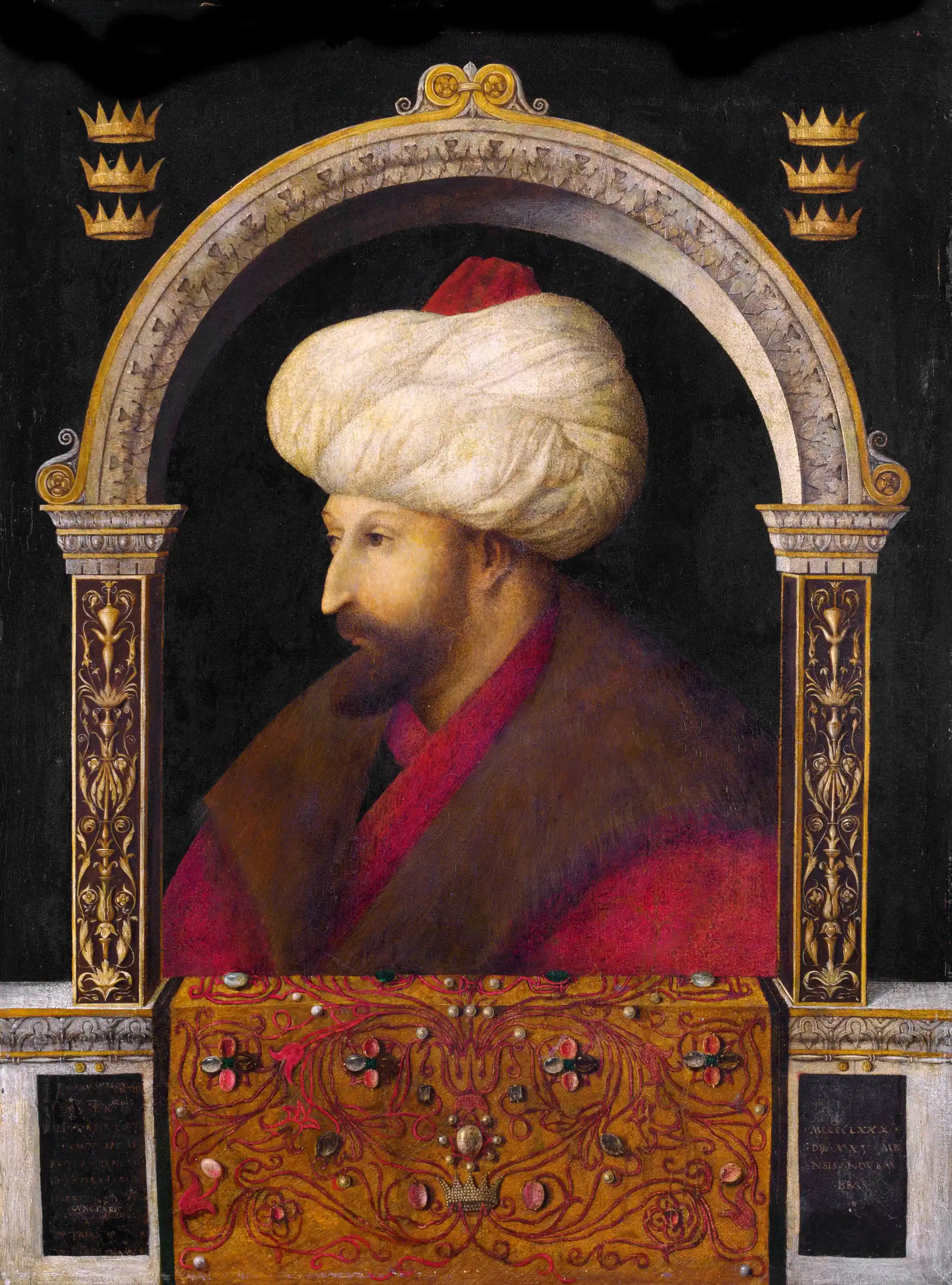
Mehmed II
Also known as: Mehmed the Conqueror, Fatih Sultan Mehmed, Kayser-i Rum
誕生日
March 30, 1432
星座
Aries
出生地
Edirne, Ottoman Empire
年齢
49歳で死去
身長
5 ft 7 in (170 cm)
概要
メフメト2世はオスマン帝国のスルタン、詩人、征服者であり、1444年から1446年、そして1451年から1481年に死去するまでの2度にわたって統治しました。彼は21歳の時に1453年にコンスタンティノープルを征服したことで最も有名であり、これにより東ローマ帝国が終焉し、彼はローマのカエサルの称号を得ました。この画期的な業績により、同市はオスマン帝国の首都となり、オスマン帝国の影響力は南東ヨーロッパとアナトリアに大きく拡大しました。軍事力に加え、メフメトは芸術と科学の保護者でもあり、アヴニーの名で詩を書き、オスマン帝国の法制度を改革しました。彼は今日、中世世界を再形成した多大な成功を反映した称号である征服王メフメトとして称えられています。彼の遺産は、彼が繁栄する帝国の中心として再建したイスタンブールや、彼の名を冠した様々な記念碑や地区に今も息づいています。
生い立ちと背景
メフメト2世は1432年3月30日、オスマン帝国の首都であったエディルネで生まれました。父はスルタン・ムラト2世、母は奴隷の側室であったヒュマ・ハトゥンです。3男でしたが、長兄のアフメトと次兄のアラエディンが若くして亡くなったため、オスマン帝国の王位継承者となりました。彼の幼少期は、指導者としての資質を養うための、極めて厳格かつ包括的な教育によって特徴づけられました。彼はモッラー・ギュラニ、モッラー・フスレヴ、ジョージ・アミロイツェス、チリアコ・ダナコーナといった著名な学者たちから指導を受けました。モッラー・ギュラニは若い王子を鍛えるために厳格な規律を用い、モッラー・フスレヴは神学とイスラム法学を教えました。ギリシャの学者ジョージ・アミロイツェスとイタリアのヒューマニストであるチリアコ・ダナコーナは、メフメトの知的好奇心を広げ、アレキサンダー大王やユリウス・カエサルのような人物の西洋哲学、地理、軍事、政治生活を紹介し、彼の野心を大きく掻き立てました。彼のカリキュラムには、言語に加え、クルアーン、法学、哲学、軍事戦略の集中的な学習が含まれていました。11歳になるまでに、メフメトはトルコ語、アラビア語、ペルシャ語、ギリシャ語、ラテン語、ヘブライ語に驚くほど流暢になり、また「アヴニ」というペンネームで詩作にも早くから関心を持っていました。
わずか11歳で、メフメトはアマシャの総督に任命されました。これはオスマン帝国の王子にとって伝統的な役職であり、将来の統治者のための重要な訓練場となりました。1444年、わずか12歳で、父であるムラト2世は驚くべきことに退位を決断し、メフメトはスルタンとして初めて即位しました。1444年から1446年までのこの最初の治世は、直ちに危機に直面しました。ポーランド王ヴワディスワフ3世とハンガリーのヤノシュ・フニャディに率いられた大規模なヨーロッパの十字軍が帝国を脅かしました。メフメトの若さと経験不足は危機の管理において明らかになり、父に隠遁生活から戻ってオスマン軍を指揮するよう促しました。ムラト2世は1444年11月のヴァルナの戦いで軍を勝利に導きました。イェニチェリの間での政治的不安定と混乱の期間の後、ムラト2世は1446年に正式に王位に復帰しました。メフメトはその後、総督としてマニサに送り返され、そこで集中的な教育と軍事訓練を続け、指導者の責任への準備をさらに成熟させました。
1451年にスルタン・ムラト2世が死去すると、当時19歳だったメフメトは2度目のオスマン帝位に就きました。スルタンとしての彼の最初の行動は、権力の冷酷な誇示でした。彼は異母弟である幼いアフメトの殺害を命じました。この過酷な措置は、王位を主張する可能性のあるライバルを排除するために取られたもので、残忍ではありましたが、その後、オスマン帝国の継承政策の標準的ではあるものの、陰鬱な側面となりました。
キャリアの歩み
メフメトの決定的な功績は1453年、53日間の包囲戦の末にコンスタンティノープルを征服したことです。彼は1452年にボスポラス海峡を封鎖するためにルメリ・ヒサルを建設させ、海上から都市を遮断しました。1453年5月29日、彼の軍隊は城壁を突破し、メフメトは都市に入り、アヤソフィアをモスクに改築し、自らを「ローマのカイザー」と宣言しました。彼はほとんど放棄されていた都市を再入植させ、オスマン帝国の首都イスタンブールとしました。
次の20年間、メフメトは執拗な遠征を行いました。彼はセルビア(1454-1456年)、モレア(1458-1460年)、トレビゾンド帝国(1461年)、ボスニア(1463年)を征服しました。ヴェネツィアとの長期にわたる戦争(1463-1479年)はコンスタンティノープル条約で終結し、オスマン帝国はネグロポンテ、レムノス、アルバニアを支配下に置きました。1468年、彼はカラマンを征服し、アナトリアを統一しました。1473年のオトルクベリの戦いでは、アク・コユンル同盟を決定的に破りました。彼は1475年にクリミア・ハン国を属国とし、1479年までにアルバニアのシュコドラを占領しました。1480年、彼の軍隊はイタリアのオトラントを占領し、オスマン帝国にヨーロッパでの足がかりを与えましたが、彼の死後に放棄されました。
国内では、メフメトはカヌンナメ法典を成文化し、国家を中央集権化し、デヴシルメ制度を奨励しました。彼はファーティフ・モスク複合施設とトプカプ宮殿を建設し、最初のオスマン帝国大学であるサフン・イ・セマン・メドレセを設立しました。彼は1480年に肖像画を描いたジェンティーレ・ベッリーニのような芸術家を招き、クリトヴロスのような歴史家を後援しました。彼の治世はオスマン帝国を世界的な大国へと変貌させました。
キャリア年表
公的イメージとスタイル
メフメト2世は、優れた軍事戦略家であり、教養ある知識人として記憶されています。トルコ史において、彼はコンスタンティノープル征服というイスラムの予言を実現した征服者、ファーティフ・スルタン・メフメトとして崇拝されています。彼のイメージは、冷酷な戦士とルネサンスの君主が融合したものです。彼はライバルを処刑するよう命じた後、ギリシャの学者と哲学を議論することができました。西洋の歴史家は、しばしば彼を恐るべき啓蒙的な支配者として描き、彼の帝国におけるキリスト教徒とユダヤ教徒への寛容さ、そして芸術への後援に言及します。征服者という彼のニックネームは普遍的に使われ、ベッリーニによる彼の肖像画は象徴的です。オスマン帝国の歴史のファンは彼の野心とビジョンを称賛しますが、一部の批評家は彼のキャンペーンの残虐さと人口の強制移住を指摘します。彼の遺産は現代トルコにおいて誇りの源であり続けており、彼の名前は橋、大学、地区に冠されています。
名声とファンダム
The enduring appeal of Mehmed II transcends the typical boundaries of modern fandom, rooted instead in a deep, state-sponsored reverence that has persisted for over five centuries. Unlike contemporary celebrities who rely on social media trends or fan clubs, his admirers are found in historical societies, academic circles, and the Turkish nation itself, which commemorates his conquest of Constantinople with grand annual ceremonies rather than digital hashtags. There is no formal name for this collective group of enthusiasts; the public's devotion manifests through cultural preservation and educational tributes rather than organized campaigns or merchandise drives. While fictional portrayals like the Netflix drama *Mehmed* have sparked renewed interest, they reflect engagement with a dramatized narrative rather than a grassroots movement dedicated to the historical figure. His legacy remains a subject of intense study and national pride, characterized by a solemn respect for his role in ending the Byzantine Empire and shaping the modern world. Despite this massive global influence and the sheer volume of literature written about him, iFANN's Global Fame Engine has evaluated this person, but they do not currently hold a placement in the published rankings (Global Top 1,000 or a Top-100 scope list). This absence from the current charts reflects the unique nature of his fame as a historical monarch rather than a fluctuating celebrity metric.
興味深い事実と伝説
Mehmed wrote poetry under the pen name Avni, meaning the Helper, and his divan collection survives to this day. He was fluent in six languages: Turkish, Arabic, Persian, Greek, Latin, and Hebrew, reportedly memorizing works by Homer and Aristotle. His portrait by Gentile Bellini, painted in 1480, stands as one of the few contemporary images of any Ottoman sultan. The sultan maintained a personal library filled with philosophy, geography, and science texts, often debating religious topics with scholars of different faiths. He also possessed a fascination with automata, commissioning engineers to create moving statues and clocks for his palace. Beyond these facts, the most legendary moment in his life is the Fall of Constantinople on May 29, 1453. At just 21 years old, he led a siege against massive walls using giant cannons, including the famous 'Basilica' cast by Urban the Hungarian. Upon entering the city, folklore says he rode directly to Hagia Sophia to pray before ordering protection for refugees, though accounts of the subsequent looting vary. Another enduring story surrounds his death on May 3, 1481, at Hunkar Cayiri. While official records cite natural causes, centuries of speculation suggest assassination or poisoning due to the political instability and succession struggles among his sons. These narratives have evolved into cultural myths celebrated annually by the Turkish state.
注目の発言
“I am the emperor of the Romans, and I am the shadow of God on earth.”
“Either I will take Constantinople, or Constantinople will take me.”
“The world is a garden, and its fence is the state.”
“Justice is the foundation of the state.”
“I have no need of anyone's advice; I know what I am doing.”
家族と私生活
メフメトの父はスルタン・ムラト2世、母はフマ・ハトゥンで、彼女はギリシャ系、セルビア系、またはアルバニア系である可能性のある、出自不明の奴隷の側室でした。息子には、彼に後を継いだバヤズィト2世、1474年に亡くなったムスタファ、後にバヤズィト2世と対立したジェム・スルタンなどがいました。メフメトには娘もいましたが、その名前は広く記録されていません。彼は1459年に建設を開始したイスタンブールのトプカプ宮殿に住んでいました。彼の家には、ハレム、廷臣、奴隷が含まれていました。メフメトは側室と結婚しなかったため、有力な一族が影響力を持つことを防ぐという方針をとりました。彼の唯一の正式な結婚は政治的なもので、1449年のスィッテシハ・ムクリメ・ハトゥンと1461年のアンナ・コムニニで、どちらも子供はいませんでした。
注目の関係
メフメト2世は、オスマン帝国の礎を築いた父ムラト2世としばしば関連付けられます。彼の息子であるバイェズィト2世とジェム・スルタンは、彼の死後の王位継承争いの中心人物です。彼の肖像画を描いたヴェネツィアの画家ジェンティーレ・ベッリーニは、彼の芸術への後援と結びついています。コンスタンティノープル防衛中に死亡したビザンツ皇帝コンスタンティノス11世は、彼の最も有名な敵対者です。ハンガリーの軍事指導者ヤノシュ・フニャディは、1456年のベオグラード包囲戦で彼と戦いました。アク・コユンル(Aq Qoyunlu)の指導者ウズン・ハサンは、アナトリアにおける彼のライバルでした。メフメトはまた、彼が再建し首都としたイスタンブールとも関連付けられています。
恋愛関係と交際歴
メフメト2世の関係は、オスマン帝国のハレム制度と王朝政治によって形成されました。彼の最初の知られている側室はヒュマ・ハトゥン(Hüma Hatun)で、彼女は1445年頃に彼の長男バイェズィト2世の母となりました。彼女はギリシャ系またはセルビア系である可能性のある、出自不明の奴隷でした。1449年、メフメトは同盟を確保するために、ドゥルカディル朝(Dulkadirid)の支配者スュレイマン・ベイ(Süleyman Bey)の娘、シッテシ・ムクリメ・ハトゥン(Sittişah Mükrime Hatun)と政略結婚しました。この結婚は不幸だったと報告されており、彼女は子供を産むことなく1467年に亡くなりました。1461年にトレビゾンド帝国を征服した後、メフメトは自身の主張を正当化するために、皇帝ダヴィド・コムネノス(David Komnenos)の娘アンナ・コムネナ(Anna Komnene)と結婚しました。彼女は1463年までに死亡または処刑されたと考えられており、おそらく彼のライバル排除政策の一環でした。別の側室ギュルバハル・ハトゥン(Gülbahar Hatun)は、1459年頃に彼の息子ジェム・スルタン(Cem Sultan)を出産しました。彼女はアルバニア系またはギリシャ系でした。4番目の側室チチェク・ハトゥン(Çiçek Hatun)は、1474年に亡くなった彼の息子ムスタファの母でした。メフメトは側室と結婚しませんでしたが、これは有力な家系が影響力を持つことを防ぐために採用した慣習でした。1481年の彼の死時、彼のハレムと子供たちは息子たちの間で分散され、その後、彼らは王位継承を巡って内戦を繰り広げました。
- 交際歴ありHüma Hatun1445 - 1449バイェズィト2世の母である奴隷の側室。メフメトより前に死去。
- 既婚Sittişah Mükrime Hatun1449 - 1467ドゥルカディル朝の王女との政略結婚。子供はいなかった。
- 既婚Anna Komnene1461 - 1463トレビゾンド征服後に結婚。死亡または処刑された。
- 交際歴ありGülbahar Hatun1458 - 1481セム・スルタンの母である側室。
- 交際歴ありÇiçek Hatun1446 - 1481ムスタファの母である側室。
死去とその後
死没
May 3, 1481 (49歳没)
死没地
Edirne, Ottoman Empire
死因
Reported sudden fever or stroke
Mehmed II left Istanbul in early 1481 to launch a new military campaign against the Mamluk Sultanate, but his journey ended abruptly near Nicaea or Edirne. He fell ill during the travel and passed away on May 3, 1481, at the Eski Palace in Edirne. While official reports attribute his end to a sudden fever or stroke, some chroniclers like Tursun Beg hinted at foul play involving his son Bayezid II or rival factions fearing Cem Sultan, though these claims remained unconfirmed rumors. The reaction to his death was immediate within the Ottoman elite, with Grand Vizier Karamanlı Mehmed Pasha announcing the news to the army and populace. Tributes took the form of elegies composed by contemporary poets and scholars, while the Mehter band likely performed dirges to mark the loss.
Public festivities were suspended for a state funeral that followed shortly after his passing, culminating in a private ceremony and public procession. He was buried in the Fatih Mosque complex in Istanbul, a mausoleum he had built himself, where high-ranking officials and religious leaders gathered for the interment. Posthumously, his legacy has been celebrated annually in Turkey, particularly regarding the anniversary of the 1453 conquest, and a rare Renaissance medallion of him was scheduled for auction in Dubai in March 2026. His estate was absorbed into the imperial treasury as Bayezid II ascended the throne following a brief civil war.
総資産(遺産評価額)
$1 Billion
iFANN編集チームによる推定
As a 15th-century monarch, Mehmed II's personal wealth was effectively the Ottoman treasury. At his death in 1481, the empire's annual revenue was estimated at 3-4 million gold ducats, making it one of the wealthiest states in Europe and Asia. In modern terms, his personal fortune is incalculable, but the assets he controlled, treasuries, palaces, land, and the spoils of conquest, would be worth billions. Today, his legacy generates significant economic value through tourism, cultural institutions, and intellectual property. The Fatih Mosque complex, built on his orders, is a major tourist attraction in Istanbul, drawing millions of visitors annually. His name is licensed for use on stamps, coins, and commemorative items, and he appears in video games like Age of Empires and Assassin's Creed. The Fatih Sultan Mehmet University, founded in 2010, bears his name. While no living estate exists, the Turkish government manages the historical endowments he established, which continue to generate revenue for cultural preservation. Per iFANN's editorial analysis, the estimated value of his tangible legacy, including real estate, tourism revenue, and cultural assets, is placed at around $1 Billion, though this is a symbolic figure given the state ownership of most properties. As of 2026, the estimated value of his tangible legacy, including real estate, tourism revenue, and cultural assets, is placed at around $1 Billion, though this is a symbolic figure given the state ownership of most properties.
受賞 (2)
15世紀の君主であったメフメト2世は、現代の賞を受けていません。しかし、1453年以降、ファーティフ(征服者)という栄誉称号を授与され、ローマ皇帝の称号を主張しました。死後、ファーティフ・スルタン・メフメト橋(1988年)とファーティフ・スルタン・メフメト大学(2010年)が彼の名にちなんで名付けられました。彼はしばしば歴史上最も偉大な征服者の一人に数えられ、TIME誌の「過去1000年間で最も強力な人物25人」(1999年)に選ばれました。
1453 · 栄誉称号
Conquest of Constantinople
1453 · 自称の称号
Conquest of Constantinople
代表作
Conquest of Constantinople
1453 · Sultan and commander
Construction of Rumeli Hisarı
1452 · Patron
Fatih Mosque complex
1470 · Patron
Topkapi Palace
1459 · Patron
Kanunname legal code
1470 · Codifier
キーワード
クイック情報
- 職業
- monarch, poet, sultan
- 生年月日
- +1432-03-30
- 出生地
- Edirne, Ottoman Empire
- 死没
- +1481-05-03
- 死没地
- Gebze, Ottoman Empire
- 性別
- 男性
- 配偶者
- Sittişah Mükrime Hatun, Anna Komnene
- 星座
- Aries
個人情報
- 本名
- Mehmed bin Murad Han
- 身長
- 5 ft 7 in (170 cm)
- 配偶者
- Sittişah Mükrime Hatun, Anna Komnene
- 子ども
- Bayezid II, Cem Sultan, Mustafa, several others
- 学歴
- Tutored by Molla Gürani, Molla Hüsrev, George Amiroutzes, Ciriaco d'Ancona; studied Quran, jurisprudence, philosophy, military strategy, languages
よくある質問
メフメト2世はコンスタンティノープルを征服したとき何歳でしたか?
2026年のメフメト2世の総資産は?
メフメト2世はなぜ征服者と呼ばれるのですか?
メフメト2世は詩を書いていましたか?
メフメト2世は現代のトルコで英雄と見なされていますか?
コミュニティに参加
人のファンが話題に