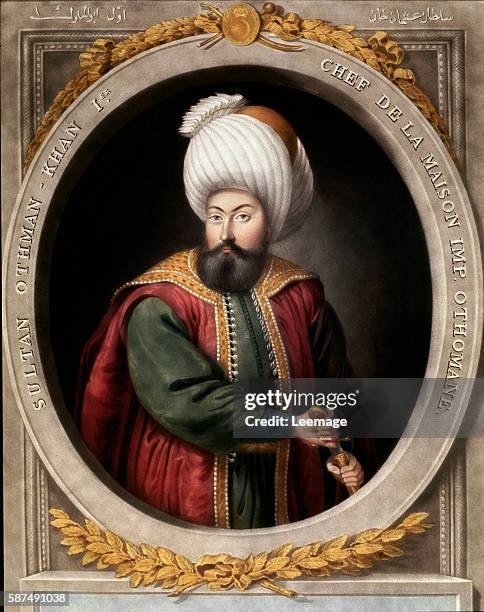
Osman I
Also known as: Osman Ghazi, Osman Bey, Ataman
誕生日
1258
星座
Leo
出生地
Söğüt, Anatolia
年齢
68歳で死去
概要
オスマン1世はトルコ系の指導者であり、オスマン帝国の創設者です。彼は小さな公国を築き、それが1922年まで6世紀以上にわたって続く広大な帝国へと発展したことで有名です。彼の正確な出自については歴史家の間で議論がありますが、彼のベイリク(辺境領)がビザンツ帝国国境に近い戦略的な位置にあったことが、彼とその子孫の統治下での大幅な拡大を促進しました。彼の記念碑的な影響にもかかわらず、彼の生涯に関する現存する歴史的記録は乏しく、多くの現代の学者は彼の治世を理解するために後代の年代記に頼っています。オスマンは1326年に死去し、世界史の流れを根本的に形作る遺産を残しました。
生い立ちと背景
オスマン・ガーズィーとして崇敬されるオスマン1世は、1258年頃、アナトリア北西部の険しい広がりに位置する小さな町ソユトで生まれました。彼の成長期は、トルコ系遊牧部族の伝統に浸って過ごされました。この伝統は、しばしばオグズ・トルコ人の伝説的なカユ部族と関連付けられています。後の伝承がこの系譜を強く主張しましたが、一部の現代の歴史家は、それが王朝の正当性を強化するために後から作られた可能性があると慎重に示唆しています。正確な歴史的起源はともかく、オスマンの幼少期は、回復力と自給自足を重視する文化に深く根ざしていました。幼い頃から、彼は厳しい伝統的なトルコ系遊牧訓練を受け、乗馬、弓術、剣術といった辺境に不可欠なスキルを習得しました。これらの技能は単なる娯楽ではなく、不安定な国境地帯での生存と防衛に絶対的に不可欠でした。同時に、彼の育ちはイスラム教の枠組みに深く根ざしており、深遠なスーフィーの精神的教養によって補完されていました。彼は尊敬されるスーフィーのシェイクの庇護のもとで指導を受け、中でもシェイク・エデバリは彼の精神的指導者として重要な人物であり、彼の道徳心と哲学的見解を形成しました。
オスマンの青年期の地理的・政治的状況は、彼の性格と能力を形成する上で重要な役割を果たしました。彼の家族はカユ部族の一部として、セルジューク朝のスルタンによってソユトとその周辺地域を戦略的に割り当てられていました。この任命には、ビザンツ帝国の絶え間ない圧力から辺境を守るという重要な責任が伴っていました。ビテュニア地方のビザンツ国境近くに位置するこの地位は、若きオスマンが単なる傍観者ではなく、頻繁な小競り合いや襲撃に積極的に参加することを意味しました。このような絶え間ない紛争への曝露は、彼に貴重な実戦的軍事経験を提供し、戦術的洞察力を磨き、非常に幼い頃から辺境戦争への理解を固めさせました。
この困難な環境の中で、オスマンの生来の指導力と戦略的先見性が現れ始めました。彼は鍛え上げられた武勇と、彼の新生公国の本質的に有利な立地に基づき、小規模なトルコ系ベイリクの統治者として台頭しました。動的な国境に沿って拡大するために戦略的に位置づけられたこの新興国家は、彼の旅における重要な最初のステップを表し、後にオスマン帝国へと発展する強力な実体の基礎となる枠組みを築きました。
キャリアの歩み
父エルトゥールルが1280年から1281年頃に亡くなると、オスマンはカユ部族とその小さなベイリクの指導権を継承しました。彼はビザンツ領への襲撃を成功させ、カラジャヒサルの要塞を占領し、イェニシェヒルを初期の行政中心地としました。1299年頃、オスマンは弱体化したルーム・セルジューク朝からの独立を宣言しました。この年は伝統的にオスマン・ベイリクの公式な創設年とされています。1302年、オスマンはバフェウスの戦いでビザンツ軍に勝利し、ビテュニア地方における支配を確固たるものにしました。彼は襲撃、包囲、戦略的同盟の戦略を通じて領土を拡大し、非イスラム教徒の土地との戦いのイデオロギーを推進することでガーズィーとして知られる辺境の戦士たちを惹きつけました。1326年までに、オスマンはかつてビザンツ領だったいくつかの要塞の支配を拡大し、ブルサとニカイアを包囲する強固な拠点を提供しました。彼の息子オルハンは1326年4月6日にブルサを占領しました。
キャリア年表
公的イメージとスタイル
現代のトルコのメディアや大衆文化において、オスマン1世は伝統的なトルコの衣装を身にまとい、ターバンを巻き、剣を携えた髭面の戦士として描かれています。テレビでの描写は、彼の辺境のガーズィーとしての役割を強調しています。『Kuruluş: Osman』(2019年~現在)のようなトルコの歴史ドラマは、彼を英雄的で神の導かれた創設者として描き、特にトルコ国内やディアスポラコミュニティの間で新たな大衆の関心を呼び起こしています。このシリーズはかなりのファン層を生み出し、ファンはInstagram、Facebook、YouTubeなどのソーシャルメディアプラットフォームでクリップ、編集動画、議論を共有しています。
名声とファンダム
Osman I has never been the subject of a modern organized fandom with birthday billboards, subway campaigns, or streaming drives, as these phenomena belong to the digital age rather than the 13th century. While he is revered across Turkey and among diaspora communities as a national hero and the eponymous founder of an empire that lasted over six centuries, this devotion remains cultural and historical rather than structured as a fanbase with rituals or official names. The enthusiasm for his legacy often manifests through the enduring popularity of historical dramas like Kuruluş: Osman, which have sparked renewed interest in his life story without creating a formal group identity. In August 2026, iFANN's Global Fame Engine evaluated his standing and determined that Osman I does not currently hold a placement in the published rankings, meaning he is not ranked within the Global Top 1,000 or any Top-100 scope list. This absence from the charts reflects his status as a medieval figure whose fame operates on a different axis than contemporary celebrities who drive search volume and media consumption signals worldwide. Although he commands immense respect and is frequently depicted in Turkish media as a bearded warrior guiding a divinely appointed destiny, there is no documented fandom name attached to his followers, nor are there records of fan-led projects dedicated to him in the manner seen for living stars. The lack of a numeric rank underscores that while his impact on world history is monumental, his current visibility does not translate into the specific metrics used to generate global celebrity hierarchies today.
興味深い事実と伝説
The most enduring legend about Osman involves a prophetic dream where a moon emerged from Sheikh Edebali's chest and entered Osman's, followed by a great tree growing from his body to cover the world, symbolizing the future expansion of the Ottoman Empire. Historical accounts suggest his name may have originally been the Turkish Ataman or Atman before being Arabicized to Osman, a detail Byzantine sources consistently record as Atouman or Atman. Folklore also claims that Osman killed his uncle Dündar to eliminate a rival claimant to leadership, though this event remains part of the traditional narrative rather than a verified fact. His rise occurred during the collapse of the Seljuk Sultanate of Rum under Mongol pressure, leaving many small Turkish beyliks competing for power. A widely retold story from his era notes that tradition states he was born on the same day the Mongols destroyed Baghdad in 1258. Cultural narratives describe him as a warrior, judge, and visionary leader who waged war against the Byzantine Empire and rival Turks, cementing his place in foundational national myths. These stories, recorded centuries later in chronicles such as those by Aşıkpaşazade, remain central to how his legacy is understood today.
家族と私生活
恋愛関係と交際歴
オスマン1世が13~14世紀に生きた人物であることを考えると、詳細な恋愛歴は同時代の記録ではなく、後世のオスマン朝年代記や伝説に依存しています。彼は1280年代頃にラビア・バラ・マル・ハトゥンと結婚しました。彼女はオスマンの精神的指導者であるシェイフ・エデバリの娘でした。伝説によれば、オスマンは彼女の父と親交を深め、その知恵に感銘を受けて結婚したとされています。彼女は伝統的にオスマンの主要な配偶者の一人と見なされています。また、1280年代~1290年代頃にマルフン・ハトゥンと結婚しました。彼女は時にオルハン1世の母とされていますが、歴史家の間では異論もあります。1326年時点で、オスマン1世は死去時に寡夫でした。
- 既婚Rabia Bala Mal Hatun1280 - 1326シェイフ・エデバリの娘。父と親交を深めた後に結婚。
- 既婚Malhun Hatun1285 - 1326オルハン1世の母の可能性あり。オメル・ベイの娘。
死去とその後
死没
1326 (68歳没)
死没地
Söğüt
死因
Reported natural causes
Osman I spent his final years in Söğüt, the quiet capital of his beylik in northwestern Anatolia, overseeing the consolidation of lands that had been won through decades of raids and sieges against Byzantine forces. By 1326, the founder of what would become a vast empire had passed away at the age of roughly sixty-eight, leaving behind a transformed tribal confederation ready for expansion. Historical chronicles from the era do not record a specific medical cause; he is simply remembered as having died naturally after a long reign of territorial growth. Succession followed established dynastic tradition rather than litigation, with his son Orhan immediately assuming leadership to continue the conquests.
The immediate aftermath involved a private burial consistent with Islamic traditions of the period, held within the city of Söğüt where Osman had ruled. His tomb, now known as the Osman Gazi Mosque and Tomb, stands today as a significant religious and historical site in Bilecik Province, serving as a focal point for centuries of cultural memory. Modern tributes manifest in the naming of major landmarks like the Osman Gazi Bridge and various academic studies that keep his legacy alive.
総資産(遺産評価額)
受賞と栄誉
View 3 records, honours and achievements代表作
Founding the Ottoman Empire
1299 · 創設者
Battle of Bapheus
1302 · コマンダー
キーワード
出典
クイック情報
- 職業
- オスマン帝国の創設者
- 生年月日
- 1258
- 出生地
- Söğüt, Anatolia
- 死没
- 1326
- 死没地
- Söğüt
- 性別
- 男性
- 配偶者
- Rabia Bala Mal Hatun, Malhun Hatun
- 星座
- Leo
個人情報
- 配偶者
- Rabia Bala Mal Hatun, Malhun Hatun
- 子ども
- Orhan I, Alaeddin Bey, Çoban Bey
- 学歴
- Traditional Turkic nomadic training in horsemanship, archery, and combat; Islamic and Sufi spiritual education under Sheikh Edebali
よくある質問
オスマン1世とは誰ですか?
オスマン1世はどのように亡くなりましたか?
オスマン1世の妻は誰ですか?
オスマン1世は何で有名ですか?
オスマン1世は実在の歴史上の人物ですか?
コミュニティに参加
人のファンが話題に