 France
概要
ピエール・キュリーは、現代科学を変革したフランスの物理学者であり化学者です。妻マリー・キュリーと共に放射能の研究を先駆け、ポロニウムとラジウムという元素を発見しました。共同研究により1903年にノーベル物理学賞を受賞し、キュリー夫妻はノーベル賞を受賞した最初の夫婦となりました。ピエールの結晶学と磁気学における初期の発見(圧電効果やキュリーの法則など)は今も基礎となっています。現在、キュリーの名は研究所、大学、さらには放射能の単位にも冠されています。ピエールの静かな才能と科学の公開への無私の献身は、今も世界中の物理学者や化学者に影響を与え続けています。
生い立ちと背景
ピエール・キュリーは1859年5月15日にパリで、医師のウジェーヌ・キュリーとソフィー=クレール・ドゥプイユの間に生まれました。自由思想の医師であり科学に情熱を注いだ父親は、ピエールを14歳までホームスクーリングし、数学と幾何学への初期の興味を育みました。16歳までにピエールはソルボンヌ大学で理学士号を取得。18歳で実験助手、19歳で助教授兼講師となりました。転機は1880年、兄のジャックと共に圧電効果(機械的応力から電荷を生み出す現象)を発見したことです。質素な実験室でのこの画期的発見は、後にクォーツ時計、マイク、超音波画像診断を可能にしました。1895年に完成した磁気学に関する博士論文では、磁性体の温度による振る舞いを説明するキュリーの法則を提唱。これらの初期の業績により、マリーと出会う前からフランス物理学界の新星と目されていました。
キャリアの歩み
ピエールのキャリアは、1895年にマリー・スクウォドフスカと結婚した後、飛躍的に発展しました。二人はアンリ・ベクレルが発見したウランからの謎の放射線を研究。1898年7月にポロニウム(マリーの祖国にちなんで命名)を発表し、12月にはウランより数千倍も放射能の強いラジウムを単離しました。この研究は風通しの悪い小屋で行われ、何トンものピッチブレンド鉱石を処理する必要がありました。1903年、ノーベル物理学賞はピエール、マリー、ベクレルに授与されました。ピエールは磁気学にも永続的な貢献をし、強磁性体が永久磁気を失う温度であるキュリー温度を定義。1904年、ソルボンヌ大学は彼のために物理学教授職を新設しました。彼はラジウム単離法の特許取得を拒否し、科学は万人の利益になるべきだと信じたその姿勢は、彼の原則に基づく研究者としての遺産を確固たるものにしました。
キャリア年表
公的イメージとスタイル
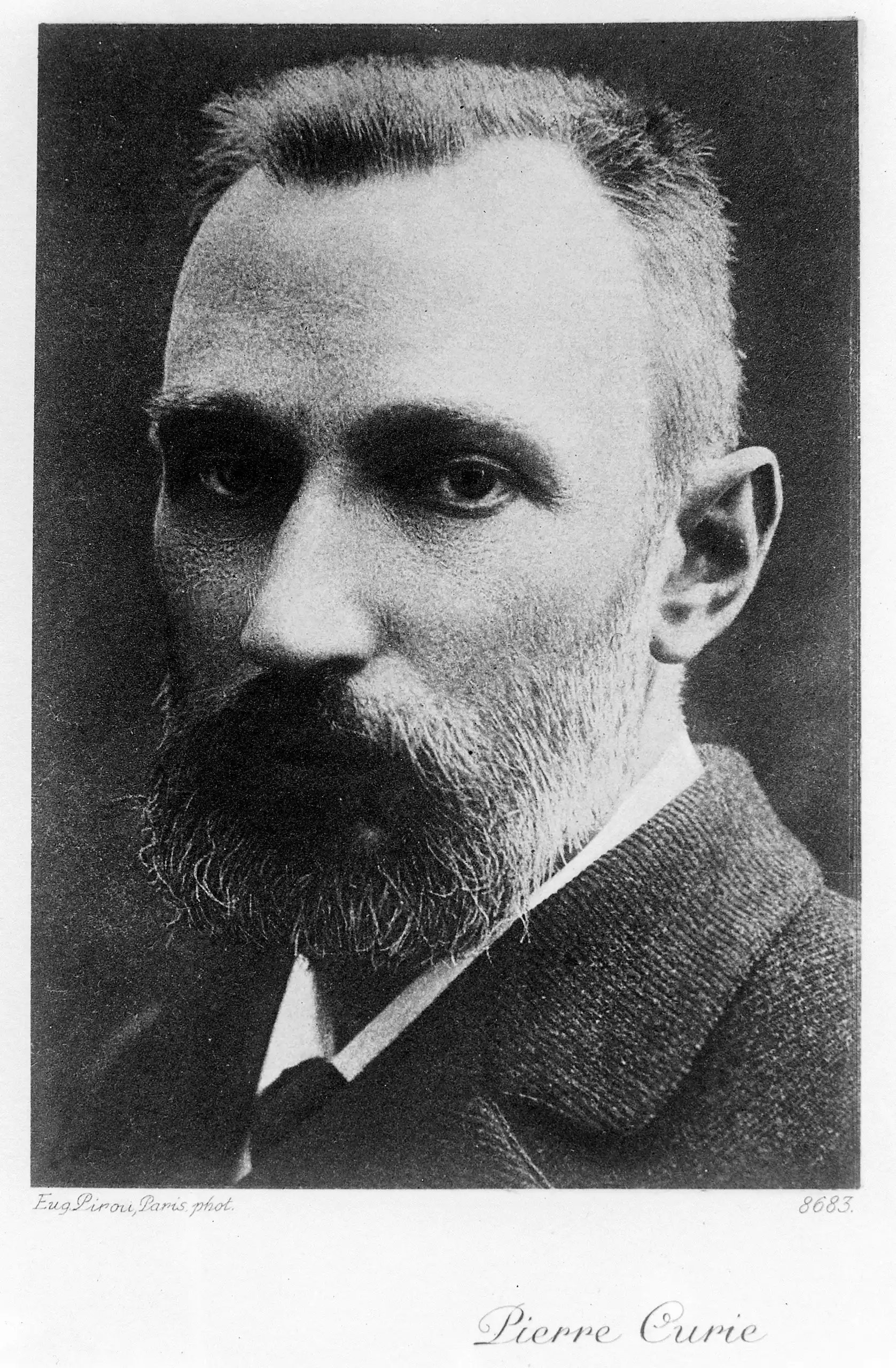
ピエール・キュリーは、無私の科学者の典型として記憶されています。物静かで、原則を重んじ、発見に完全に献身した人物です。歴史的な写真では、暗いひげとフロックコートをまとい、しばしばカメラから思索的に視線をそらした姿で写っています。メディアでの描写は、マリーとの協力関係に焦点を当て、彼女の激しい決意に対して、安定した思索的な相棒として描かれています。科学愛好家の間では、結晶学と磁気学における基礎的な業績で尊敬されています。公式のファンダム名はありませんが、ファンは非公式に「キュリーイスト」と名乗っています。パリのキュリー博物館は、彼らの旧実験室にあり、毎年何千人もの訪問者が歴史が作られた場所を見に訪れます。
名声とファンダム
The reverence for Pierre Curie exists not in crowded conventions or viral hashtags, but in the quiet hum of laboratories and the pages of textbooks where his name anchors the laws of magnetism. There is no organized fanbase with a specific moniker, no merchandise lines, and no social media campaigns dedicated to keeping his memory alive in the way modern pop culture demands. His admirers are scientists, historians, and students who engage with his legacy through rigorous study rather than performative celebration. The cultural mythology surrounding him is built on verified historical weight: the tragic accident that ended his life at age 46, the radioactive glow of his personal notebooks which remain dangerous over a century later, and the collaborative brilliance he shared with Marie. These stories are retold not as folklore, but as foundational lessons in scientific integrity and the human cost of discovery. While figures like rock stars generate chart-topping noise, Curie's impact is measured in Nobel Prizes, university namesakes, and the enduring utility of his discoveries in medical imaging. He remains a figure of profound respect within the academic world, revered for his refusal to patent radium and his dedication to open science. Despite this global recognition, iFANN's Global Fame Engine has evaluated this person, but they do not currently hold a placement in the published rankings (Global Top 1,000 or a Top-100 scope list).
興味深い事実と伝説
Pierre Curie's first major discovery, piezoelectricity, powers quartz watches and ultrasound machines today. He was so absorbed in his work that Marie often had to remind him to eat. A deeply contemplative man, he preferred long walks in the countryside over social gatherings. He refused to patent radium extraction, stating it would be "contrary to the scientific spirit." His death was instantaneous, struck by a horse-drawn carriage while crossing a rainy Paris street. A rare manuscript on polonium discovery sold at auction for €1.2 million in 2025. Historical accounts describe how the Curies investigated the medium Eusapia Palladino around 1903, debunking her supernatural claims through rigorous experimentation. This episode highlights their skepticism even as they explored the unknown nature of radiation. Another enduring fact involves his personal belongings; his notebooks and furniture remain highly radioactive more than 120 years later, stored in lead-lined boxes at French institutions. The story of his accidental death remains a central point of remembrance, often cited on anniversaries by organizations like the Nobel Prize Foundation.
注目の発言
“One never notices what has been done; one can only see what remains to be done.”
“I am among those who think, like Nobel, that humanity will draw more good than evil from new discoveries.”
“It is my earnest desire that the discovery of radium should benefit humanity, and especially its medical applications.”
“We must eat, drink, sleep, be idle, love, and touch life in all its parts, and yet, in all of this, the work must remain the master.”
家族と私生活
ピエールの父ウジェーヌは医師で、貧しい人々を治療し、息子たちに科学への愛情を植え付けました。母ソフィー=クレールは家計を管理しました。兄のジャックは彼と共に圧電効果を発見。1895年、ピエールは優秀なポーランド人物理学者マリー・スクウォドフスカと結婚。二人の関係は恋愛的であり科学的でもあり、実験室で共に働きました。二人の間には2人の娘が生まれました。1897年生まれのイレーヌは後に夫のフレデリック・ジョリオ=キュリーと共にノーベル化学賞を受賞。1904年生まれのイヴは作家兼外交官になりました。家族はパリで質素に暮らし、名声が高まるにつれても経済的には苦しい時期が続きました。
注目の関係
ピエールの最も親しい協力者は妻マリー・キュリーでした。兄のジャックは圧電効果を共同発見。アンリ・ベクレルによる自然放射能の発見がキュリー夫妻の研究の基盤を築きました。娘のイレーヌ・ジョリオ=キュリーとその夫フレデリックは、家族のノーベル賞の伝統を引き継ぎました。ピエールはポール・ランジュバンを指導し、彼は後に著名な物理学者となり、マリーの人生において物議を醸す人物となりました。博士課程の指導教官ガブリエル・リップマンもノーベル賞を受賞しました。
恋愛関係と交際歴
ピエール・キュリーの恋愛歴は、一つの深い関係によって特徴づけられます。彼は1894年に、共通の友人であるポーランド人物理学者ユゼフ・ヴィエルシュ=コヴァルスキを通じてマリー・スクウォドフスカと出会いました。ピエールは彼女の知性と科学への情熱にすぐに心を奪われ、手紙で結婚を申し込みました。二人は1895年7月26日に結婚しました。彼らの関係は深く協力的で愛情に満ちたものであり、風通しの悪い小屋でラジウムとポロニウムを分離する研究を共に行いました。二人の間には2人の娘、イレーヌとイヴが生まれました。1906年のピエールの突然の死により、マリーは未亡人となりました。2026年現在、ピエールは故人であり、マリーと結婚したまま亡くなっています。
- 既婚Marie Curie1895 - 19061895年からピエールが1906年に亡くなるまで結婚。2人の娘をもうけ、科学的に協力した。
死去とその後
死没
April 19, 1906 (46歳没)
死没地
Paris, France
死因
Trauma from horse-drawn carriage accident
Pierre Curie, the French physicist and chemist, died on April 19, 1906, in Paris, France. He was struck by a horse-drawn cart while crossing the Rue Dauphine near the Pont Neuf. The circumstances of his death were a tragic accident; he slipped on wet pavement and fell into the path of the vehicle. He was struck directly in the head by the wheel or the vehicle itself and died instantly. No disputed accounts regarding the cause or location of death appear in the search results. Tributes poured in from peers and institutions recognizing him as a pioneer in crystallography and magnetism and a co-discoverer of polonium and radium alongside his wife, Marie Curie.
His remains were interred in the Cimetière de Sceaux. Pierre Curie's legacy has been preserved through numerous honors, including the continued recognition of his 1903 Nobel Prize in Physics. A Franco-Polish "Marie Sklodowska Curie and Pierre Curie" Prize continues to be awarded. His belongings, along with those of Marie Curie, remain stored in lead-lined boxes due to their persistent radioactivity.
総資産(遺産評価額)
$10 Million
iFANN編集チームによる推定
Though Pierre Curie died in 1906 with a modest personal fortune, his financial legacy has grown into a substantial entity managed by the Curie family and the Institut Curie. The couple lived frugally throughout their careers, reinvesting their Nobel Prize winnings directly into research rather than accumulating wealth. Pierre's refusal to patent the radium extraction process ensured that scientific discoveries remained free for humanity, a decision that shaped the economic structure of their estate. Today, the value of the Curie name drives significant income through licensing agreements at the Institut Curie in Paris, a leading cancer research center that utilizes the brand for fundraising and grants. Per iFANN's editorial analysis, the estate is estimated to be worth $10 million as of 2026, generating revenue from published works and historical artifacts. A rare manuscript on polonium discovery sold at auction for €1.2 million in 2025, contributing to this total. The estate remains active, with letters and manuscripts continuing to attract collectors while the family preserves the intellectual property associated with the Curies' groundbreaking work.
受賞 (4)
ピエール・キュリーは、1903年にマリー・キュリーおよびアンリ・ベクレルと共同でノーベル物理学賞を受賞しました。また、デービー・メダル(1903年)、マテウッチ・メダル(1904年)、エリオット・クレッソン・メダル(1905年)も受賞しています。これらの栄誉は、放射能と磁性における彼の基礎的な業績を認めたものです。
1905 · 物理学
Discovery of radium
1904 · 物理学
Research on magnetism
代表作
Discovery of polonium
1898 · Co-discoverer
Discovery of radium
1898 · Co-discoverer
Piezoelectric effect
1880 · Co-discoverer
Curie's law of magnetism
1895 · Discoverer
Curie temperature
1895 · Discoverer
キーワード
クイック情報
- 職業
- physicist, chemist, university teacher
- 生年月日
- May 15, 1859
- 出生地
- Paris, France
- 死没
- April 19, 1906
- 死没地
- Paris, France
- 性別
- 男性
- 配偶者
- Marie Curie
- 星座
- Taurus
個人情報
- 本名
- Pierre Curie
- 身長
- 5 ft 7 in (170 cm)
- 配偶者
- Marie Curie
- 子ども
- Irène Joliot-Curie, Ève Curie
- 学歴
- Bachelor of Science, Doctor of Science from the Sorbonne
よくある質問
ピエール・キュリーの最も有名な発見は何ですか?
ピエール・キュリーはどのように亡くなりましたか?
ピエール・キュリーはノーベル賞受賞者ですか?
ピエール・キュリーには子供がいましたか?
キュリーの法則とは何ですか?
コミュニティに参加
人のファンが話題に