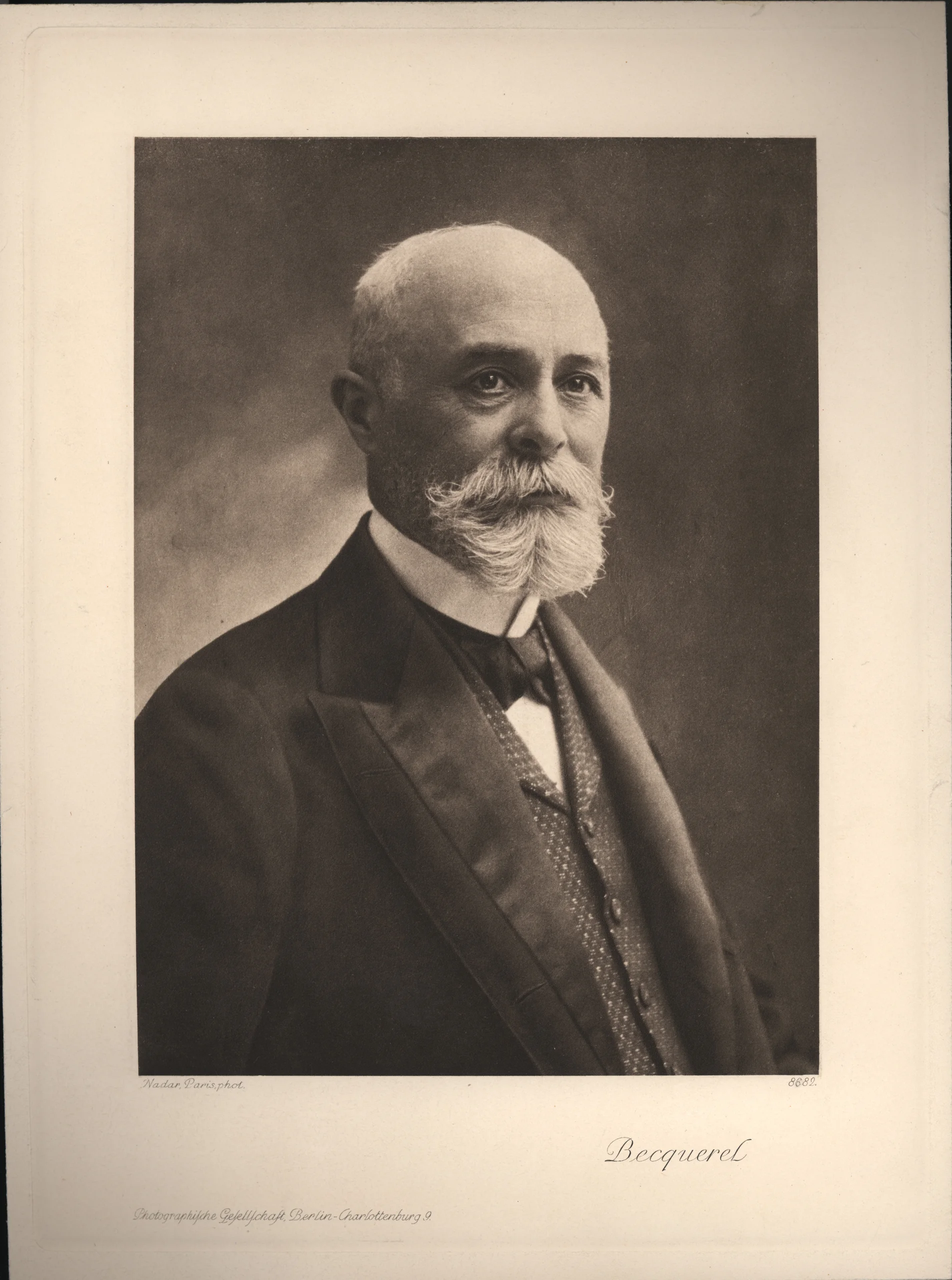
Antoine Henri Becquerel
 France
physicist•engineer•university teacher
Also known as: Henri Becquerel
誕生日
December 15, 1852
星座
Sagittarius
出生地
Paris, France
年齢
55歳で死去
概要
アントワーヌ・アンリ・ベクレルはフランスの実験物理学者で、1896年に偶然にも放射能を発見し、その画期的な業績は現代物理学を一変させました。彼のウラン塩に関する研究は、不透明な物質を透過し写真乾板を感光させる光線を放出することを示し、この現象を「ベクレル線」と名付けました。この功績により、彼は1903年にマリー・キュリーおよびピエール・キュリーとともにノーベル物理学賞を共有しました。放射能のSI単位であるベクレル(Bq)は彼の名に由来します。今日、彼の遺産は原子力エネルギー、医療画像診断、放射線治療に生き続けています。ベクレルは国立自然史博物館の物理学教授を務め、フランス科学アカデミーの会員でもありました。彼の発見は燐光の研究中になされましたが、すぐにその放射が外部刺激とは無関係な新しい形態の放射線であることに気づきました。
生い立ちと背景
パリの科学者一族に生まれたベクレルは、父アレクサンドル=エドモンと祖父アントワーヌ・セザールがともに著名な物理学者でした。この環境により、彼は幼少期から物理学に親しみました。リセ・ルイ=ル=グランに通った後、1872年にエコール・ポリテクニークに入学し、1874年に卒業しました。その後、エコール・デ・ポン・エ・ショセで工学を学び、1877年に学位を取得しました。短期間技師として働いた後、研究に転じました。1888年、パリ大学理学部で結晶における光の吸収に関する論文により博士号を取得しました。父が働いていた国立自然史博物館の博物学者助手となりました。初期の研究は光学、磁気、ウラン塩の燐光に焦点を当てており、それが直接彼の決定的な発見につながりました。
キャリアの歩み
1896年初頭、ベクレルはウラン塩などの燐光物質が太陽光にさらされた後にX線を放出するかどうかを調査していました。彼は写真乾板を黒い紙で包み、その上にウラン塩を置いて日光にさらしました。乾板は曇りました。しかし、曇天のため実験が遅れた際、それでも乾板を現像したところ、日光がなくとも曇っていることを発見しました。彼はウランが外部エネルギーとは無関係に独自の光線を放出していることに気づきました。1896年3月2日にその発見を発表しました。この自然放射能の発見は科学界を震撼させました。マリー・キュリーが「放射能」という用語を作り、ピエールとともにポロニウムとラジウムを分離しました。1903年、ノーベル物理学賞は放射線に関する研究によりベクレル、マリー、ピエール・キュリーに共同授与されました。ベクレルは健康が衰えるまで放射性元素の性質の研究を続けました。
キャリア年表
公的イメージとスタイル
ベクレルは、20世紀で最も重要な発見の一つを偶然見つけた、几帳面で控えめな科学者として記憶されています。写真では、厳格なひげを生やした正装の男性として描かれ、当時の気品ある学者を反映しています。科学界では、厳密な実験手法とキュリー夫妻と功績を分かち合う姿勢で尊敬されています。ベクレル単位の命名により、彼の名はすべての物理教科書に登場します。一般向けの解説ではマリー・キュリーの物語に影が薄れることもありますが、歴史家は彼を放射能の発見者として認めています。
名声とファンダム
Antoine Henri Becquerel commands a reverence that transcends the fleeting nature of celebrity culture, existing instead as a foundational pillar within the global scientific community. Unlike modern icons who cultivate organized fanbases with specific names and ritualistic gatherings, Becquerel is revered by historians, physicists, and students rather than a dedicated fandom. No official moniker exists for his admirers, nor are there chart-topping campaigns or birthday tributes; his legacy is maintained through academic curricula and the enduring presence of the unit bearing his name. This quiet, institutional devotion stands in stark contrast to the noisy adoration reserved for living entertainers.
In August 2026, the iFANN Global Fame Engine evaluated Antoine Henri Becquerel's standing across all metrics. The assessment concludes that he is currently an EVALUATED_UNRANKED figure, meaning he does not hold a placement within the published Global Top 1,000 or any Top-100 scope list. While his name appears on every physics textbook, this ubiquity has not translated into a ranked position in the current fame hierarchy. His influence remains absolute yet static, rooted in historical fact rather than the fluctuating signals of contemporary media consumption or search volume.
The absence of a formal ranking reflects his status as a figure of the past whose cultural footprint is immutable. He is neither rising nor falling in popularity because his relevance is absolute. The scientific world honors him not through the mechanics of a popularity contest but through the fundamental laws of nature he helped uncover. His story serves as a permanent reference point, ensuring his name endures without the need for the competitive dynamics that drive modern fame rankings.
興味深い事実と伝説
While often described as a serendipitous accident, Becquerel was methodically investigating phosphorescence when he noticed the anomaly that would change science. The unit becquerel (Bq) represents one radioactive decay per second, cementing his contribution in the International System of Units. Elected to the French Academy of Sciences in 1889 at age 36, he held the chair of physics at the Muséum National d'Histoire Naturelle. His son Jean also became a physicist, collaborating with him on magnetic experiments before both faced health declines likely due to radiation exposure.
A defining legend of his career centers on a rainy week in Paris during February 1896. Having prepared uranium salts atop photographic plates wrapped in black paper, he intended to expose them to sunlight. When overcast skies prevented this, he stored the setup in a dark drawer, assuming no reaction would occur. Upon developing the plates weeks later, he found they were strongly marked, proving the uranium emitted rays spontaneously without external energy. This verified event, recorded in his laboratory notebooks, illustrates the critical importance of observing unexpected results.
Becquerel remained humble despite his Nobel Prize, once noting his discovery was not a complete surprise given his family's extensive work in optics. An avid sailor, he spent summers at his manor in Le Croisic, where he died in 1908. His life exemplifies the meticulous experimental methods that defined his era, leaving a legacy that permeates nuclear energy and medical imaging without the need for self-promotion.
注目の発言
“I have observed that the rays emitted by uranium salts are capable of passing through opaque bodies.”
“The discovery of radioactivity was not a complete surprise, given the work of my father and grandfather.”
“I believe that the study of these radiations will open a new field of physics.”
家族と私生活
ベクレルは1877年にルイーズ・ロリューと結婚しましたが、彼女は1878年に息子ジャンを出産後まもなく亡くなりました。1890年にリュシー・ジャマンと再婚しました。息子のジャン・ベクレルは父や祖父に続いて物理学者となり、博物館の教授になりました。ベクレル家の科学的遺産は3世代にわたり、いずれも物理学に貢献しました。アンリはしばしば、燐光への初期の興味を父のおかげだと述べています。一家はパリとル・クロワジックのペン・カステル邸に住み、アンリはそこで晩年を過ごしました。
注目の関係
ベクレルは、彼の発見を基に新たな放射性元素を分離したマリー・キュリーおよびピエール・キュリーと緊密に協力しました。息子のジャン・ベクレルは後年の研究パートナーでした。また、ヴィルヘルム・レントゲンによるX線の発見にも影響を受け、それが初期の実験のきっかけとなりました。
恋愛関係と交際歴
ベクレルは1877年にルイーズ・ロリューと結婚しました。彼女は翌年、息子ジャンを出産後に亡くなりました。1890年にリュシー・ジャマンと再婚し、彼女は彼より長生きしました。2度目の結婚は安定しており、彼の科学的研究を支えました。1908年の死去時、リュシーと結婚していました。
- 既婚Louise Lorieux1877 - 18781877年に結婚。1878年に産褥で死去。
- 既婚Lucie Jamin1890 - 19081890年に結婚。彼女は彼より長生きした。
死去とその後
死没
August 25, 1908 (55歳没)
死没地
不明
死因
不明
総資産(遺産評価額)
19世紀の学者として、ベクレルの財源は教授職と家族からの遺産でした。彼はパリで質素に暮らし、ル・クロワジックに邸宅を所有していました。ノーベル賞の賞金はキュリー夫妻と分け合いましたが、当時の価値は約15万スウェーデンクローナでした。彼は1908年に死去したため、現代の総資産は計算できません。
受賞 (2)
ベクレルは、自然放射能の発見により、マリー・キュリーおよびピエール・キュリーと共に1903年のノーベル物理学賞を受賞しました。また、1900年には王立協会からランフォード・メダルを授与されました。SI単位のベクレルは彼にちなんで名付けられています。
1903 · 物理学
Discovery of spontaneous radioactivity
1900 · 物理学
Discovery of radioactivity
代表作
Discovery of Radioactivity
1896 · Discoverer
Becquerel Rays
1896 · Discoverer
キーワード
クイック情報
- 職業
- physicist, engineer, university teacher
- 生年月日
- +1852-12-15
- 出生地
- Paris
- 死没
- +1908-08-25
- 死没地
- manoir de Pen Castel
- 性別
- 男性
- 配偶者
- Louise Lorieux, Lucie Jamin
- 星座
- Sagittarius
個人情報
- 本名
- Antoine Henri Becquerel
- 配偶者
- Louise Lorieux, Lucie Jamin
- 子ども
- Jean Becquerel
- 学歴
- エコール・ポリテクニーク
よくある質問
アントワーヌ・アンリ・ベクレルとは誰ですか?
アントワーヌ・アンリ・ベクレルは何を発見しましたか?
アントワーヌ・アンリ・ベクレルはいつノーベル賞を受賞しましたか?
アントワーヌ・アンリ・ベクレルはどのように亡くなりましたか?
ベクレルという単位は誰にちなんで名付けられましたか?
コミュニティに参加
人のファンが話題に