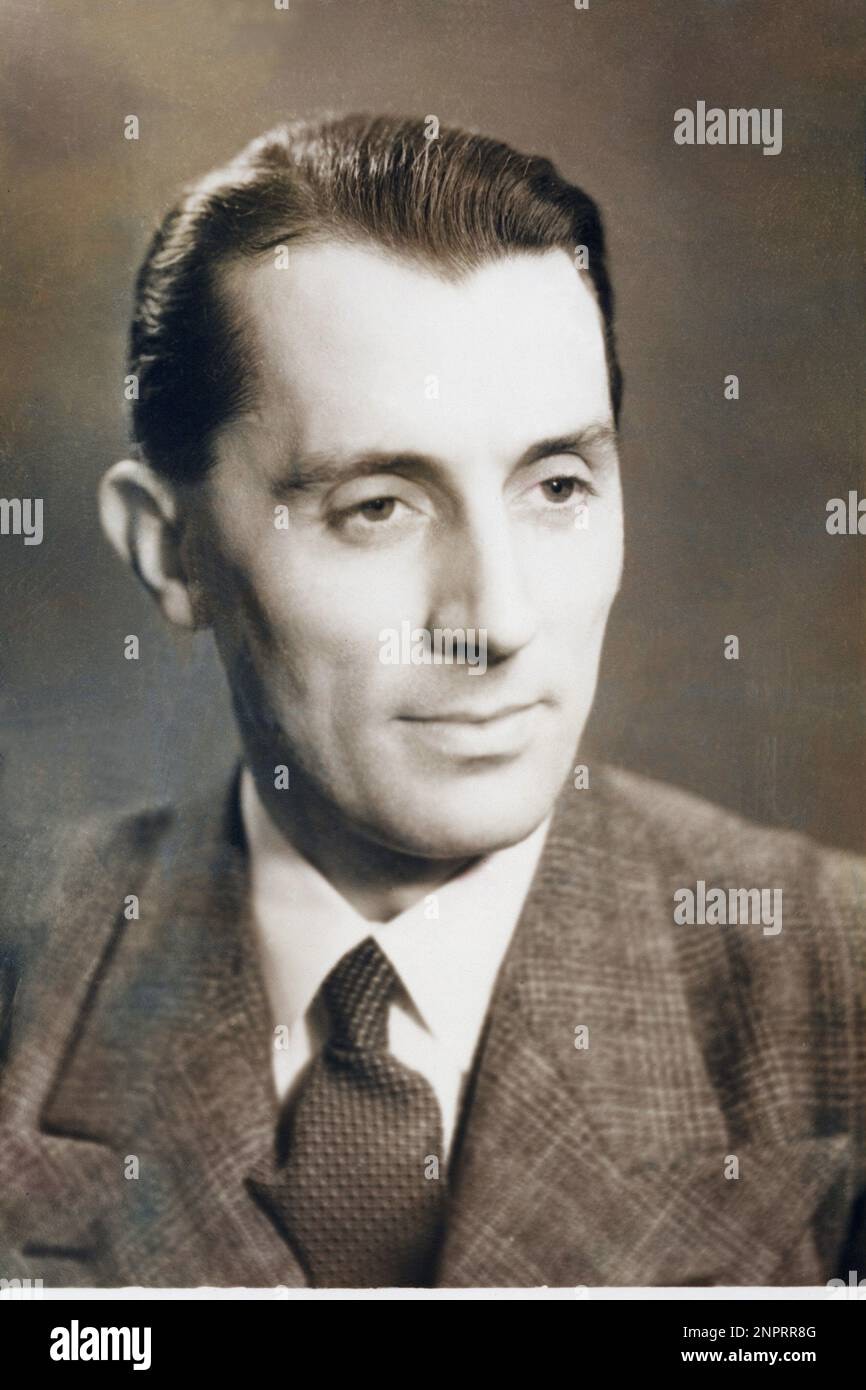
Frédéric Joliot-Curie
 France
nuclear physicist•chemist•professor
Also known as: Jean Frédéric Joliot
誕生日
March 19, 1900
星座
Pisces
出生地
Paris, France
年齢
58歳で死去
概要
フレデリック・ジョリオ=キュリーは、フランスの物理学者であり化学者で、妻のイレーヌ・ジョリオ=キュリーとともに人工放射能を発見しました。この画期的な成果により、1935年のノーベル化学賞を共同受賞し、イレーヌの両親であるマリー・キュリーとピエール・キュリーに続いて、ノーベル賞を受賞した2組目の夫婦となりました。現在、彼の遺産は科学界におけるジョリオ=キュリーの名、彼が設立に貢献したオルセーの研究センター、そして核物理学における彼の研究の継続的な影響を通じて生き続けています。彼は、核兵器に反対しながらも原子力の平和的利用を推進し、優れた研究と強い社会的責任感を兼ね備えた科学者として記憶されています。
生い立ちと背景
パリでアルザス系プロテスタントの家庭に生まれたフレデリック・ジョリオは、幼い頃から科学の才能を示しました。1919年に、かつてピエール・キュリーが教鞭をとっていたエコール・ミュニシパル・ド・フィジック・エ・ド・シミー・アンデュストリエル(市立物理化学工業学校)に入学し、1923年に物理エンジニアとしてクラスのトップで卒業しました。彼の教師ポール・ランジュバンは、彼を基礎研究へと導きました。
1924年12月、ジョリオはマリー・キュリーと出会い、ラジウム研究所で彼女の個人助手となりました。そこで彼は彼女の娘イレーヌ・キュリーと出会い、恋に落ちました。マリーは彼にさらなる学歴を追求するよう主張したため、ジョリオは第二のバカロレア、学士号、そして1930年に放射性元素の電気化学に関する論文で博士号を取得しました。彼は1926年10月4日にイレーヌと結婚し、共同の姓ジョリオ=キュリーを名乗りました。
キャリアの歩み
1934年1月、ジョリオ=キュリー夫妻はホウ素、アルミニウム、マグネシウムにアルファ粒子を照射し、窒素、リン、ケイ素の新しい放射性同位体を生成しました。これは初の人工放射能でした。この発見により、1935年のノーベル化学賞を受賞しました。
ジョリオ=キュリーは1937年にコレージュ・ド・フランスの教授に就任しました。第二次世界大戦中はフランスレジスタンスに参加し、自身の実験室で爆発物や無線機器を製造しました。戦後、1945年に国立科学研究センター(CNRS)の所長に任命され、フランス初の原子力庁長官に就任しました。1948年にはフランス初の原子炉の建設を監督しました。1955年には核兵器に反対するラッセル=アインシュタイン宣言に署名しました。
キャリア年表
公的イメージとスタイル
名声とファンダム
Frédéric Joliot-Curie's enduring recognition rests on his scientific achievements and his role in the wartime resistance, rather than on any organized fan base. There is no documented fandom name, no coordinated fan community, and no fan-driven campaigns or rituals associated with him. His legacy is preserved through institutions such as the Institut Curie and the Joliot-Curie laboratory, as well as through Nobel Prize archives and historical foundations. The Picasso portrait from 1959 and the continued scholarly interest in the Curie family dynasty reflect a diffuse, institutional admiration rather than a modern fandom.
As of August 2026, iFANN's Global Fame Engine has evaluated Frédéric Joliot-Curie, but he does not currently hold a placement in the published rankings. This means he is not listed among the Global Top 1,000 most famous people, nor does he appear on any Top-100 scope list. The evaluation acknowledges his historical significance, yet his fame, while considerable, does not currently meet the threshold for a ranked position within iFANN's frameworks.
興味深い事実と伝説
Frédéric Joliot-Curie played the piano and enjoyed landscape painting. He was an avid reader of Rudyard Kipling, and during the German occupation of France, he coordinated the production of Molotov cocktails for the Resistance. He was a commander of the Legion of Honour and received the Croix de Guerre. In 1942, he joined the French Communist Party, a decision that would later define his public life.
A widely retold story from his wartime activities involves the secret shipment of France's heavy water supply, which was smuggled to England in 1940 to prevent it from falling into German hands. Accounts describe the heavy water being hidden in containers disguised as sardine tins, though the specific details may have been embellished over time. The core event is documented and has become part of his heroic wartime legend.
Another iconic moment is the discovery of artificial radioactivity with his wife Irène in 1934, which earned them the 1935 Nobel Prize in Chemistry. This breakthrough transformed nuclear physics and led to advances in medical imaging and cancer treatment. The Nobel ceremony itself, where they followed in the footsteps of Irène's parents, Marie and Pierre Curie, holds a special place in scientific lore.
家族と私生活
注目の関係
Frédéric Joliot-Curieは妻のIrène Joliot-Curieと密接に協力しました。彼はMarie Curieから指導を受け、物理学者Paul Langevinから影響を受けました。また、初期の原子炉設計においてLew KowarskiやHans Halbanと協力しました。
恋愛関係と交際歴
Frédéric Joliotは1925年、ラジウム研究所で母親のMarieと共に働いていたIrène Curieと出会いました。2人は1926年10月4日に結婚し、共同の姓Joliot-Curieを名乗りました。彼らのパートナーシップは個人的かつ職業的なものであり、人工放射能の発見で協力しました。Irèneは1956年に白血病で亡くなりました。Frédéricは再婚せず、1958年に自身が亡くなるまで彼女の記憶に献身的であり続けました。
- 既婚Irène Joliot-Curie1926 - 19561926年10月4日に結婚。ノーベル賞受賞研究で協力。Irèneは1956年に死去。
死去とその後
死没
August 14, 1958 (58歳没)
死没地
Paris, France
死因
不明
A lithograph portrait drawn by Pablo Picasso in February 1959 stands as a notable cultural artifact commemorating the intersection of two giants of the 20th century, created specifically as an homage following the scientist's passing. This posthumous tribute from a fellow icon preceded any formal state recognition, reflecting the deep respect held for Joliot-Curie among peers in both the scientific and political spheres who noted his contributions to nuclear physics and his engagement with the World Peace Council. The man known for opposing nuclear weapons while advancing atomic energy for peaceful uses passed away on August 14, 1958, in Paris, France, at the age of 58, concluding a life that had seen him serve as a professor at the Collège de France and a director of the National Centre for Scientific Research.
While his wife Irène had died in 1956 from leukemia linked to radiation exposure, Frédéric continued his work until his final days without an official hospital statement detailing the immediate circumstances or last public appearance being released. Consequently, the exact cause remains unconfirmed in public documentation, with no disputed accounts regarding foul play or accident reported in the search results. Public reaction centered on tributes from scientific and political institutions rather than commercial surges or fan vigils, acknowledging a prominent figure whose legacy extended beyond the laboratory into the realm of international peace advocacy. He was buried in the family plot consistent with Curie family tradition, though specific details regarding eulogies or attendees were not widely digitized in general biographical summaries compared to the more publicized events surrounding Marie Curie.
Posthumously, his intellectual property and estate were managed by his family, including his daughter Hélène Langevin-Joliot, who later became a nuclear physicist herself, ensuring the continuation of the family's scientific lineage.
総資産(遺産評価額)
受賞 (2)
Frédéric Joliot-Curieは、人工放射能の発見により、1935年のノーベル化学賞をIrène Joliot-Curieと共同受賞しました。また、1947年には核物理学への貢献により王立協会からヒューズ・メダルを受賞しました。
1935 · 化学
Discovery of artificial radioactivity
1947 · 物理学
Contributions to nuclear physics
代表作
Discovery of artificial radioactivity
1934 · co-discoverer
Nobel Prize in Chemistry
1935 · laureate
キーワード
出典
クイック情報
- 職業
- nuclear physicist, chemist, professor
- 生年月日
- March 19, 1900
- 出生地
- パリ、フランス
- 死没
- August 14, 1958
- 死没地
- パリ、フランス
- 性別
- 男性
- 配偶者
- Irène Joliot-Curie
- 星座
- Pisces
個人情報
- 本名
- Jean Frédéric Joliot
- 配偶者
- Irène Joliot-Curie
- 子ども
- Hélène Joliot-Curie, Pierre Joliot-Curie
- 学歴
- École Supérieure de Physique et de Chimie Industrielles de Paris
よくある質問
Frédéric Joliot-Curieとは誰ですか?
Frédéric Joliot-Curieは何を発見しましたか?
Frédéric Joliot-Curieはいつノーベル賞を受賞しましたか?
第二次世界大戦におけるFrédéric Joliot-Curieの役割は何でしたか?
Frédéric Joliot-Curieの総資産はいくらでしたか?
コミュニティに参加
人のファンが話題に