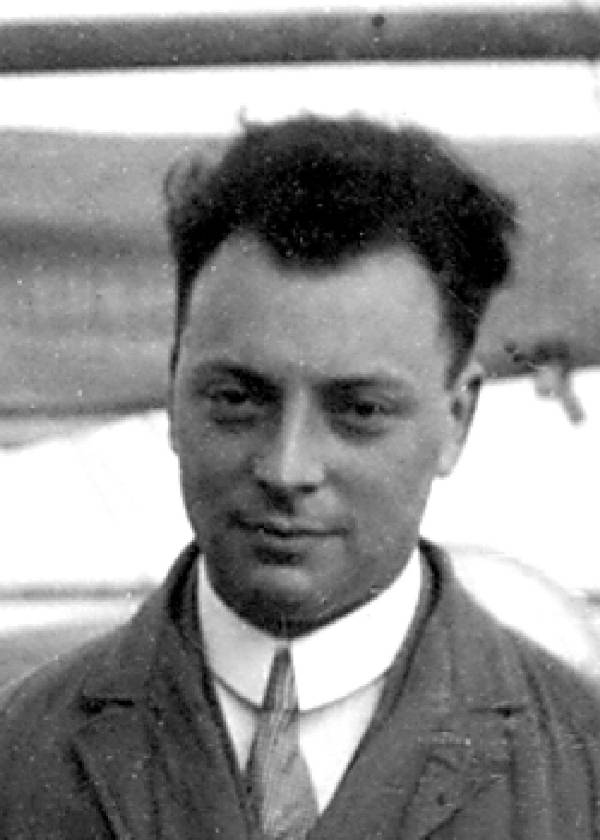
Wolfgang Pauli
theoretical physicist•university teacher
誕生日
April 25, 1900
星座
Sagittarius
出生地
Vienna, Austria-Hungary
年齢
58歳で死去
概要
ヴォルフガング・パウリはオーストリア系スイスの理論物理学者であり、量子力学の創始者の一人として、20世紀で最も優秀で厳格な物理学者の一人とみなされている。鋭い知性と厳格な基準で知られ、原子および亜原子世界の理解に根本的な貢献をした。彼の精密さと洞察力がその仕事を定義づけた。パウリの最も有名な貢献は排他原理であり、これは2つの電子が同じ量子状態を占めることができないという法則で、原子の構造と周期表を説明する発見であり、アルベルト・アインシュタインの推薦によりノーベル物理学賞を受賞した。この原理は現代の物質理解の基礎となっている。また、放射性崩壊の謎を説明するために、微小で中性、ほとんど検出不可能な粒子の存在を提唱するという深遠な理論的飛躍を遂げた。この粒子は後にニュートリノと名付けられ、数十年後に直接検出された。この予言は理論物理学の金字塔であった。有名なほど批判的で要求が厳しく、同僚の間ではその厳格な懐疑主義で知られ、いわゆるパウリ効果はユーモラスな伝説となった。優秀で影響力があり、妥協を許さなかった彼は、現代物理学の発展における中心人物であった。深遠で厳格、彼はこの分野を形成した。ヴォルフガング・パウリは量子時代の偉大な理論物理学者の一人として記憶されている。
生い立ちと背景
ウィーンで、コロイド化学教授のヴォルフガング・ヨーゼフ・パウリとジャーナリストのベルタ・カミラ・シュッツの間に生まれたパウリは、ローマ・カトリックとして育ち、代父は物理学者で哲学者のエルンスト・マッハであった。妹のヘルタは後に作家兼女優となった。デーブリンガー・ギムナジウムでは神童であり、12歳のとき、父に連れられて物理学者アルノルト・ゾンマーフェルトの講演を聞き、パウリはゾンマーフェルトの計算の誤りを指摘した。ギムナジウム在学中、彼はアインシュタインの相対性理論の論文を研究し、退屈な授業中に机の下に隠して読んでいた。1918年7月に優等で卒業した2か月後、彼は一般相対性理論に関する最初の論文を発表した。その後、ミュンヘンのルートヴィヒ・マクシミリアン大学でゾンマーフェルトのもとで学び、1921年にイオン化した二原子水素の量子論に関する論文で博士号を取得した。ゾンマーフェルトの提案で、彼は『数学科学百科事典』のために相対性理論に関する200ページの記事を執筆し、これは今でも古典とみなされている。
キャリアの歩み
博士号取得後、パウリはゲッティンゲンでマックス・ボルンの助手として1年間、コペンハーゲンでニールス・ボーアのもとでさらに1年間過ごした。1924年2月にハンブルク大学で教授資格を取得し、1928年まで講師を務めた。1925年、彼はパウリの排他原理を定式化し、これは原子の構造と周期表を説明する画期的な発見であった。翌年、彼はヴェルナー・ハイゼンベルクの理論を用いて水素原子の観測スペクトルを導出した。1928年、チューリッヒ工科大学の理論物理学教授に任命された。1930年、ベータ崩壊のエネルギー危機を解決するためにニュートリノの存在を仮定し、この粒子は後にエンリコ・フェルミによって命名され、1956年に検出された。1930年代にはプリンストン高等研究所の客員研究員を務め、1940年には同研究所の理論物理学教授となった。1945年、アインシュタインの推薦により排他原理でノーベル物理学賞を受賞した。1946年にチューリッヒ工科大学に戻り、同年に米国市民権を取得し、1949年にスイス市民権を取得した。1958年にマックス・プランク・メダルを受賞した。
キャリア年表
公的イメージとスタイル
ヴォルフガング・パウリは、優秀で辛辣な『物理学の良心』として記憶されており、チェーン・スモーカーで知的に妥協を許さない理論家であり、厳格さを要求し、粗雑な研究を『間違ってすらいない』と一蹴したことで有名である。彼の公の人格は、鋭い舌を持つ批評家であり、時に威圧的でありながら深い洞察力を持つ人物である。メディアや物理学者は彼を、気性が激しく、伝説的な『パウリ効果』(彼の存在下で実験装置が故障する現象)を起こしやすい天才として描いている。厳しい外見にもかかわらず、彼は音楽(特にバッハ)、心理学、夢分析に私的な情熱を持ち、カール・ユングと広範に文通していた。特定の名称を持つ組織化されたファンダムは存在しないが、科学コミュニティの崇拝者たちは単に彼の遺産に触発された物理学者と自称している。チューリッヒ工科大学やCERNなどの機関が運営するソーシャルメディアアカウントは時折彼の業績を紹介するが、彼自身のオンラインプレゼンスはない。彼の美学は古典的なミッドセンチュリーの学者のそれであり、フォーマルなスーツ、眼鏡、真剣な表情が、象徴的な白黒写真に収められている。
名声とファンダム
Wolfgang Pauli commanded a global audience of unparalleled magnitude within the scientific community, though his reach in popular culture remains distinct from that of modern entertainers. His intellectual footprint defines the architecture of matter, yet his standing in contemporary fame metrics reflects a specialized rather than ubiquitous presence. The iFANN Global Fame Engine has evaluated Wolfgang Pauli, but he does not currently hold a placement in the published rankings, meaning no specific ordinal position is assigned to him in the Global Top 1,000 or any Top-100 scope list. This absence of a numerical rank indicates that while his historical contributions are absolute, his current volume of public engagement does not meet the threshold for a ranked listing in the general population. Consequently, there is no formal fandom name documented for his followers; the collective group honoring his legacy consists of physicists and historians rather than an organized fanbase with a designated title. No official organizations, chart pushes, or charity drives bear his name, and his influence is measured strictly through academic impact rather than social media engagement or consumer behavior. While streets like the Wolfgang-Pauli-Strasse at ETH Zurich stand as institutional tributes, these are honors bestowed by universities rather than acts of a fan movement. The absence of a named fandom underscores the distinction between a celebrated scientist whose work is revered and a celebrity whose persona drives a commercial following.
興味深い事実と伝説
Pauli and Richard Kuhn, who later won the Nobel Prize in chemistry, were classmates at the Döblinger Gymnasium. Under the influence of physicist Otto Stern, he transitioned from a teetotaler to a champagne enthusiast. Even as a professor, he maintained a bohemian lifestyle, frequenting pubs and working late into the night. When asked to schedule a lecture at 8 AM, he famously replied that he could not stay up that long. His grandmother, a soprano at the royal opera house, sparked his lifelong enthusiasm for music, particularly the works of Bach. He left the Catholic Church at age 29. His extensive correspondence with psychoanalyst Carl Jung analyzed his own dreams and contributed significantly to Jung's concept of synchronicity. Beyond these biographical details, legends persist regarding his sharp intellect and perceived influence on physical reality. A widely retold story in the physics community describes the "Pauli Curse," a humorous folklore suggesting that his mere presence or critical comments caused laboratory equipment to malfunction. David Fathi documented this phenomenon in 2016, noting that instruments often broke when Pauli visited, leading physicists to jokingly blame him for experimental failures. Another enduring anecdote involves his acerbic wit; he is frequently cited for dismissing sloppy theoretical work as "not even wrong," a phrase that entered the cultural lexicon to describe hypotheses too poorly constructed to be falsified. These stories highlight his reputation as the conscience of physics, where his scrutiny seemed to physically disrupt the very experiments he observed.
注目の発言
“I do not mind your thinking slowly; I mind your publishing faster than you think.”
“Not even wrong.”
“What God has put asunder, let no man join together.”
“I cannot stay up that long.”
家族と私生活
注目の関係
恋愛関係と交際歴
パウリは1929年にダンサーのケーテ・マルガレーテ・デプナーと結婚しました。この結婚は短く、1930年に離婚で終わりました。この結婚からは子供はいません。1934年にフランツィスカ・ベルトラムと結婚しました。パウリが1958年12月15日に死去するまで結婚生活は続きました。この結婚からも子供の記録はありません。死去時、パウリはフランツィスカ・ベルトラムと結婚していました。
- 既婚Käthe Margarethe Deppner1929 - 19301929年に結婚、1930年に離婚。子供なし。
- 既婚Franziska Bertram1934 - 19581934年に結婚、パウリが1958年に死去するまで一緒にいた。子供なし。
死去とその後
死没
December 15, 1958 (58歳没)
死没地
Zurich, Switzerland
死因
Pancreatic cancer
Wolfgang Ernst Pauli passed away at the University Hospital in Zurich on December 15, 1958, following a period of declining health attributed to pancreatic cancer. Medical records from the facility confirm the diagnosis as the official cause, ending a life marked by recurring ailments and a long history of psychoanalysis with Carl Jung. Although he had largely stepped back from active teaching and research duties in his final years due to his deteriorating condition, he remained engaged with physics until shortly before his hospitalization. The scientific community responded with profound grief, recognizing the loss of one of quantum mechanics' primary architects. Albert Einstein, who considered Pauli his intellectual heir, mourned the physicist deeply, while institutions such as ETH Zurich observed moments of silence rather than public vigils.
His funeral was a private affair held shortly after his death in Zurich, attended by immediate family and close colleagues. He was cremated, and his ashes were interred in the Zollikerberg Cemetery. In the decades following his death, Pauli's legacy has been preserved through the establishment of the Wolfgang Pauli Institute in Vienna and various scholarships supporting students in physics. The exclusion principle remains a cornerstone of quantum mechanics, frequently cited in educational contexts. His papers and correspondence were archived at institutions like CERN and ETH Zurich, ensuring his intellectual property remained accessible to researchers. Streets bearing his name, such as Wolfgang-Pauli-Strasse at ETH Zurich, have undergone renovations, serving as lasting tributes to his contributions to science.
総資産(遺産評価額)
受賞 (2)
1958 · 物理学
1945 · 物理学
Discovery of the Exclusion Principle
代表作
Pauli Exclusion Principle
1925 · Discoverer
Neutrino
1930 · Postulated
Electron spin
1925 · Introduced
キーワード
出典
クイック情報
- 職業
- theoretical physicist, university teacher
- 生年月日
- April 25, 1900
- 出生地
- Vienna, Austria-Hungary
- 死没
- December 15, 1958
- 死没地
- Zurich, Switzerland
- 性別
- 男性
- 配偶者
- Käthe Margarethe Deppner, Franziska Bertram
- 星座
- Sagittarius
- Education
- PhD from University of Munich
個人情報
- 本名
- Wolfgang Ernst Pauli
- 配偶者
- Käthe Margarethe Deppner, Franziska Bertram
- 学歴
- PhD from University of Munich
よくある質問
ヴォルフガング・パウリはどのように亡くなったのですか?
ヴォルフガング・パウリは結婚していましたか?
パウリの排他原理とは何ですか?
ヴォルフガング・パウリはノーベル賞を受賞しましたか?
ヴォルフガング・パウリは何を発見しましたか?
似た人物
コミュニティに参加
人のファンが話題に